
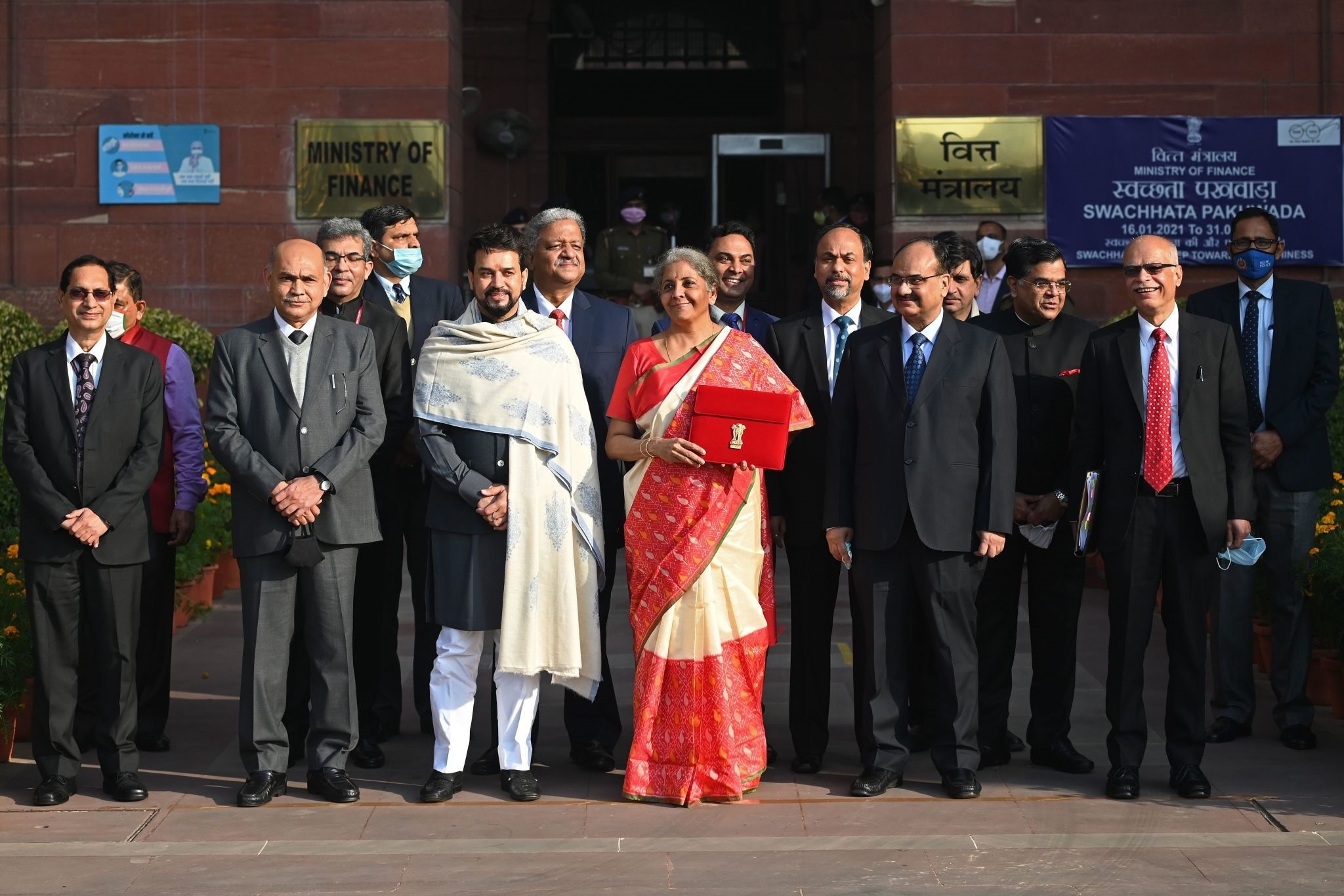
The Union Budget 2026–27 sets out a growth-focused and inclusive economic roadmap for the nation. Notably, this document emphasises public investment, structural reforms, and capacity building. While presenting the first Budget at Kartavya Bhawan, the Finance Minister explained that three Kartavyas inspire the proposals. Specifically, the first focuses on sustaining economic growth, while the second aims to fulfil people’s aspirations. Meanwhile, the third Kartavyaof Union Budget 2026–27 aligns with the vision of Sabka Sath, Sabka Vikas. Consequently, the government remains committed to supporting the underprivileged sections of society.
Infrastructure Expansion and National Connectivity Goals
Under the growth Kartavya, the Budget proposes interventions across six priority areas. Specifically, these include manufacturing, infrastructure, and long-term energy security. Moreover, the government increased public capital expenditure to ₹12.2 lakh crore for the coming fiscal year. This marks a significant rise from the previous estimate of ₹11.2 lakh crore. Furthermore, the proposals include seven high-speed rail corridors between major cities. Because of these strategic links, dedicated freight corridors and national waterways will soon strengthen cargo movement across India.
In addition, twenty new national waterways will become operational over the next five years. To drive local development, the government will create City Economic Regions based on specific growth drivers. Each region will receive ₹5,000 crore over five years through reform-linked financing. Therefore, these measures will likely support real estate and urban development activity. Similarly, improved logistics may lower overall construction costs. Thus, the stable fiscal signals from the Union Budget 2026–27 provide long-term investment confidence.
Union Budget 2026–27 : Industrial Modernisation and Small Business Empowerment
The proposals also introduce the Biopharma SHAKTI initiative with an outlay of ₹10,000 crore. Notably, this mission aims to boost the domestic production of biologics and biosimilars. To support this, the government will set up three new National Institutes of Pharmaceutical Education and Research (NIPER). Similarly, five Regional Medical Hubs will promote medical tourism by integrating healthcare and research. Furthermore, mental healthcare infrastructure will expand through new institutions. Because of these strategic investments, the textile sector will also receive integrated support for modernisation.
On the other hand, a ₹10,000 crore SME Growth Fund will nurture Micro, Small, and Medium Enterprises (MSME) champions. Specifically, this support strengthens manufacturing and consumer durables supply chains. Furthermore, customs duty rationalisation will reduce costs for imported components. Consequently, the services sector stands to gain from logistics and tourism reforms. For instance, a structured programme will upskill ten thousand tourist guides. Additionally, the government will establish Audio Visual-Gaming-Comics (AVGC) Content Creator Labs in schools and colleges nationwide.
Digital Agriculture and Fiscal Management Projections
Regarding social inclusion, the Bharat-VISTAAR system will integrate agricultural platforms using artificial intelligence. This system provides customised advisory support to farmers across the country. Moreover, SHE Marts will support women-led self-help groups through community retail outlets. Regarding fiscal consolidation, the Union Budget 2026–27 estimates the fiscal deficit at 4.3 per cent of GDP. Consequently, the debt-to-GDP ratio should decline gradually. These figures reflect a disciplined approach to national finance amid global uncertainties.
Finally, the New Income Tax Act will come into effect from April 2026. The government will notify simplified tax rules and forms shortly to ease compliance. In addition, the Budget raises safe harbour thresholds for IT services to ₹2,000 crore. Foreign cloud service providers using Indian data centres will also receive tax holidays until 2047. Therefore, the Union Budget 2026–27 reinforces the commitment to sustaining economic growth while advancing structural reforms. These measures aim to strengthen India’s resilience and improve the ease of doing business.
| Category | Key Announcements |
|---|---|
| Theme | Yuva Shakti–driven Budget focused on growth, aspirations and inclusion |
| Three Kartavyas | Accelerate and sustain economic growth; build aspirations and capacity; ensure Sabka Sath, Sabka Vikas |
| Growth & Infrastructure | Public capex raised to ₹12.2 lakh crore; seven high-speed rail corridors; new freight corridors and national waterways; City Economic Regions with ₹5,000 crore support |
| Industry & MSMEs | ₹10,000 crore SME Growth Fund; Biopharma SHAKTI with ₹10,000 crore outlay; textile sector modernisation and skilling push |
| Human Capital & Social Sectors | Medical tourism hubs; veterinary education expansion; AVGC labs in schools and colleges; girls’ hostels in every district; Khelo India Mission expansion |
| Agriculture & Inclusion | Bharat-VISTAAR AI platform for farmers; SHE Marts for women entrepreneurs; expansion of mental health infrastructure |
| Tax & Reforms | New Income Tax Act from April 2026; simplified tax rules and reduced litigation; IT sector safe harbour expansion; customs digitisation and faster clearances |
| Fiscal Discipline | Fiscal deficit estimated at 4.3 per cent of GDP; debt-to-GDP ratio on a declining path |
About the Author
