

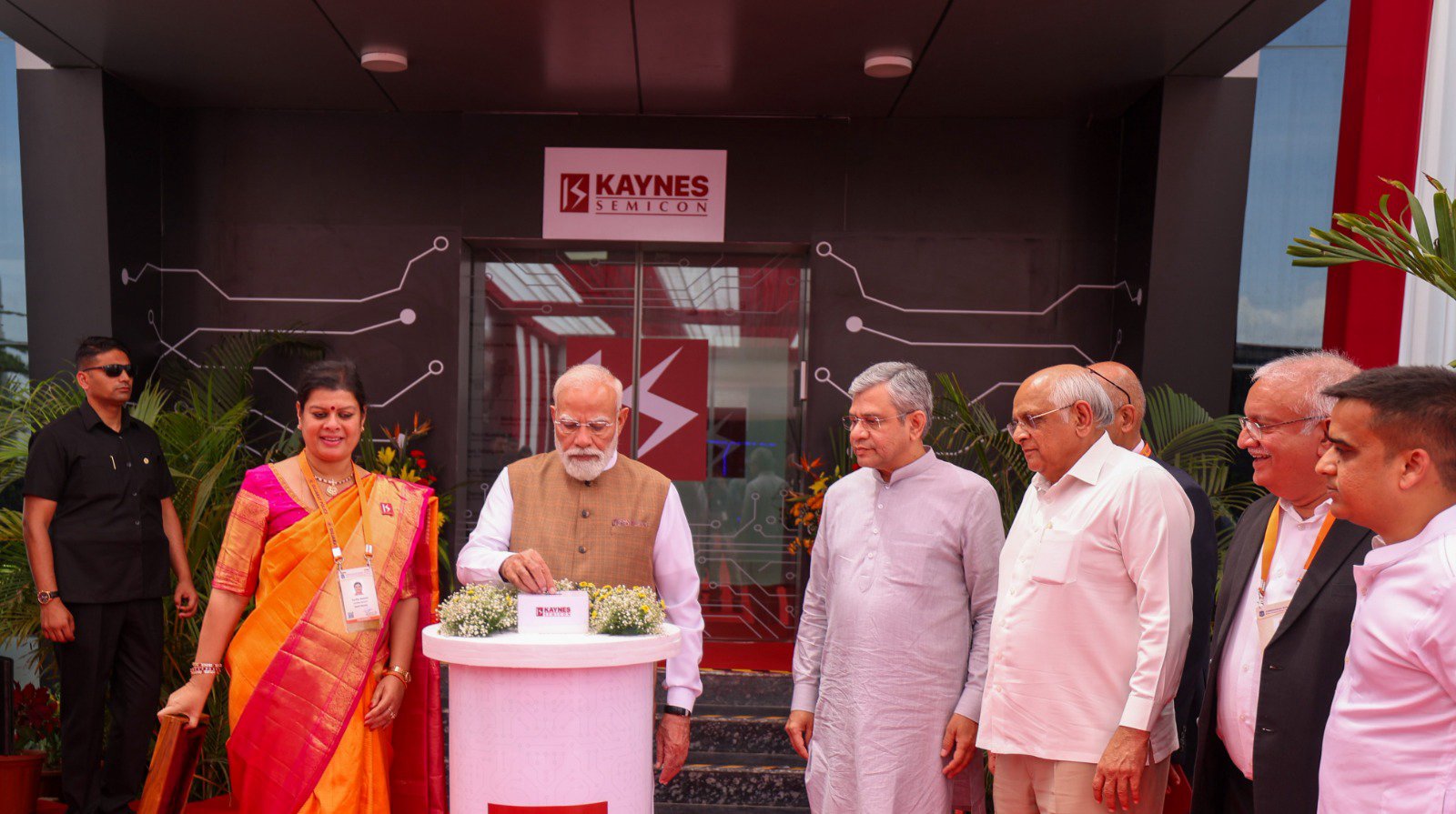
SANAND. Prime Minister (PM) Narendra Modi inaugurated the Kaynes Semiconductor facility at Sanand today. This ₹3,300 crore plant marks a significant expansion of the India semiconductor ecosystem. The facility operates within the Sanand Gujarat Industrial Development Corporation (GIDC) estate. Modi stated that the nation is no longer a mere witness to global change. He asserted that India now moves forward with a resolve to lead that change. This plant represents the second major chip facility to begin operations in the country. The Prime Minister highlighted the rapid pace of development in the India semiconductor ecosystem. He noted that India completed this project in just 900 days. Most developed nations often take several years to finalize such complex approvals.
Chip Production and Mission 2.0
The facility will manufacture 60 lakh chips every day for various industries. These products will support the automotive, electric vehicle, and consumer electronics sectors. This massive output strengthens the foundation of the India semiconductor ecosystem. During the event, the Prime Minister flagged the launch of the India Semiconductor Mission 2.0. This new phase aims to make the country self-reliant in every production sector. The government launched this mission in the latest budget with an increased outlay. Such decisive policies provide a long-term roadmap for the India semiconductor ecosystem. Modi emphasized that clear intentions and national dedication drive this momentum.
Global Supply Chains and Critical Minerals
India is positioning itself as a reliable player in the global value chain. The Prime Minister announced that the nation has joined the Pax Silica initiative. This partnership strengthens national access to critical minerals for chip manufacturing. Secure mineral supplies are essential for the growth of the semiconductor ecosystem. The Prime Minister also inaugurated the Samrat Samprati Museum in Gandhinagar earlier today. This cultural project showcases the rich spiritual legacy of Jainism on Mahavir Jayanti. However, the focus remains on transforming Sanand into a global high-tech hub. Sanand is now emerging as the first chip packaging cluster in the country. This development mirrors the success of tech hubs like Hsinchu in Taiwan.
India semiconductor ecosystem: Future Outlook
The Outsourced Semiconductor Assembly and Test (OSAT) facility will generate thousands of jobs. These roles range from design engineers to logistics and machine manufacturing professionals. Building a complete semiconductor ecosystem is the ultimate goal of the current administration. As production increases, the demand for domestic materials and components will also grow. This trend creates massive opportunities for small and medium domestic industries. The government has approved 10 major projects under the semiconductor programme so far. Four of these significant investments are currently located within Gujarat.
Finally, the Prime Minister concluded that this decade marks a turning point for national technology. Implementation of the new mission will ensure a predictable and fair industrial environment. Most experts monitor the rollout of these packaging units with extreme optimism. Future stability depends on the cessation of global supply chain disruptions. In summary, the nation enters a futuristic era of industrial self-reliance.
Kaynes Semiconductor Plant Details
| Parameter | Detail / Value |
|---|---|
| Total Investment | ₹3,300 Crore. |
| Location | Sanand GIDC, Ahmedabad, Gujarat. |
| Daily Capacity | 60 Lakh (6 Million) Chips. |
| Facility Type | Outsourced Semiconductor Assembly and Test (OSAT). |
| Key Initiative | Part of the India semiconductor ecosystem. |
| National Target | India Semiconductor Mission 2.0. |
About the Author
