

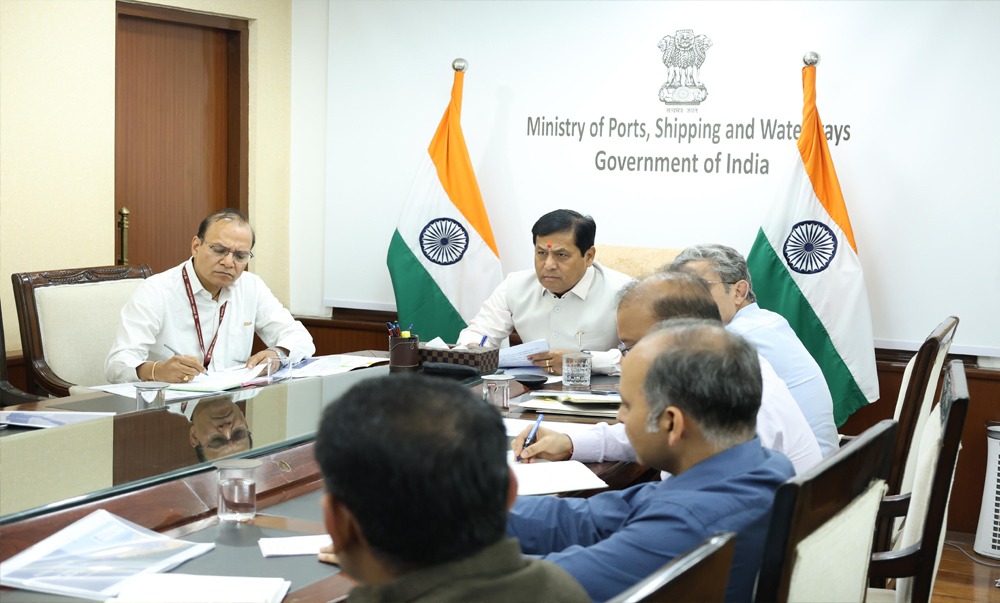
NEW DELHI. Union Minister for Ports, Shipping and Waterways Sarbananda Sonowal announced a major logistics achievement today. He confirmed that authorities achieved a major port cargo clearance of 90 per cent across all primary maritime gateways. This progress comes despite the persistent shipping disruptions caused by tensions in the Strait of Hormuz. The Ministry initiated emergency protocols last month to handle the sudden accumulation of stranded containers. Sonowal credited the dedication of port workers and terminal operators for this rapid recovery in trade volumes. Maintaining a high rate of major port cargo clearance remains essential for the national economic stability this quarter.
Digital Integration and 24/7 Port Operations
The Ministry implemented a round-the-clock operational schedule to accelerate the processing of essential goods and raw materials. Integrated digital tracking systems now allow for real-time monitoring of every container moving through the yard. This major port cargo clearance effort focuses on reducing the turnaround time for large mother vessels. Port authorities also streamlined the customs documentation process to prevent further administrative bottlenecks at the gates. Minister Sonowal emphasised that the government prioritises the movement of perishable items and industrial components. The use of automated cranes and upgraded berth facilities significantly enhanced the overall handling capacity. These technological interventions ensure that the major port cargo clearance stays ahead of the incoming vessel schedule.
Strategic Resilience and Global Supply Chains
The recent maritime disruptions highlighted the need for more resilient infrastructure in the Indian Ocean Region. India continues to diversify its shipping routes to mitigate the impact of regional conflicts on domestic markets. Sonowal noted that the successful major port cargo clearance provides confidence to international shipping lines and trade partners. The government organises regular coordination meetings with stakeholders to address emerging logistical challenges in real time. Enhanced rail and road connectivity to the hinterland helps evacuate cleared cargo from the docks quickly. This multi-modal approach prevents congestion from shifting from the seaside to the landside facilities. Most industry experts view the current clearance rate as a benchmark for crisis management in the maritime sector.
Future Infrastructure and Capacity Expansion
The administration remains committed to the long-term goals of the Sagarmala Project and the Maritime India Vision. Future investments will focus on deep-draft ports and the digitisation of the entire logistics value chain. Minister Sonowal stated that the current success in major port cargo clearance proves the robustness of the domestic port ecosystem. New transshipment hubs currently under construction will further reduce the country’s dependence on foreign intermediary ports. Scientists and engineers work on green shipping initiatives to make Indian ports more sustainable and efficient. The nation aims to become a global hub for maritime trade by the end of the current decade. Consistent performance in cargo handling will attract more direct calls from global liner services.
Port Clearance Performance Metrics (2026)
| Parameter | Details / Metrics |
| Backlog Cleared | 90 Per Cent. |
| Primary Metric | major port cargo clearance. |
| Key Official | Sarbananda Sonowal (Union Minister). |
| Operational Mode | 24/7 Round-the-Clock. |
| Regional Factor | Strait of Hormuz Disruptions. |
| Focus Areas | Perishables and Industrial Components. |
About the Author
