

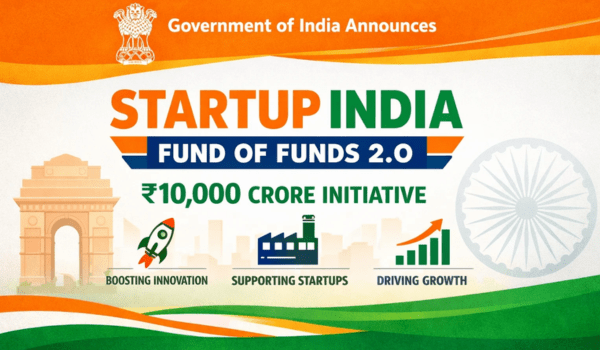
NEW DELHI. The central government notified the highly anticipated second phase of the Startup India Fund today. This new iteration features a massive total corpus of ₹10,000 crore to support domestic ventures. The Department for Promotion of Industry and Internal Trade (DPIIT) issued the formal notification earlier this morning. This initiative builds upon the initial success by doubling the financial commitment to innovative Indian firms. Small Industries Development Bank of India (SIDBI) continues to manage the fund as the primary operating agency. Launching the Startup India Fund reflects the administration’s deep commitment to making India a global entrepreneurial powerhouse.
Startup India Fund and Venture Capital Support
The fund does not invest directly into startups but contributes to SEBI-registered Alternative Investment Funds. These private venture capital funds then deploy the resources into promising early-stage companies and established MSMEs. This Startup India Fund specifically targets high-growth sectors such as deep-tech, healthcare, and clean energy. Government officials expect the new corpus to catalyse additional private investments worth over ₹50,000 crore. Professional fund managers follow a rigorous due diligence process to ensure the efficient allocation of these public resources. This indirect investment model encourages the growth of a professional and sustainable domestic venture capital industry. Increased funding availability helps local entrepreneurs scale their operations and compete on a global level.
Driving Innovation via the Startup India Fund
The notification of the Startup India Fund provides a significant boost to the national employment landscape. Startups currently contribute to a substantial portion of the new jobs created in the formal urban economy. The Ministry prioritises the support of startups led by women and those operating in Tier-2 and Tier-3 cities. This geographical diversification ensures that the benefits of the digital revolution reach every corner of the country. Authorities also introduced streamlined reporting requirements to reduce the administrative burden on fund managers and founders alike. Robust digital platforms now track the real-time impact of these investments on sectoral growth and innovation. The government remains focused on removing all regulatory bottlenecks that hinder the ease of doing business for young firms.
Future Vision for a Self-Reliant Economy
Economists view the expansion of the funding corpus as a critical step towards a self-reliant Indian economy. Future policy interventions will focus on enhancing the exit opportunities for investors through secondary markets and public listings. Officials stated that the success of the fund will inspire more domestic institutional investors to enter the asset class. The nation aims to host the largest number of unicorns globally by the end of the current decade. Scientists and researchers in the startup domain receive additional support for patent filing and commercialising new technologies. This integrated approach fosters a culture of risk-taking and high-impact innovation among the Indian youth. In summary, the new fund corpus secures the financial future of the next generation of Indian innovators.
Startup India Fund of Funds 2.0 Overview
| Parameter | Details / Status |
| Total Corpus | ₹10,000 Crore. |
| Primary Metric | Startup India Fund of Funds 2.0. |
| Managing Agency | SIDBI. |
| Parent Department | DPIIT (Ministry of Commerce). |
| Investment Model | Fund of Funds (Indirect Investment). |
| Target Sectors | Deep-tech, Health-tech, Green-tech, MSMEs. |
About the Author
