

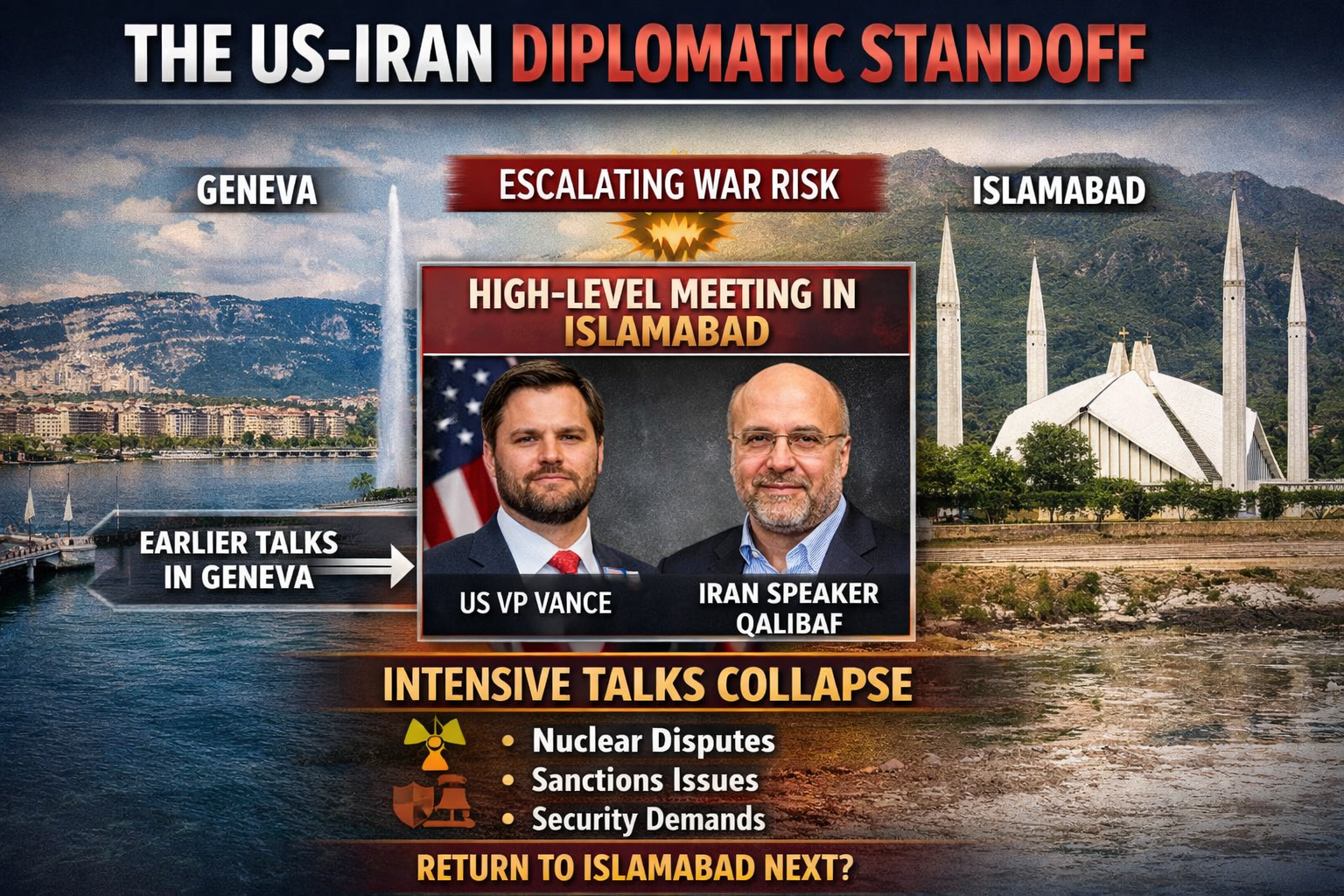
ISLAMABAD. The United States and Iranian teams might return for Islamabad peace talks this week. This potential breakthrough comes as the maritime blockade in the Persian Gulf enters its second week. Pakistan recently offered to mediate between the two adversaries to prevent a wider regional conflict. Senior officials from both nations reportedly expressed a cautious willingness to explore a diplomatic off-ramp. The proposed agenda focuses on restoring safe passage for commercial shipping through the Strait of Hormuz. Resuming the Islamabad peace talks represents the most significant hope for regional stability.
Earlier strands of US–Iran diplomacy had intermittently played out in Geneva, but amid rising tensions and war risks, a decisive shift occurred with a high-level, direct engagement in Islamabad involving the US Vice President and the Iranian Parliament Speaker. These Islamabad talks became the central negotiation effort but ultimately collapsed after intensive discussions due to differences over nuclear commitments, sanctions relief, and security guarantees. Current diplomatic efforts are now focused on potentially returning to Islamabad to revive that stalled channel.
Regional Mediation and the Islamabad Peace Talks
The Pakistani government has prepared a secure neutral venue for the visiting delegations in the capital’s diplomatic enclave. International observers view the Islamabad peace talks as a critical opportunity to lower the risk of naval engagement. The mediation team includes seasoned diplomats with extensive experience in Middle Eastern security affairs. They aim to establish a temporary ceasefire in the maritime exclusion zone to facilitate the dialogue. Preliminary discussions suggest that both sides seek to avoid a full-scale war despite the recent military buildup. Successful coordination could lead to a phased reduction of naval forces in the strategic waterway soon.
Economic Pressures Driving Diplomatic Engagement
Extreme volatility in global energy markets exerts immense pressure on both Washington and Tehran to negotiate. Most major economies now urge a swift resolution to the Islamabad peace talks to stabilise oil prices. The ongoing blockade severely impacts the Iranian domestic economy and global manufacturing supply chains. Analysts believe that economic pragmatism might outweigh the current military posturing during the upcoming sessions. The US administration also faces calls from domestic industries to protect international trade routes from further disruptions. Providing a clear roadmap for de-escalation will likely calm the nervous financial markets across the globe.
Strategic Outlook and Obstacles to Peace
Significant trust deficits remain the primary obstacle to achieving a lasting security framework in the Gulf. Hardline factions in both countries continue to voice opposition to any major diplomatic concessions at this stage. Future sessions will likely address the long-term monitoring of maritime traffic to prevent future skirmishes. The international community monitors the situation closely as the first delegation arrives in Pakistan tomorrow evening. Both parties must navigate complex domestic political landscapes while pursuing a peaceful resolution to the standoff. In summary, the world waits to see if the second round of negotiations can deliver a sustainable peace.
Islamabad Diplomatic Update
| Parameter | Details / Status |
| Host City | Islamabad, Pakistan. |
| Primary Metric | Islamabad peace talks. |
| Potential Participants | US and Iranian Delegations. |
| Mediation Lead | Ministry of Foreign Affairs (Pakistan). |
| Core Agenda | Maritime Blockade De-escalation. |
| Current Status | Sources confirm talks may resume this week. |
About the Author
