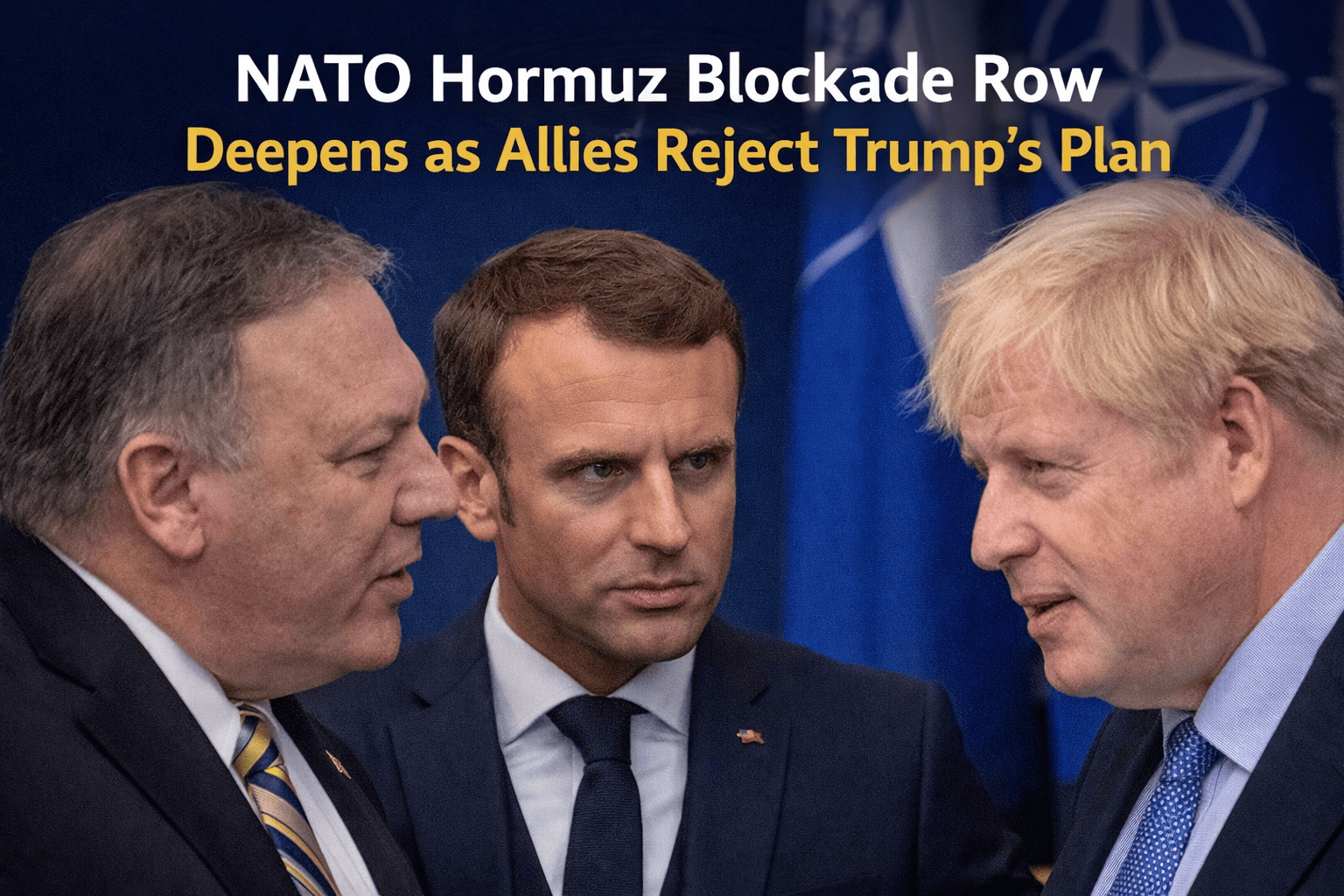
NATO Hormuz Blockade Row Deepens as Allies Reject Trump’s Plan
• NATO allies declined to support the US blockade plan.
• European nations called for diplomacy over military escalation.
• The move highlights growing tensions within the alliance.
• Strait of Hormuz remains a critical global energy route.
NATO allies have refused to join the proposed blockade in the Strait of Hormuz. The decision has intensified divisions within the alliance.
The United States announced the plan after failed talks with Iran. President Donald Trump proposed blocking maritime traffic through the route.
However, NATO members declined to participate in the operation. They expressed concerns over escalation and legal implications.
NATO Hormuz Blockade Faces Resistance
The NATO Hormuz blockade plan triggered strong reactions across Europe.
Countries like the United Kingdom and France rejected participation.
They stressed the importance of keeping the waterway open.
European leaders favoured diplomatic solutions over military action.
They warned that the blockade could worsen regional instability.
The Strait of Hormuz carries a large share of global oil supply.
Any disruption could impact energy markets worldwide.
Allies Push for Diplomacy Over Conflict
NATO allies proposed intervention only after hostilities end.
They suggested a coordinated international approach later.
France is planning discussions with multiple countries on maritime security.
The goal is to restore safe navigation through the strait.
 Turkey also called for renewed diplomatic engagement.
Officials emphasised the need to avoid further escalation.
The refusal has exposed growing differences within NATO.
Some members remain cautious about entering the conflict.
Strategic and Economic Concerns Rise
The United States clarified that the blockade targets Iranian-linked shipping.
It plans to restrict vessels moving to and from Iranian ports.
The move follows a breakdown in negotiations over the ongoing conflict.
Tensions have remained high across the region.
 The Strait of Hormuz remains a key global energy corridor.
Nearly one-fifth of global oil trade passes through it.
Analysts warn that any prolonged disruption could raise oil prices.
Global markets have already shown signs of volatility.
NATO Hormuz Blockade Highlights Alliance Strains
The NATO Hormuz blockade issue highlights deeper strategic differences.
European nations prefer multilateral and defensive approaches.
They remain cautious about unilateral military actions.
Such actions could increase geopolitical risks.
The United States continues to push for stronger measures.
It aims to pressure Iran through economic and military tools.
However, the lack of allied support may limit its strategy.
The situation reflects a changing dynamic within NATO.
The NATO Hormuz blockade debate continues as tensions persist.
News Orbiter runs a 24/7 news bureau that tracks the intersections of governance, policy, business & economy, infrastructure & real estate with specialised insights into India’s growth story. The bureau manages a policy-business-intelligence hub, delivering clarity, context, and depth on the decisions shaping India’s governance, economy, and industry.