

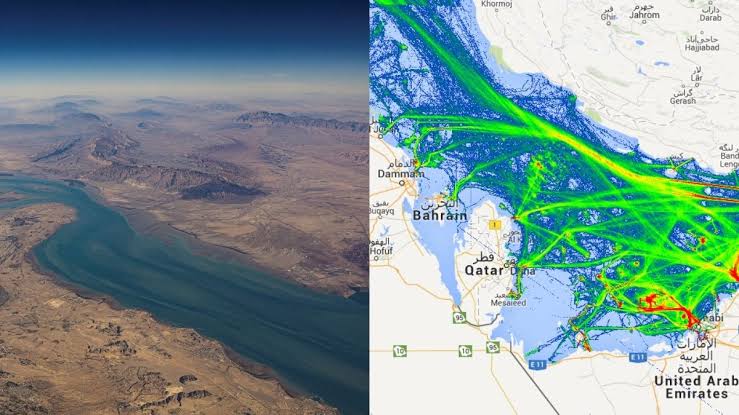
New Delhi: In a major relief for India’s industrial and energy sectors, the central government has officially withdrawn all emergency restrictions previously imposed on natural gas supplies. The decision comes immediately after international Liquefied Natural Gas (LNG) shipments successfully resumed safe passage through the vital Strait of Hormuz, following a conclusive ceasefire in the West Asia conflict.
In an official notification, the Ministry of Petroleum and Natural Gas announced a critical amendment to the Natural Gas (Supply Regulation) Order, 2026. The new amendment completely repeals the emergency provisions that had granted the government sweeping powers to control, redirect, and prioritize the allocation of both domestically produced natural gas and imported LNG cargo.
The Origin of the Energy Emergency
The emergency intervention mechanism was originally triggered in March 2026 under the strict legal jurisdiction of the Essential Commodities Act.
The policy was deployed as a protective shield after escalating geopolitical hostilities in West Asia severely disrupted global shipping lanes, temporarily closing the Strait of Hormuz—a strategic maritime chokepoint through which a significant portion of India’s imported LNG supply flows.
 [March 2026: Conflict Escalation] ──> [Strait of Hormuz Blocked] ──> [Emergency Supply Curbs]
                                                                              │
 [July 2026: US-Iran Ceasefire]   ──> [Safe Shipping Resumes]    ──> [Emergency Curbs Lifted]
During the height of the shipping blockade, the emergency order allowed the Ministry to ration gas inventories, prioritizing critical fertilizer plants, power grids, and City Gas Distribution (CGD) networks for domestic kitchens and CNG vehicles over non-essential industrial manufacturing.
Returning to Free Market Operations
The quick withdrawal of these state mandates signals a rapid stabilization of India’s energy ecosystem. With maritime trade lanes fully reopened, private and public sector importers are once again free to distribute and trade gas volumes based on standard commercial contracts rather than state-directed quotas.
Union Petroleum and Natural Gas Minister Hardeep Singh Puri previously indicated that India’s proactive energy management during the global supply shock kept domestic markets insulated from extreme price hyperinflation. The focus now shifts back toward long-term exploration goals, highlighted by the upcoming launch of the Open Acreage Licensing Policy (OALP) Bid Round-XI, which will open fresh bidding avenues for local oil and gas exploration blocks across the country.
WordPress Dashboard Table: Status of Indian Natural Gas Regulations
| Regulatory Parameter | Emergency Status (March–June 2026) | Current Status (July 2026 Onward) |
| Supply Mandate | Natural Gas (Supply Regulation) Order, 2026 | Emergency Clauses Repealed |
| Statutory Power | Enforced under Essential Commodities Act | Standard commercial guidelines restored |
| Allocation Control | Government-dictated priority quotas | Market-driven commercial allocation |
| Strait of Hormuz Status | Blockaded / Highly disrupted freight lanes | Fully Open (Post-Ceasefire) |
| LNG Supply Fluidity | Stockpiled / Rationed to essential sectors | Normal import flow and distribution |
About the Author
