

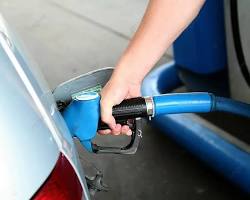
NEW DELHI. The central government announced excise duty relief on petrol and diesel to support national energy security. This decisive move provides immediate financial support to Oil Marketing Companies (OMCs). The Finance Ministry reduced the tax on petrol from 13 rupees to 3 rupees per litre. It also eliminated the 10-rupee duty on diesel entirely. These measures ensure excise duty relief reaches the intended energy sector sectors effectively. Global crude oil prices recently exceeded 100 dollars per barrel. Tensions in West Asia continue to disrupt the Strait of Hormuz. This waterway handles one-fifth of the world’s oil shipments. The government hopes excise duty relief on petrol, diesel will cushion the impact of these high international costs. Consequently, public sector firms like Indian Oil Corporation (IOCL) will avoid heavy losses.
Supporting Public Sector Energy Firms
Bharat Petroleum Corporation (BPCL) and Hindustan Petroleum Corporation (HPCL) also benefit from this policy. Retail prices for consumers remain unchanged for now. The state chose to protect citizens from extreme price volatility. This excise duty relief on petrol and diesel offers necessary stability to maintain operational viability. Global fuel prices have surged by nearly 50 per cent in several regions. India currently sources a significant portion of its crude requirements through the Gulf route. The government aims to cushion the domestic economy from these external price shocks. Authorities believe that excise duty relief prevents a wider inflationary spike.
Export Taxes and Fiscal Balance
To balance the exchequer, the state introduced windfall taxes on fuel exports. Diesel exports now face a tax of 21.5 rupees per litre. This levy provides partial funding for the massive domestic duty cuts. The notification for excise duty relief also includes a tax on Aviation Turbine Fuel (ATF). This ATF export tax stands at 29.5 rupees per litre. These export taxes ensure domestic availability of fuel products. The exchequer will lose approximately 7,000 crore rupees every fortnight. The Central Board of Indirect Taxes and Customs (CBIC) monitors the situation daily. Authorities confirmed that excise duty relief remains a priority over short-term revenue collection.
Supply Stability and National Resilience
Refineries continue to operate at very high capacity to ensure uninterrupted supplies. Authorities confirmed that adequate stocks of petrol and diesel exist nationwide. Citizens should avoid panic buying or believing rumours regarding shortages. The Ministry of Petroleum and Natural Gas has also increased domestic production. India has expanded its energy import sources to 41 countries over 11 years. This diversification reduces the national dependence on any single region. Chancellor Friedrich Merz in Germany recently highlighted similar energy security challenges.
Finally, the government monitors the situation in the Strait of Hormuz in real time. The national strategy addresses the short-term and long-term impacts of the West Asia war. Most experts view the duty cuts as a vital intervention for economic stability. Future growth will require a balance between fiscal discipline and citizen welfare. In summary, India strengthens its energy resilience through these bold financial measures.
Excise Duty Relief on Petrol and Diesel
| Parameter | Previous Rate | New Rate | |
|---|---|---|---|
| Excise Duty on Petrol | 13 rupees per litre | 3 rupees per litre | |
| Excise Duty on Diesel | 10 rupees per litre | Nil (0 rupees) | |
| Diesel Export Tax | Nil | 21.5 rupees per litre | |
| ATF Export Tax | Nil | 29.5 rupees per litre | |
| Net Fiscal Loss | Nil |
| |
About the Author
