

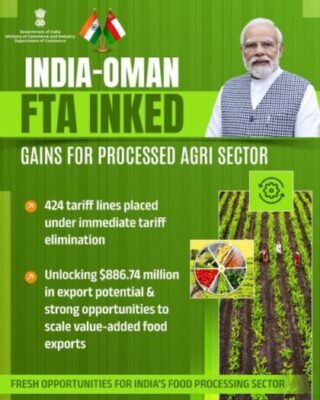
NEW DELHI. The India-Oman Free Trade Agreement has officially entered into force, following high-level talks between Prime Minister Narendra Modi and Sultan Haitham bin Tarik. This Comprehensive Economic Partnership Agreement (CEPA) represents a landmark shift in West Asian diplomacy. Both leaders signed the deal at Hyderabad House during the Sultan’s state visit to India.
Slashing Tariffs via India-Oman Free Trade Agreement
The new pact immediately eliminates or reduces import duties on over 80% of goods traded between the two countries. Indian exporters of textiles, electronics, and agricultural products will now enjoy duty-free access to the Omani market. Conversely, Oman will find it easier to export petroleum products and fertilisers to India.
Furthermore, the agreement simplifies customs procedures. This reduction in red tape will significantly lower the cost of doing business for small and medium enterprises. Experts predict that bilateral trade will surpass $20 billion within the next three years due to these incentives.
Strategic Energy and Security Cooperation
Beyond simple commerce, the deal secures India’s energy future. Oman remains a critical source of crude oil and liquefied natural gas (LNG). This agreement includes specific provisions for long-term supply contracts at competitive rates.
Additionally, the two nations agreed to deepen their maritime security cooperation. The Sultanate provides India with critical access to the Port of Duqm for logistical support. This geographic advantage strengthens India’s presence in the Western Indian Ocean.
A Gateway to the Gulf
This treaty serves as a blueprint for India’s wider engagement with the Gulf Cooperation Council (GCC). By securing a standalone deal with Oman, India gains a strategic gateway into the broader Arab markets. Prime Minister Modi described the deal as a “new milestone” that reflects the ancient maritime bonds between the two civilizations.
The India-Oman Free Trade Agreement also includes a dedicated chapter on digital trade. Both countries will collaborate on fintech, cybersecurity, and digital payments. This modern framework ensures that the partnership evolves alongside the global digital economy.
About the Author
