

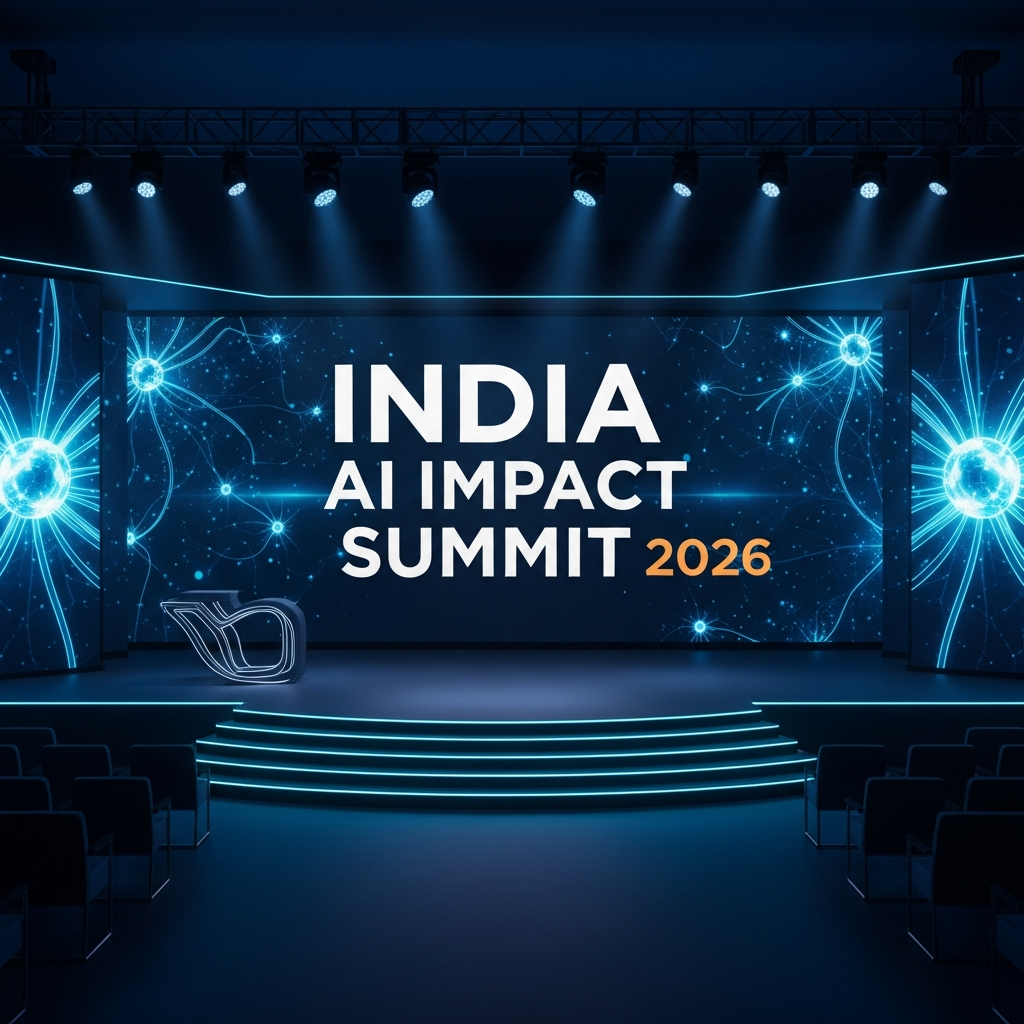
NEW DELHI. Puneet Chandok, the President of Microsoft India and South Asia, has asserted that Artificial Intelligence (AI) will fundamentally reshape the global workforce rather than replace it. Notably, he stated that the current era represents the “AI Century” and that India’s AI leadership is a defining factor in this technological shift. During the India AI Impact Summit 2026 in New Delhi, Chandok explained that the technology acts as a co-pilot for human ingenuity. Furthermore, he noted that India has become the largest developer hub for GitHub globally. Consequently, this vast talent pool reflects the nation’s growing influence in the digital economy.
Economic Projections and India’s AI Leadership
Moreover, Chandok highlighted the massive economic potential associated with emerging technologies. Specifically, he noted that India’s AI leadership aligns with projections that AI could add between $450 billion and $500 billion to the national GDP by 2025. Because of the rapid adoption of cloud and AI services, he believes businesses are seeing unprecedented efficiency gains across sectors. Similarly, he identified AI as a primary driver for the country’s goal of reaching a trillion-dollar digital economy. Therefore, these economic indicators suggest that the technology is a catalyst for broad-based prosperity.
In addition, Chandok focused on building a highly skilled workforce to sustain this momentum. To support this, Microsoft has launched the “ADVANTA(I)GE INDIA” initiative, which aims to provide AI skilling to 2 million people in Tier 2 and Tier 3 cities. Since the nation already possesses the second-largest pool of AI talent globally, India’s AI leadership is well-positioned to meet international demand. Furthermore, he committed to ensuring that the benefits of AI are democratised across various socio-economic layers. Thus, these efforts reflect a strategic approach to inclusive technological growth.
Reshaping the Job Market via India’s AI Leadership
Beyond economic figures, Chandok addressed concerns regarding automation and employment. Specifically, he argued that while some tasks may change, the demand for human creativity and problem-solving remains indispensable. Furthermore, India’s AI leadership involves a significant pivot toward “responsible AI” frameworks that prioritise ethical considerations and safety. Meanwhile, he expressed that the integration of AI tools will allow employees to focus on higher-value responsibilities. Consequently, he has encouraged industries to adopt AI as a tool for augmentation rather than a substitute for labour.
On the other hand, Chandok noted that the success of this transition depends on robust collaboration between various sectors. Specifically, he mentioned that creating a regulatory environment that fosters innovation while protecting data privacy is essential. Since India contributes a significant portion of the world’s open-source projects, the trajectory of India’s AI leadership is being watched closely by global technology firms. Furthermore, Microsoft continues to invest in local data centres to ensure data sovereignty and low-latency performance. Additionally, he highlighted the importance of AI-based research in academic institutions.
Future Outlook and Strategic Growth
Finally, Chandok stated that domestic innovations are solving significant challenges through scalable AI solutions. For instance, the transition toward AI-driven healthcare and agriculture is already showing promising results in rural segments. Moreover, he emphasized the need to enhance India’s contribution to international AI standards and governance. Regarding long-term goals, he believes the foundation for India’s AI leadership serves as a bridge to the “Viksit Bharat” vision. Consequently, this move will likely foster a more technologically advanced and economically stable nation.
In summary, the insights provided by Puneet Chandok offer a confident outlook on the future of technology in the subcontinent. With a focus on skilling, ethical deployment, and economic contribution, he asserts the country is set to lead the global AI narrative. Therefore, these strategic initiatives will continue to drive the social and economic evolution of the digital era.
Microsoft AI Insights 2026
| Key Metric / Concept | Detail / Attribution |
|---|---|
| Event Location | India AI Impact Summit 2026, New Delhi. |
| GDP Impact | Projected $450-$500 Billion by 2025. |
| Talent Pool | 2nd Largest AI Talent Pool globally. |
| Skilling Goal | 2 Million people via ADVANTA(I)GE INDIA. |
| GitHub Status | India is the largest developer hub globally. |
About the Author
