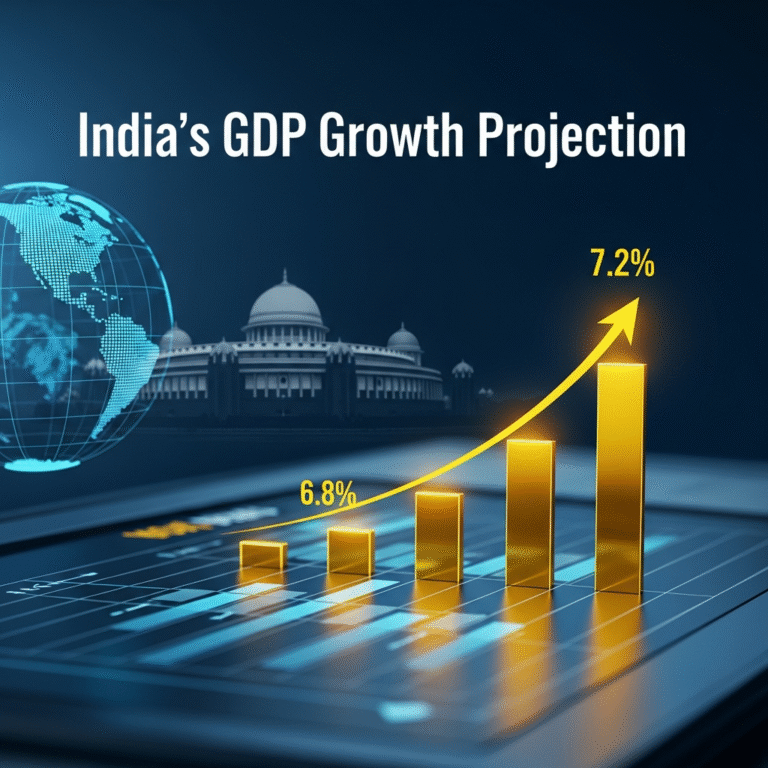

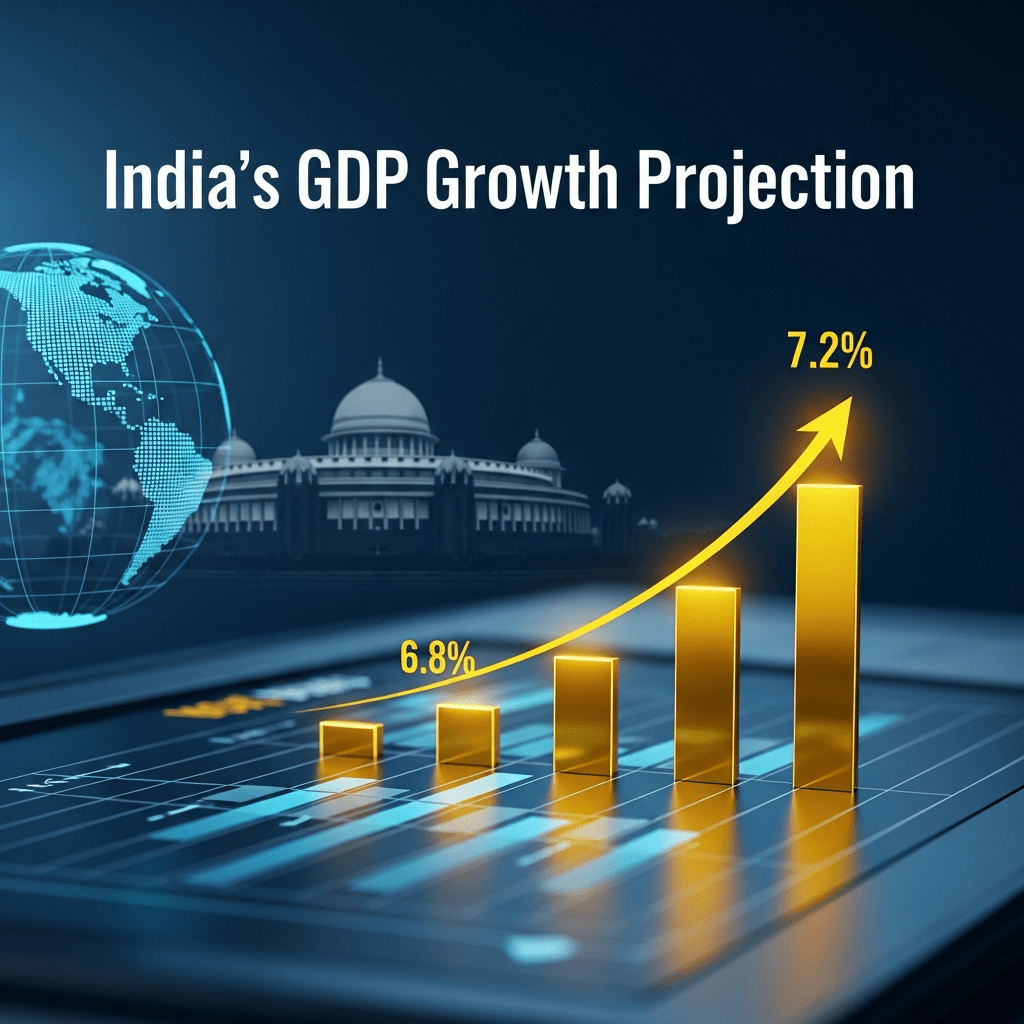
NEW DELHI. The Indian economy continues to demonstrate strong macroeconomic fundamentals and industrial resilience. According to the latest Economy Watch report by Ernst & Young (EY), India’s GDP growth projection for the Financial Year 2026-27 (FY27) stands between 6.8 per cent and 7.2 per cent. The report attributes this steady performance to a robust domestic investment cycle. Sustained government capital expenditure also supports this outlook. Furthermore, EY notes that India remains one of the fastest-growing major economies globally. Consequently, this Gross Domestic Product (GDP) outlook reflects the successful implementation of structural reforms.
Investment Cycles and India’s GDP growth projection
The report emphasises that the private sector investment cycle is gaining significant momentum. Specifically, the updated India’s GDP growth projection relies on public infrastructure spending. Government focus on long-term assets continues to attract private capital. Meanwhile, the manufacturing sector scales up due to production-linked incentive schemes. Similarly, the services sector remains a critical pillar of strength for the overall economy. Therefore, these internal drivers support a highly positive trajectory for the next fiscal year.
Global factors play a mixed role in determining India’s GDP growth projection for the medium term. While international markets face volatility, India’s domestic demand provides a substantial safety buffer. Specifically, the EY)report highlights a notable recovery in rural consumption patterns. This shift helps balance the economy against potential slowdowns in Western markets. Because the nation possesses a diverse export basket, it can mitigate risks from geopolitical tensions. Thus, the current India’s GDP growth projection considers both local strengths and international headwinds.
Inflationary Trends and Fiscal Health
Stable pricing remains a priority for maintaining the momentum of the current economic cycle. Analysts expect that inflation will align closely with the Reserve Bank of India (RBI) target of 4 per cent. Notably, the stability of India’s GDP growth projection depends on effective monetary policy. Furthermore, the report suggests that the fiscal deficit remains on a downward path. Consequently, the government has more room to fund social welfare and infrastructure projects. This disciplined fiscal approach builds immense confidence among global institutional investors.
On the other hand, the report identifies specific risks that could impact the 7.2 per cent upper limit. Specifically, volatility in crude oil prices remains a primary concern for the trade balance. Since India imports a large portion of its energy, global price spikes can pressure the budget. Furthermore, any sudden global economic slowdown could soften the demand for Indian exports. However, EY maintains that India’s GDP growth projection remains realistic. Strong credit growth in the banking sector provides additional support. Additionally, the Ministry of Finance will continue to monitor these external variables closely.
Future Outlook and Economic Sovereignty
Finally, the report concludes that India is well-positioned to reach its long-term development targets. For instance, the focus on digital infrastructure and green energy will drive efficiency. Moreover, the synergy between technology and agriculture will enhance rural productivity. Regarding long-term goals, the foundation of a 7 per cent growth rate serves as a bridge to 2047. Consequently, India’s GDP growth projection highlights the nation’s rising influence in the global economic order.
EY Economy Watch FY27 Insights
| Parameter | Statistic / Attribution |
|---|---|
| FY27 Growth Forecast | 6.8% to 7.2% (Real GDP). |
| FY26 Forecast | 7.0% to 7.5% (Projected). |
| Key Growth Drivers | Capital Expenditure and Private Investment. |
| Inflation Target | Aligning with the Reserve Bank of India (RBI) 4% goal. |
| Primary Risks | Geopolitical Tensions and Oil Price Volatility. |
| Reporting Agency | Ernst & Young (EY) India. |
About the Author