

Industry sentiment has turned positive following the presentation of the Union Budget 2026–27. Businesses across sectors see the Budget as a signal of long-term policy direction.
Many companies are not expecting immediate consumption-led stimulus from the proposals.
Instead, they are focusing on how policies shape investment decisions and capacity expansion. Industry leaders say the Budget provides clarity rather than short-term relief.
The Budget places strong emphasis on infrastructure creation and domestic manufacturing.
This approach has reassured businesses planning projects with longer execution cycles.
Executives say policy stability matters more than quick incentives for such investments.
The absence of consumption-led measures has not unsettled industry sentiment.
Many companies see the steady approach as supportive for sustainable growth planning.
A major factor supporting confidence is the scale of capital expenditure announced.
The proposed ₹12.2 lakh crore public capex signals continued infrastructure priority.
Industry leaders say sustained spending reduces uncertainty around future demand.
Roads, railways, logistics and urban infrastructure remain focus areas.
Such investments improve visibility for long-gestation infrastructure projects.
The announcement of seven high-speed rail corridors has drawn attention.
Expansion of inland waterways has also been welcomed by logistics-linked sectors.
Industry executives believe these moves can unlock new economic growth centres.
Tier-II and tier-III cities could see increased investment activity over time.
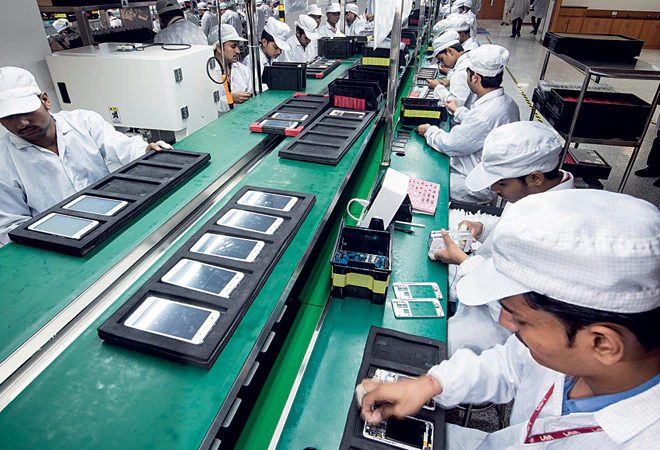
Manufacturing-led sectors have responded positively to the Budget’s direction.
The continued emphasis on Make in India has strengthened confidence.
Selective customs duty rationalisation has supported electronics and technology companies.
Executives say clearer sourcing policies aid medium-term capacity planning.
Local assembly and manufacturing decisions benefit from predictable policy frameworks.
The ₹10,000 crore SME Growth Fund has drawn strong industry interest.
Mid-sized companies often face challenges in accessing growth capital.
Industry leaders say the fund could ease expansion and employment constraints.
Manufacturing, FMCG and services firms see this as a timely intervention.
Healthcare and life sciences companies have welcomed the innovation push.
The ₹10,000 crore Biopharma Shakti initiative signals long-term sector commitment.
Industry leaders expect stronger research and manufacturing capabilities.
Regional healthcare hubs may expand access beyond metropolitan centres.
This could improve affordability and reach of specialised healthcare services.
Renewable energy players have highlighted continuity as a positive signal.
India’s renewable capacity has crossed significant installation milestones.
Sector participants say grid integration and storage support remain essential.
Policy stability is viewed as critical for long-term renewable projects.
Education and skilling initiatives have also received attention.
Proposals include digital labs in schools and colleges.
Girls’ hostels in districts aim to improve access to higher education.
Industry observers say education-industry alignment will gain importance.
Utkarsh Gupta, Managing Director of Ramagya Group, welcomed education measures.
He said digital labs and hostels strengthen foundational and higher education.
He added that creative learning prepares students for evolving workforce needs.
Sneha Rathor Khandelwal, CEO of Sanfort Group of Schools, shared similar views.
She said digital infrastructure supports future-ready skill development.
She noted technology integration will shape learning outcomes going forward.
As attention shifts from announcements to execution, companies remain watchful.
Industry leaders are now assessing costs, timelines and implementation efficiency.
The coming months will test how effectively policies translate on the ground.
About the Author