

AI image
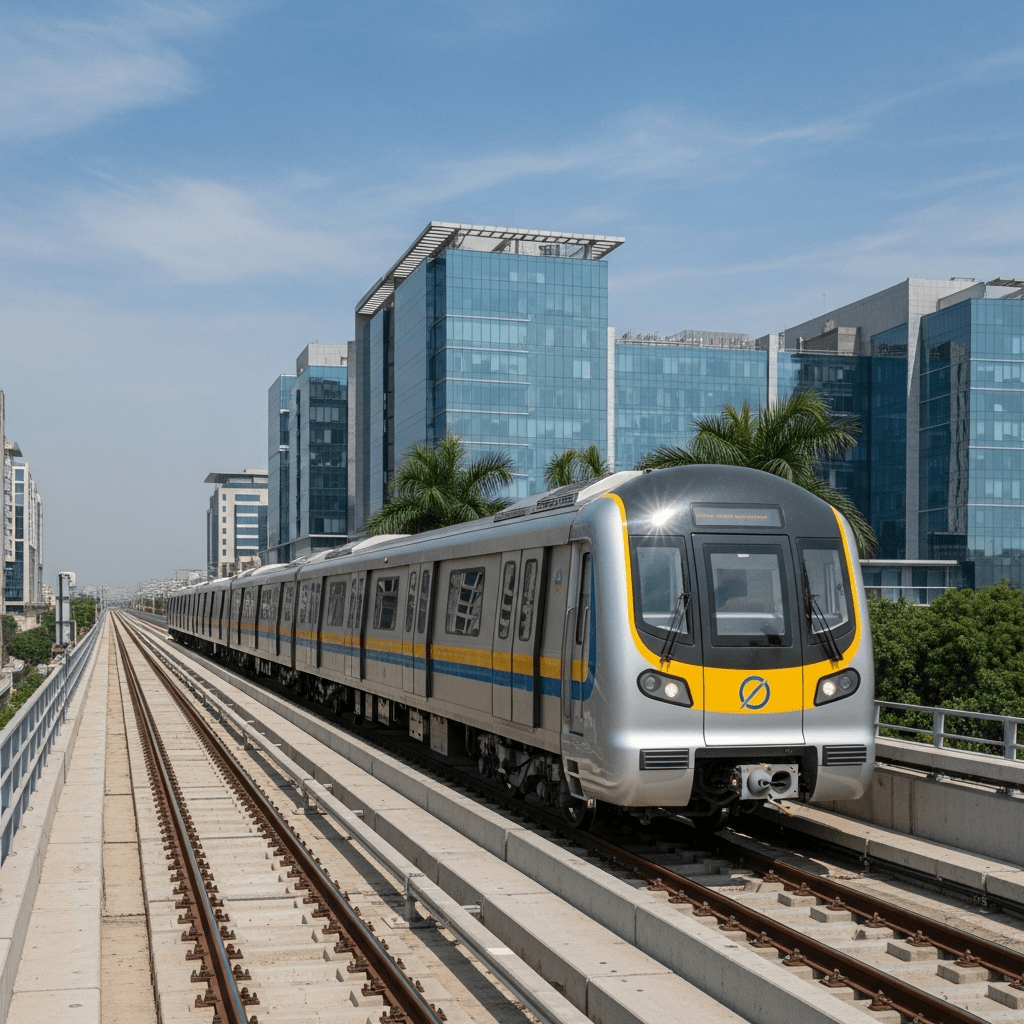
NEW DELHI. The Union Cabinet has officially approved the expansion of the Aqua Line to improve connectivity within the National Capital Region (NCR). Notably, the Noida Metro extension project will span 11.56 kilometres, connecting Noida Sector 142 directly to the Botanical Garden interchange. During the briefing, officials explained that this new corridor addresses a long-standing demand from commuters for a seamless transition between the Aqua and Blue lines. Furthermore, the government has allocated significant funds to ensure the timely completion of this vital infrastructure. Consequently, this development marks a major milestone in urban mobility for the residents of Noida and Greater Noida.
Strategic Impact of the Noida Metro Extension Project
The new route will significantly reduce the travel time for thousands of daily office-goers. Specifically, the Noida Metro extension project includes eight elevated stations that serve high-density residential and commercial hubs along the Expressway. Because of the direct link to the Botanical Garden, passengers will no longer need to rely on feeder buses or paratransit to switch between different metro networks. Similarly, the project aims to reduce vehicular congestion on the Noida-Greater Noida Expressway. Therefore, these measures promote a more sustainable and efficient public transport ecosystem.
In addition, the construction phase will generate numerous local employment opportunities. To support this, the Noida Metro Rail Corporation (NMRC) has invited tenders for the preliminary civil works. Since the government is prioritising “Gati Shakti” initiatives, the Noida Metro extension project will feature modern amenities and enhanced security systems. Furthermore, the authorities committed to integrating solar energy panels at all new stations to reduce the carbon footprint. Thus, these efforts reflect a commitment to building future-ready urban infrastructure.
Interchange Benefits of the Noida Metro Extension Project
Beyond local travel, the extension serves as a critical bridge for regional integration. Specifically, the Botanical Garden station acts as a multi-modal hub, connecting the Blue Line, Magenta Line, and now the Aqua Line. Furthermore, the NMRC continues to evaluate future phases to extend the network deeper into the developing sectors of Greater Noida. Meanwhile, urban planners expressed that the Noida Metro extension project will trigger a surge in real estate development along the corridor. Consequently, the government has reaffirmed its focus on transit-oriented development to boost economic activity.
On the other hand, the project incorporates advanced safety features to ensure a secure environment for women and elderly passengers. Specifically, the stations will be equipped with 100 per cent CCTV coverage and emergency help points. Since the project receives central funding, the execution will follow strict quality and safety standards. Furthermore, the Noida Metro extension project results suggest a projected daily ridership of over 1.5 lakh passengers upon its inauguration. Additionally, the Ministry of Housing and Urban Affairs will provide specialised technical support to streamline the operational integration.
Economic Connectivity and Future Mobility Projections
The project focuses on the potential for this corridor to attract more multinational corporations to Noida’s commercial sectors. Improved connectivity makes the region more accessible for a diverse workforce.
The Noida Metro extension project is set to transform regional mobility by linking major commercial centres, including Advant Business Park in Sector 142, Skymark One Mall in Sector 98, and the Mall of Noida in Sector 93. This vital corridor will provide seamless access to prominent corporate and IT hubs, serving global giants such as Microsoft (Sector 145), TCS (Sector 157), Infosys and Adobe (Sector 132), as well as Cognizant (Sector 135), Oracle (Sector 127), and Havells (Sector 126). Furthermore, the extension will significantly benefit key educational institutions like Amity University (Sector 125), Panchsheel Balak Inter College (Sector 91), and Mahamaya Balika Inter College (Sector 44), while ensuring that critical healthcare facilities like Max Super Specialty Hospital in Sector 128 are easily reachable for residents. Additionally, recreational and tourist hotspots, including the Botanical Garden and Sector 93 Park, will see improved connectivity, fostering a more integrated and accessible urban ecosystem for commuters throughout the National Capital Region.
Discussions have been held on the ways to enhance last-mile connectivity through e-rickshaw hubs at every new station. Regarding long-term goals, the Noida Metro extension project serves as a blueprint for other satellite cities aiming to improve their transit links. Consequently, this move will likely foster a more integrated and prosperous National Capital Region.
In summary, the Cabinet’s approval provides the necessary momentum to transform the city’s transport landscape. With a focus on speed, safety, and connectivity, the new corridor is set to become the backbone of regional travel. Therefore, this project will continue to drive the social and economic evolution of the twin cities.
Summary Table: Project Highlights 2026
| Feature | Project Details |
|---|---|
| Total Length | 11.56 Kilometres. |
| Route | Sector 142 to Botanical Garden. |
| Stations | 8 Elevated Stations. |
| Total Cost | ~₹2,254 Crore (Estimated). |
| Interchange | Connectivity to Blue and Magenta Lines. |
About the Author
