
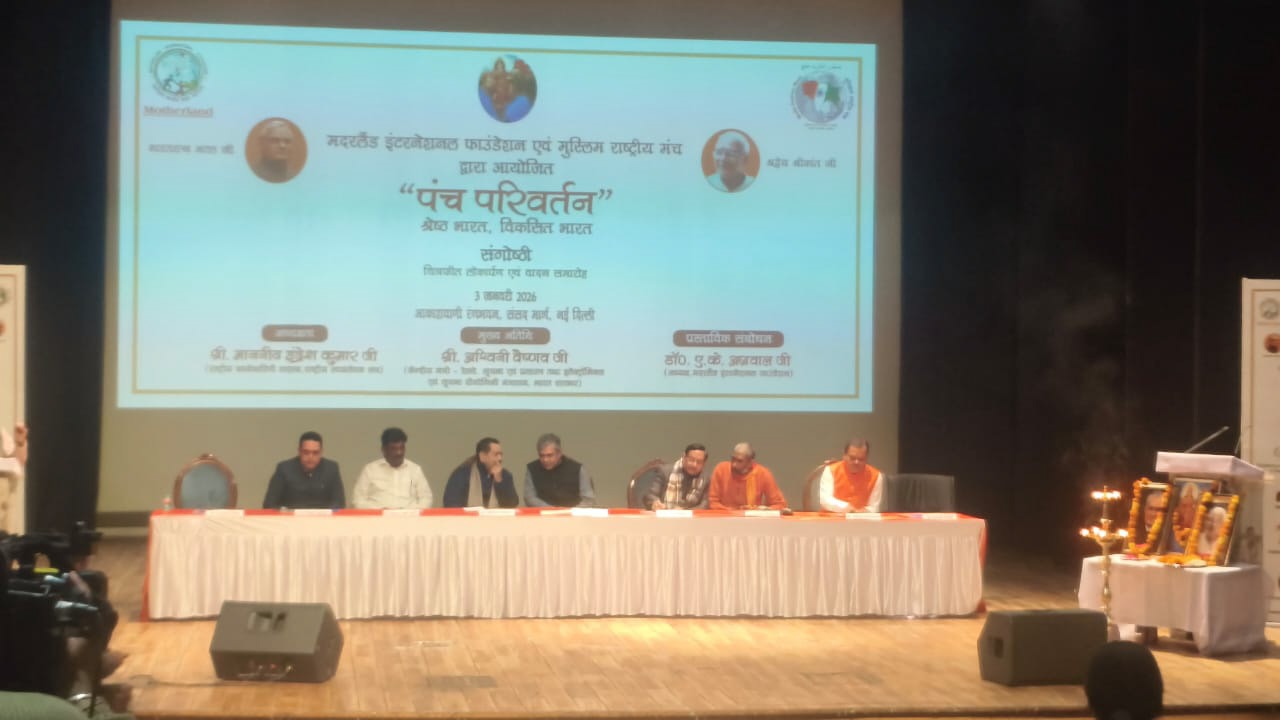
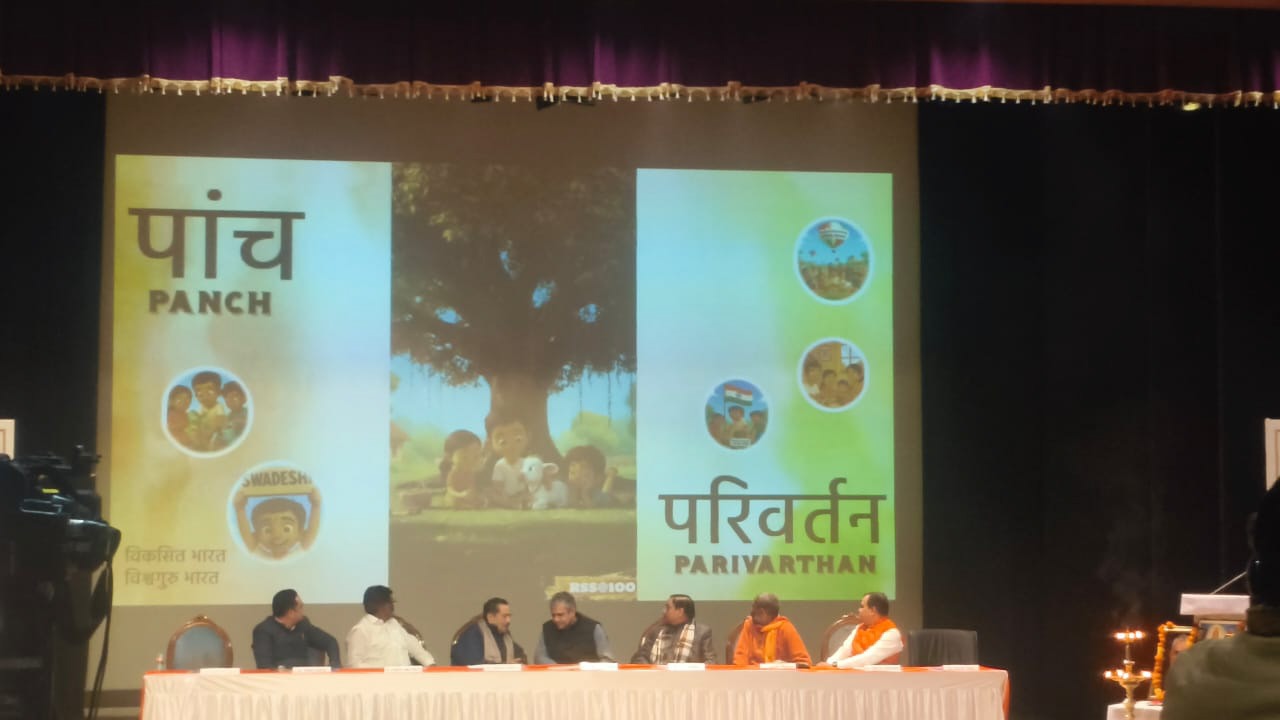
NEW DELHI. ‘Panch Parivartan’ served as the central theme for a national symposium titled “Panch Parivartan — Shreshtha Bharat, Viksit Bharat.” The event took place at Akashvani Rangbhavan on Parliament Street on 3 January 2026. It brought together political leaders, thinkers, educators, and community representatives. They deliberated on India’s path towards comprehensive national renewal. The symposium honoured the birth centenary of former Prime Minister and Bharat Ratna recipient Atal Bihari Vajpayee. Motherland International Foundation and Muslim Rashtriya Manch jointly organised the event.
Honouring National Ideals
The august gathering remembered the immense contribution of Atal Bihari Vajpayee to national life. Attendees also paid tribute to RSS leader Srikant Shankar Joshi. They acknowledged his lifelong service towards social cohesion and national ideals. Dr AK Agarwal, Chairman of Motherland International Foundation, set the tone for the proceedings. He invoked the ‘Panch Parivartan’ philosophy as a vital framework for national change. Dr Agarwal emphasised that India’s youth demographic and cultural plurality are its enduring strengths. He noted that civilisational depth is an asset to realise the nation’s potential.
The event saw participation from a wide cross-section of attendees. These included policymakers, academics, social workers, and media professionals. Youth representatives and members of various civic organisations also engaged in the dialogue. During the proceedings, the organisers felicitated Nasim Ahmed, Media Adviser at Lokmat. They also honored Dr Shriram Joshi, General Secretary of Motherland International Foundation. These honours recognised their significant contributions to society.
The Five Dimensions of Panch Parivartan
Discussions centred on the five dimensions of ‘Panch Parivartan’ as core pillars of development. The first is Samajik Samrasta, which focuses on social harmony. The second is Kutumb Prabodhan, emphasising family enlightenment and value systems. Third is Prakriti ka Sanrakshan, which underlines environmental responsibility. Further, the fourth is Swayam, highlighting self-discipline and individual accountability. Finally, Rashtrahit ki Bhavna reinforces the commitment to national interest. Speakers noted that these dimensions form the ethical foundation required for long-term progress.
Ashwini Vaishnaw, Union Minister for Railways, Communications, and IT, delivered the keynote address. He highlighted India’s resurgence across multiple sectors. Vaishnaw observed that India’s civilisation spans more than 5,000 years. Pertinently, the minister noted that a phase of stagnation had slowed progress for over a century. However, he stated that the country has now decisively emerged from that phase. India is steadily reclaiming its position as a global contributor of ideas and innovation.
Technological and Economic Milestones
Referring to progress under the Swadeshi framework, Vaishnaw shared impressive figures. He noted that 99 per cent of mobile phones are now manufactured in India. Significantly, exports are expanding steadily alongside advances in 4G and 5G technologies. The minister cited space missions and semiconductor manufacturing as indicators of self-reliance. The upcoming Vande Bharat sleeper coaches further showcase this growth. He also spoke about the emphasis on kartavya (duty) and paryavaran (environment). He pointed to the tulsi plant in households as a reflection of ingrained sustainability.
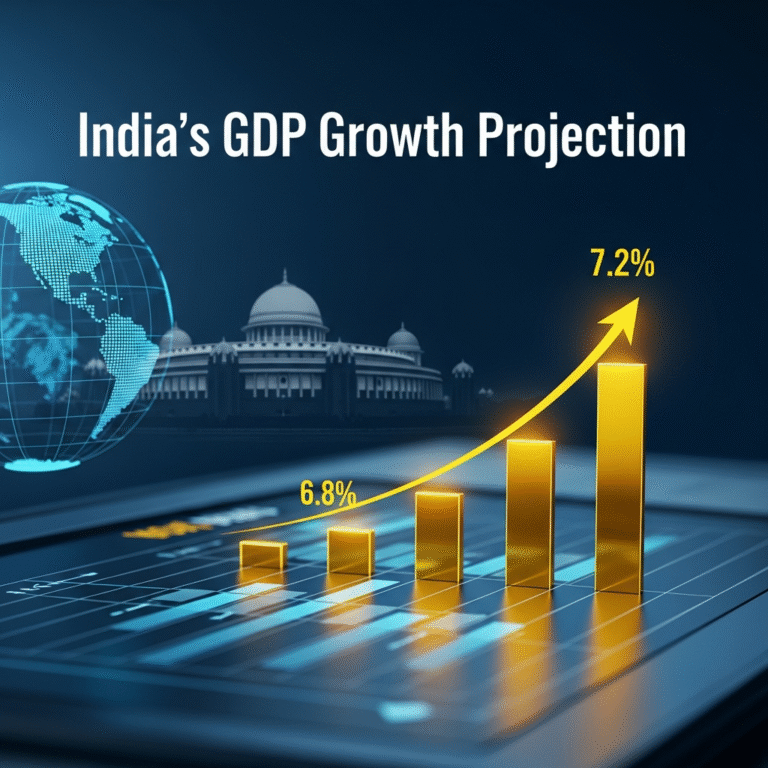
Looking ahead, the Union Minister highlighted massive economic projections. By 2047, India’s economy is projected to approach USD 25 trillion. The country’s average age will remain around 37 years. All this ensures a youthful and productive population for decades. He stated that these strengths would help India regain its rightful standing globally. He added that the present century would be defined by India’s rise.
Societal Framework and Unity
The symposium was presided over by Indresh Kumar, a senior member of the RSS National Executive. He highlighted ‘Panch Parivartan’ as a framework rooted in collective responsibility. The veteran leader spoke about the importance of introspection and strengthening the family unit. “When families are nurtured, they in turn nurture the nation,” the leader remarked. He urged citizens to rise above divisions and remember their shared identity. He noted that while not everyone can be a leader like Vajpayee, every citizen must contribute. Furthermore, he congratulated Muslim Rashtriya Manch for promoting social harmony.
Shahid Akhtar of Muslim Rashtriya Manch added perspectives on social cohesion. Akhtar emphasised that education should remain aligned with India’s cultural heritage. He observed that India has historically been one civilisation. Unity continues to be the country’s greatest strength. He concluded by reflecting on the sense of pride that comes from this shared journey. Ashok Chavhanke, Editor-in-Chief of Sudarshan TV, delivered a fiery speech. Chavhanke spoke about his channel’s contribution to promoting Swadeshi thought. He highlighted the role of media in reinforcing national consciousness.
The symposium concluded with a shared resolve to expand the ‘Panch Parivartan’ dialogue. Organisers intend to take the movement into communities and educational institutions. They reiterated that the movement is anchored in values and participation. This will contribute meaningfully to India’s journey toward becoming a developed nation by 2047.
About the Author