

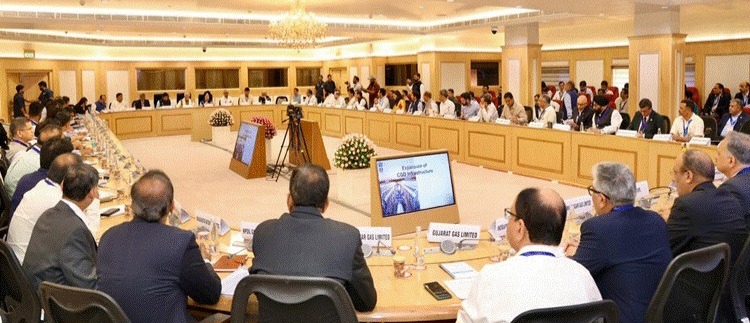
NEW DELHI. Union Ministers met at Vigyan Bhavan today to deliberate on the expansion of PNG services in urban India. Leaders from the Ministry of Housing and Urban Affairs (MoHUA) and the Ministry of Petroleum and Natural Gas (MoPNG) attended the meeting. Senior officials from the Ministry of Consumer Affairs, Food and Public Distribution (MoCAFPD) also joined the discussion. Ministers from Uttar Pradesh, Delhi, Maharashtra, Haryana, and Odisha participated in person. Representatives from Telangana, Karnataka, and Rajasthan attended the session virtually. The government aims to accelerate the rollout of Piped Natural Gas (PNG) while ensuring uninterrupted delivery of essential services. The Secretary of MoHUA highlighted the rising energy demand in cities. He emphasized the need for efficient service delivery alongside network growth.
Advantages and Rollout Presentation
The Ministry of Petroleum and Natural Gas (MoPNG) presentation highlighted the environmental sustainability of this energy source. PNG provides a reliable and affordable alternative for urban households. The presentation compared its safety record favorably against Liquefied Petroleum Gas (LPG). CMDs of GAIL and Indian Oil shared technical data during the session. They noted that affordability drives consumer interest in pipeline connections. However, several logistical hurdles currently slow the pace of work. Participants identified key challenges, including delays in municipal permissions and Right of Way (RoW) approvals, which are permissions to access and use land for laying pipelines. These bottlenecks often increase the time required to facilitate the expansion of PNG.
Policy Reforms and Target Setting
High restoration charges and administrative delays often impede the expansion of PNG across state borders. The Minister for Housing and Urban Affairs called for mission-mode implementation to solve these issues. He urged cities to function as engines of economic growth through modern infrastructure. Priorities include the institutionalisation of single-window approvals for all gas projects. The government set a mission-mode target to provide 50 lakh new connections. Integrating pipeline infrastructure into formal urban planning will facilitate last-mile connectivity. Participants also discussed adopting “deemed approval” mechanisms to fast-track road-cutting permissions. These policy shifts will help City Gas Distribution (CGD) entities accelerate the expansion of PNG.
Service Delivery and Monitoring Mechanisms
The Minister for Consumer Affairs emphasized the need to curb misinformation regarding fuel supplies. States must strengthen monitoring mechanisms to prevent the black marketing of traditional fuels. She urged public institutions like schools and colleges to transition away from LPG. Municipal Commissioners held a breakout session with CGD units after the roundtable. They identified city-specific bottlenecks and pending approvals for immediate resolution. A structured action plan now includes defined timelines and local task teams. Regular monitoring will ensure accountability and timely progress in every urban division. Enhanced coordination among state departments will ensure the seamless implementation of the project and support the expansion of PNG.
Finally, the government remains committed to strengthening national energy security through these upgrades. Most experts believe that rationalising RoW charges will lower the cost of urban infrastructure. Future growth depends on the successful integration of clean energy into the national vision. In summary, India prepares for a major leap in its urban energy infrastructure.
PNG Roundtable Outcomes (March 28, 2026)
| Parameter | Detail / Status |
|---|---|
| Connection Target | 50 Lakh (5,000,000) Urban Households. |
| Primary Objective | Fast-tracking the expansion of PNG network. |
| Participating States | UP, Delhi, Maharashtra, Haryana, Odisha, and 3 others. |
| Key Agencies | MoHUA, MoPNG, and MoCAFPD. |
| Policy Focus | Single-window approvals and RoW charge rationalisation. |
| Lead Entities | GAIL, Indian Oil, and CGD units. |
About the Author
