

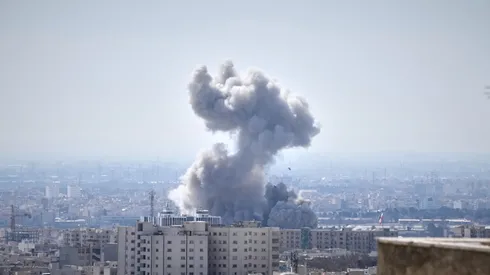
JERUSALEM. West Asia missile strikes increased today as several nations launched massive aerial assaults across the region. The Islamic Republic of Iran (IRI) targeted several strategic bases during these West Asia missile strikes. Meanwhile, the Israeli Defense Forces (IDF) conducted retaliatory operations across multiple provinces. The United States (US) also participated in the West Asia missile strikes to protect its regional interests. Because the situation remains volatile, many airlines have cancelled all flights through the zone. Consequently, these strikes have disrupted global energy supply chains significantly.
Aerial Warfare and Regional Stability
Security experts warned that West Asia missile strikes could lead to a total regional collapse tonight. German Chancellor Friedrich Merz called for an immediate humanitarian pause during an emergency session. Furthermore, the United Nations (UN) urged all parties to prioritise civilian lives during these operations. Despite these calls, the conflict shows no signs of slowing down tonight. The IDF stated its intention to neutralise all incoming threats from the north. Thus, the military pressure continues to mount as the world watches.
Furthermore, reports suggest that high-precision drones hit several industrial sites in the capital. The Ministry of External Affairs (MEA) in India is monitoring the safety of its citizens abroad. Since the strikes occurred, global oil prices have spiked significantly on international markets. Moreover, regional powers like Saudi Arabia have moved their military units to high alert. Therefore, the international community remains in a state of extreme caution. As a matter of fact, the escalation represents the most direct clash in decades.
Economic Impact and Humanitarian Concerns
Analysts believe a prolonged war would hurt the global economic recovery this year. Investors fear that the current violence will stop trade through the Persian Gulf. Consequently, gold and oil prices reached record highs on international exchanges today. The European Union (EU) urged all parties to avoid further military escalation immediately. Meanwhile, humanitarian agencies warned of a growing crisis for displaced families in the zone. Therefore, every nation is preparing for a long and difficult transition.
Prime Minister Benjamin Netanyahu stated that Israel will ensure its safety on a long-term basis. However, world leaders continue to debate the long-term stability of the region. Experts suggest the current conflict will redefine the global power balance for decades. In summary, the aftermath of these operations defines a new and dangerous era for everyone.
West Asia Conflict Status (March 2026)
| Parameter | Detail / Attribution |
|---|---|
| Primary Event | Massive West Asia missile strikes involving multiple nations. |
| Leading Forces | Iran, Israel, and the United States. |
| Market Impact | Record surge in global oil and gold prices. |
| Diplomatic Stance | UN and EU call for an immediate humanitarian pause. |
| Safety Status | High alert for Indian citizens via MEA monitoring. |
| Aviation Status | Widespread flight cancellations across regional hubs. |
About the Author
