

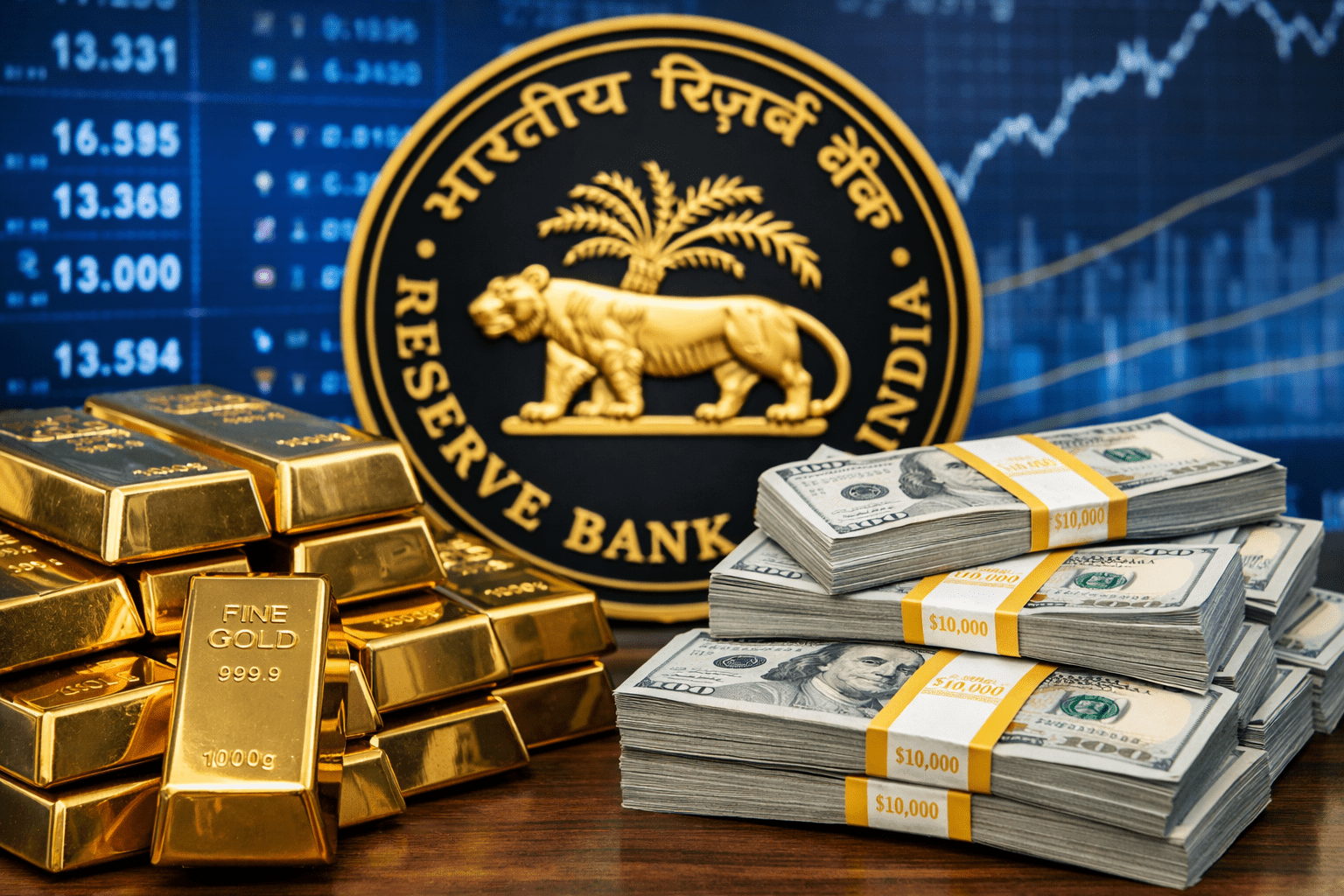
India’s foreign exchange reserves recorded a sharp increase in the week ended January 16. The Reserve Bank of India released the data in its latest Weekly Statistical Supplement. The country’s forex reserves rose by USD 14.167 billion during the reported week. Total foreign exchange reserves stood at USD 701.360 billion as of January 16.
The sharp rise followed a marginal increase recorded in the previous week. India’s forex reserves have shown a largely upward trend in recent weeks. The reserves now remain close to their all-time high of USD 704.89 billion. India achieved this record level in September 2024. Foreign currency assets formed the largest component of the reserves.
Foreign currency assets stood at USD 560.518 billion during the reported week. These assets increased by USD 9.652 billion compared to the previous week. Gold reserves also contributed significantly to the overall increase. Gold reserves rose to USD 117.454 billion during the week.
This marked an increase of USD 4.623 billion from the previous week.
Gold prices have remained on a strong upward trajectory in recent months. Global uncertainties and strong investment demand have supported gold prices. Following its monetary policy review in early December, the RBI assessed reserve adequacy. The RBI said forex reserves could cover more than 11 months of merchandise imports. The central bank expressed confidence in meeting external financing requirements comfortably.
India’s external sector continues to show resilience amid global volatility. Data showed that India’s forex reserves have grown substantially in 2025 so far. The reserves increased by about USD 56 billion during the current year. In comparison, forex reserves rose by just over USD 20 billion in 2024. India added around USD 58 billion to reserves during 2023.
This contrasted with a cumulative decline of USD 71 billion recorded in 2022. Foreign exchange reserves represent assets held by the central bank. These assets primarily include reserve currencies such as the US dollar. Smaller portions are held in the euro, Japanese yen and pound sterling. The RBI actively manages liquidity through forex market interventions. It sells dollars to prevent sharp depreciation of the rupee.
The RBI also buys dollars when the rupee strengthens excessively. This approach helps maintain orderly conditions in the foreign exchange market. The latest data underscores India’s improving external buffers and financial stability.
About the Author
