

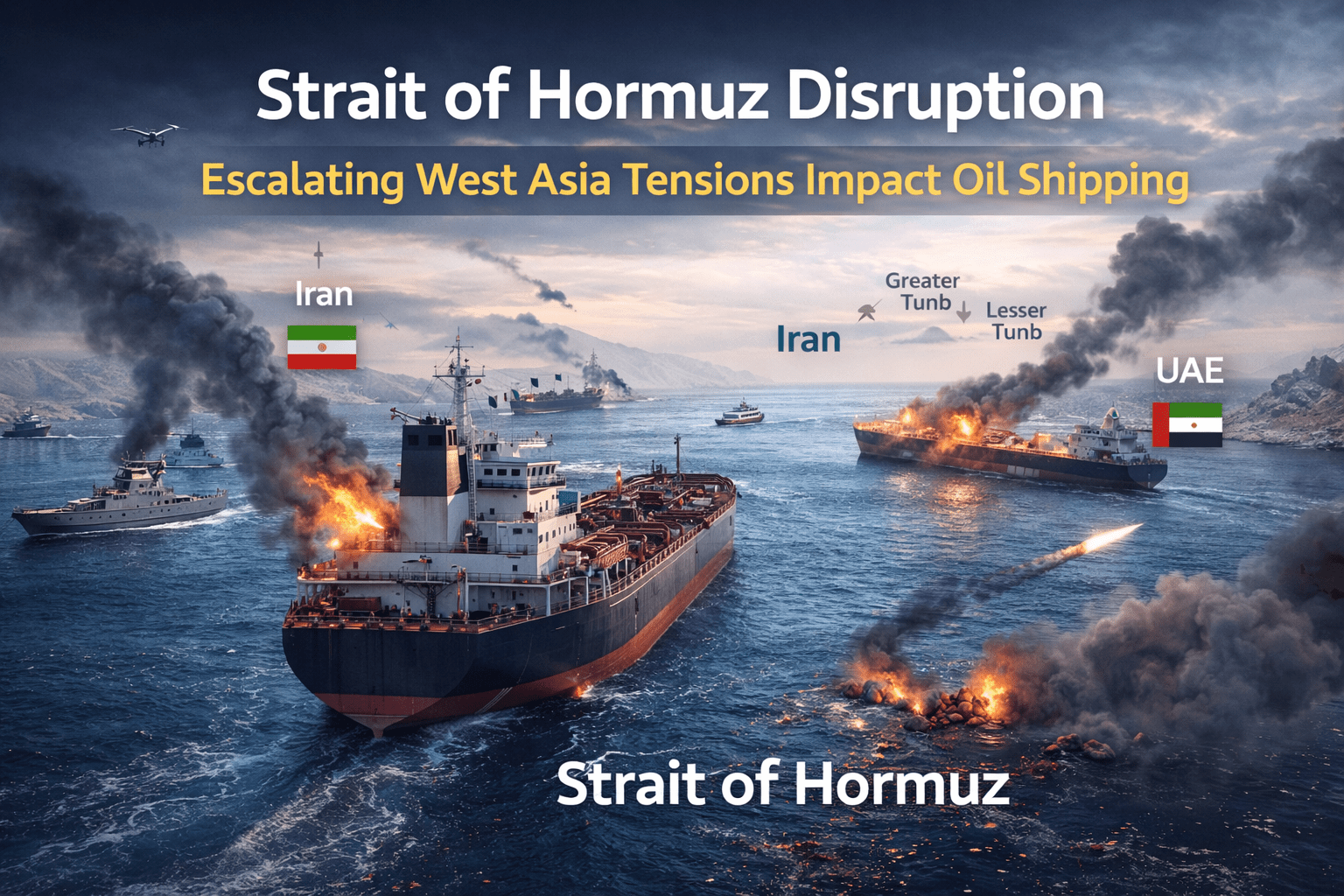
DUBAI. Tensions in West Asia currently disrupt Strait of Hormuz shipping and global energy markets. This narrow waterway serves as one of the world’s most critical maritime routes. The strait lies between Iran to the north and the Musandam Peninsula to the south. The peninsula belongs partly to Oman and the United Arab Emirates (UAE). Under normal conditions, about $20$ million barrels of oil pass through daily. This volume represents nearly one-fifth of global oil consumption. However, Strait of Hormuz shipping has slowed sharply during the ongoing conflict. Tanker traffic has declined significantly according to latest maritime reports. This disruption threatens the stability of energy-importing nations across the globe.
Geographic Constraints and Navigation Risks
The waterway stretches about $178$ kilometers in length. Its width narrows to roughly $39$ kilometers at its tightest point. Despite its narrow passage, the strait remains deep and navigable for large vessels. However, Strait of Hormuz shipping faces unprecedented danger from active hostilities today. Reports indicate tanker movement dropped by around ninety percent since February twenty-eighth.. Many vessels now remain anchored in open waters for safety. Ship operators wait for better navigation conditions before attempting the passage. The International Maritime Organization (IMO) manages traffic through designated shipping lanes. Each lane measures approximately two miles in width. A two-mile buffer zone separates these channels to prevent collisions.
Military Presence and Technological Interference
Iran maintains naval and air facilities near the strait on several strategic islands. Abu Musa and the Greater and Lesser Tunb islands host these military installations. These islands remain part of a long-standing territorial dispute with the United Arab Emirates. Their location provides direct oversight of all Strait of Hormuz shipping traffic. These strategic positions place the waterway at the centre of current tensions. Several ships have suffered damage during the recent conflict. Reports suggest attacks involved drones, missiles, and explosive surface craft. Between $8$ and $10$ commercial vessels reportedly sustained damage. Navigation risks increase further due to widespread Global Positioning System (GPS) interference. Jamming incidents complicate navigation for many international ships in the area.
Economic Impact on Asian Markets
Asian economies depend heavily on Strait of Hormuz shipping for their industrial needs. More than $80\%$ of regional oil and gas shipments head toward Asia. Major importers include Japan, South Korea, India, and China. Saudi Arabia and the United Arab Emirates operate pipelines bypassing the strait. However, these routes offer only limited alternative capacity for global trade. Combined spare capacity reaches only about $3.5$ million barrels daily. This remains far below the normal volumes of Strait of Hormuz shipping. Consequently, global oil markets have reacted quickly to the current disruption. Prices climbed above one hundred dollars per barrel. Some sessions briefly approached one hundred twenty dollars as supply fears intensified.
Analysts warn that prolonged disruption will affect global economies deeply. Higher energy costs will likely influence inflation and household spending. The impact of this crisis extends far beyond the borders of West Asia. Most nations now monitor the situation with extreme concern. The future of global energy security remains uncertain as the conflict persists.
Strait of Hormuz Crisis
| Parameter | Detail / Value |
|---|---|
| Normal Volume | Twenty million barrels of oil per day. |
| Traffic Decline | Approximately $90\%$ drop since late February. |
| Price Impact | Oil climbing above $\$100$ per barrel. |
| Strategic Width | $39$ kilometers at the narrowest point. |
| Alternative Capacity | Only $3.5$ million barrels per day via pipelines. |
| Asian Dependence | Over eighty percent of strait shipments head to Asia. |
About the Author
