

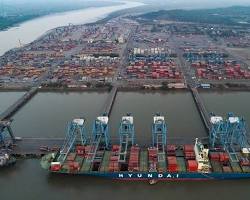
Courtesy: porttechnology.org
NEW DELHI. A new study by NITI Aayog reveals that the share of FTA partners in the national commerce has reached a significant milestone. Data shows that India’s FTA trade now accounts for 28.8 per cent of the total international trade volume. This increase reflects the growing integration of the Indian economy with its strategic partner nations. However, the report also points out that the national export basket remains heavily concentrated in specific sectors. Jewellery and gems continue to dominate a large portion of the outgoing shipments to these partner countries. Strengthening the diversity of India’s FTA trade is essential for long-term economic resilience and manufacturing growth. The government intends to use these findings to refine future negotiations with potential global trading blocs.
Structural Insights into India’s FTA Trade
NITI Aayog analysts observed that while trade volumes have grown, the utilisation rate of these pacts varies significantly. Many domestic manufacturers still face challenges in navigating the complex rules of origin associated with India’s FTA trade. The report emphasises the need for better industry awareness to maximise the benefits of reduced tariff barriers. Currently, the engineering and textile sectors show potential for expansion but require more targeted policy support. Diversifying the export commodities will help reduce the current reliance on the jewellery and petroleum segments. NITI Aayog suggests that enhancing the competitiveness of small-scale industries will improve the overall balance of trade. A more balanced export profile will ensure that the benefits of trade pacts reach a wider range of producers.
Challenges in Export Concentration and Diversification
The concentration of exports in jewellery highlights a structural vulnerability in the current international commerce strategy. NITI Aayog notes that fluctuations in global luxury markets can disproportionately affect the stability of India’s FTA trade. Expanding into high-value electronics and specialty chemicals is a primary recommendation of the latest study. The report also calls for a more robust quality control framework to meet international standards in new markets. Improving the logistics infrastructure at major ports will further enhance the delivery efficiency of diverse products. The government plans to incentivise the production of technologically advanced goods under the “Make in India” initiative. Addressing these concentration risks will empower India to capture a larger share of the global manufacturing value chain.
Future Strategy for Global Trade Agreements
NITI Aayog recommends a periodic review of existing agreements to align them with the evolving global economic landscape. Future negotiations will likely focus on services and digital trade to complement the traditional goods segments. Enhancing India’s FTA trade requires a multi-pronged approach involving both diplomatic and industrial reforms. The administration remains committed to securing favourable terms that protect domestic interests while expanding market access. Ongoing discussions with the European Union and the United Kingdom aim to broaden the geographic reach of Indian exports. Scientists and researchers contribute by developing innovative products that can compete in highly regulated foreign markets. In summary, the rise to a 28.8 per cent share marks a pivotal shift in India’s global economic engagement.
NITI Aayog Trade Study Highlights
| Parameter | Details / Findings |
| FTA Partner Share | 28.8% of Total Trade. |
| Primary Metric | India’s FTA trade. |
| Dominant Sector | Jewellery and Gems. |
| Key Challenge | High Export Concentration. |
| Research Body | NITI Aayog. |
| Recommendation | Diversification into Electronics and Chemicals. |
About the Author
