

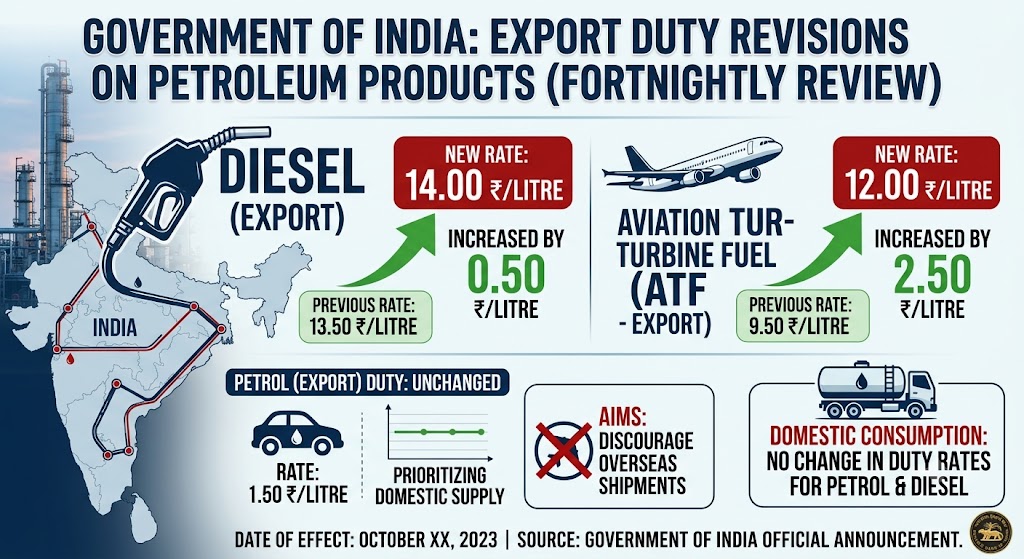
New Delhi: The Central Government has increased the Special Additional Excise Duty (SAED) on the export of diesel and Aviation Turbine Fuel (ATF) in its latest fortnightly review. The revised export duty rates take effect immediately. It is aimed at managing overseas shipments and prioritizing energy security within the country.
According to a notification issued by the Department of Revenue under the Finance Ministry, the export levy modifications directly respond to changing international oil prices and supply chain vulnerabilities.
Breakdown of the New Export Duty Rates
The government’s strategic adjustment sees a marginal bump for diesel and a steeper hike for aviation fuel. But petrol remains entirely unaffected.
1. Diesel Export Levy Raised
-
New Export Duty: ₹14.00 per litre
-
Old Rate: ₹13.05 per litre (An increase of 95 paise per litre)
2. Aviation Turbine Fuel (ATF) Spike
-
New Export Duty: ₹12.50 per litre
-
Old Rate: ₹9.05 per litre (An increase of ₹3.45 per litre)
3. Petrol Export Levy Unchanged
-
Current Rate: ₹1.05 per litre (No change was introduced during this fortnightly review)
What Happens to Domestic Fuel Prices?
In relief for local consumers, the government confirmed that there is absolutely no change in the existing duty structures for fuels cleared for domestic consumption.
Important Note for Consumers: This windfall tax revision targets fuel being shipped out of India by refiners. It does not alter retail prices of petrol or diesel at domestic fuel stations.
The Strategic Reason: The West Asia Impact
The revised export duties come amid continuing efforts by the Centre to ensure adequate domestic availability of petroleum products in view of the volatile West Asia crisis.
The government initially introduced these strict export levies on petroleum products on March 27. The aim was to discourage domestic oil companies from prioritising high-margin overseas shipments over local requirements.
Why These Rates Change Every Fortnight
-
Market Sync: The government reviews SAED on a fortnightly basis to dynamically match domestic margins with average international crude and product prices.
-
Supply Buffer: By making international shipments more financially demanding, the policy actively channels local fuel production back into Indian markets, stabilizing local reserves during global geopolitical tensions.
About the Author
