

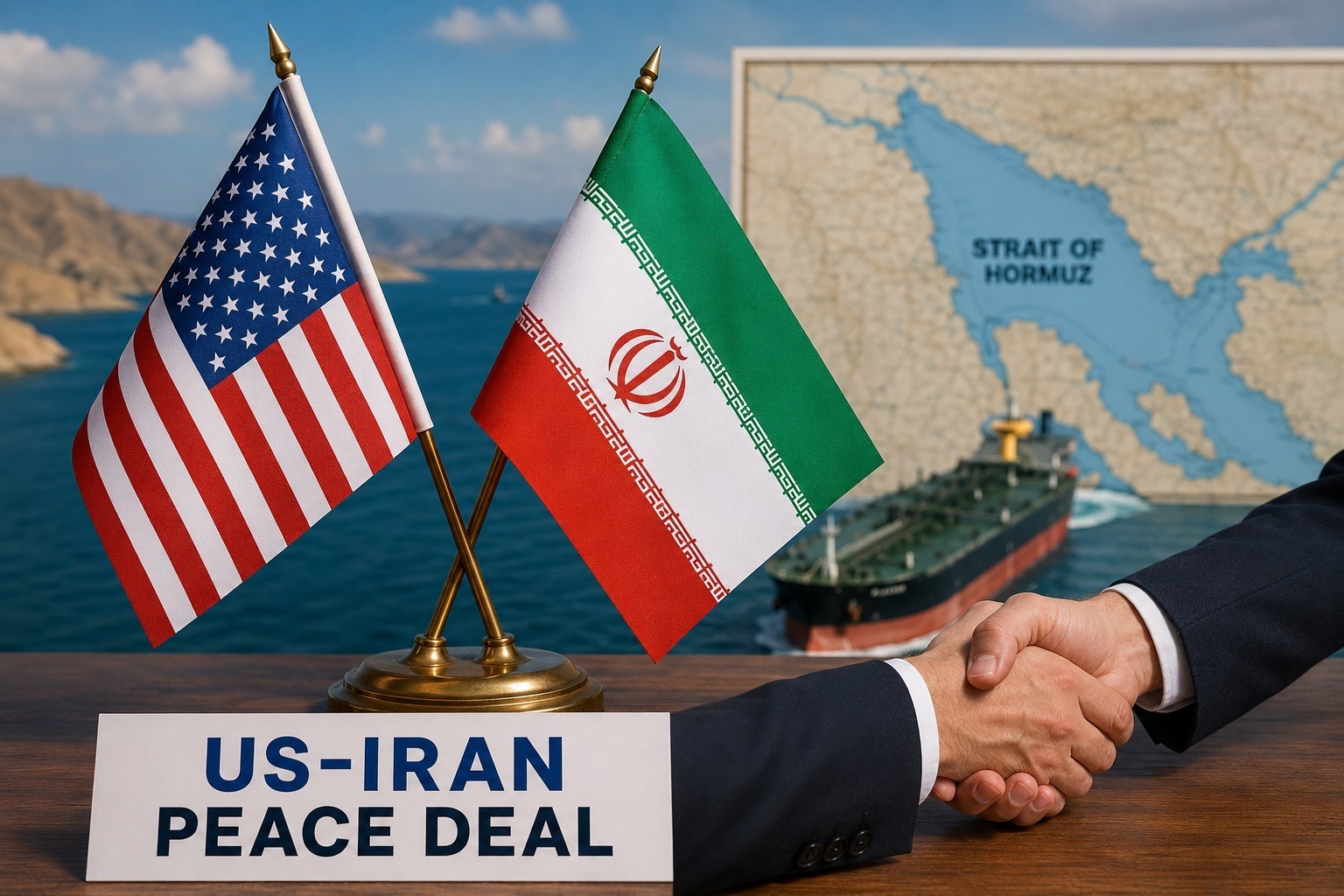
 The announcement of the US-Iran peace deal is expected to provide major relief to India’s economy by improving trade conditions and supporting currency stability.
Exporters and experts believe the agreement could revive India’s exports to West Asia. The region had witnessed major disruptions because of prolonged geopolitical tensions.
The agreement aims to end the 107-day conflict between the two countries. Both sides are expected to formally sign the deal on June 19 in Switzerland.
The conflict had affected global energy supplies and pushed crude oil prices above USD 100 per barrel. It also created concerns about wider instability across West Asia.
US-Iran peace deal brings energy relief
The US-Iran peace deal could help stabilise global oil and gas markets after months of uncertainty.
India depends heavily on West Asia for its energy requirements. The region supplies nearly 50 percent of India’s crude oil imports.
It also accounts for around 70 percent of LPG supplies and nearly 90 percent of LNG imports.
Economic experts said the conflict increased India’s energy import costs. It also created inflation risks and added pressure on the rupee.
The disruption forced refiners to explore alternative supply routes from distant markets. This increased transportation costs and created additional pressure on businesses.
Experts believe reopening the Strait of Hormuz will ease these challenges. The key shipping route handles a major share of global energy movement.
India exports expected to gain momentum
Trade experts said normal shipping operations could support India’s export recovery.
The conflict had affected India’s trade with several West Asian countries. Exporters faced higher freight charges, insurance costs and delayed shipments.
Many ships had avoided risky routes during the crisis. Some vessels used longer routes around the Cape of Good Hope, increasing delivery timelines.
Industry representatives believe peace in the region will create new opportunities for Indian businesses.
Technocraft Industries India Founder Chairman Sharad Kumar Saraf said reduced uncertainty could support stronger export growth.
He said the end of hostilities could open new business opportunities over the next few years.
GCC trade likely to recover
The Gulf Cooperation Council remains a crucial trade partner for India.
The group includes the UAE, Saudi Arabia, Oman, Qatar, Bahrain and Kuwait. These countries play a major role in India’s energy and merchandise trade.
India exports engineering goods, refined petroleum products, food items, gems, jewellery, chemicals and textiles to the region.
The country mainly imports crude oil, LNG, LPG, fertilisers, petrochemicals and mineral fuels.
The US-Iran peace deal could help restore confidence among traders and manufacturers.
Rupee stability and inflation outlook improve
Experts said easing geopolitical tensions may reduce pressure on India’s import bill.
Lower energy prices could help control inflation and support economic growth. A stable oil market may also strengthen investor confidence.
Federation of Indian Export Organisations President S C Ralhan said reduced regional tensions would support trade normalisation.
He said stable energy supplies could help the rupee and improve overall business conditions.
The US-Iran peace deal is also expected to improve India’s manufacturing outlook. Better trade flows and lower logistics costs may support industrial activity.
Analysts believe the agreement could bring wider economic benefits if implemented successfully. They expect stronger regional stability to help India’s long-term growth plans.
About the Author
