

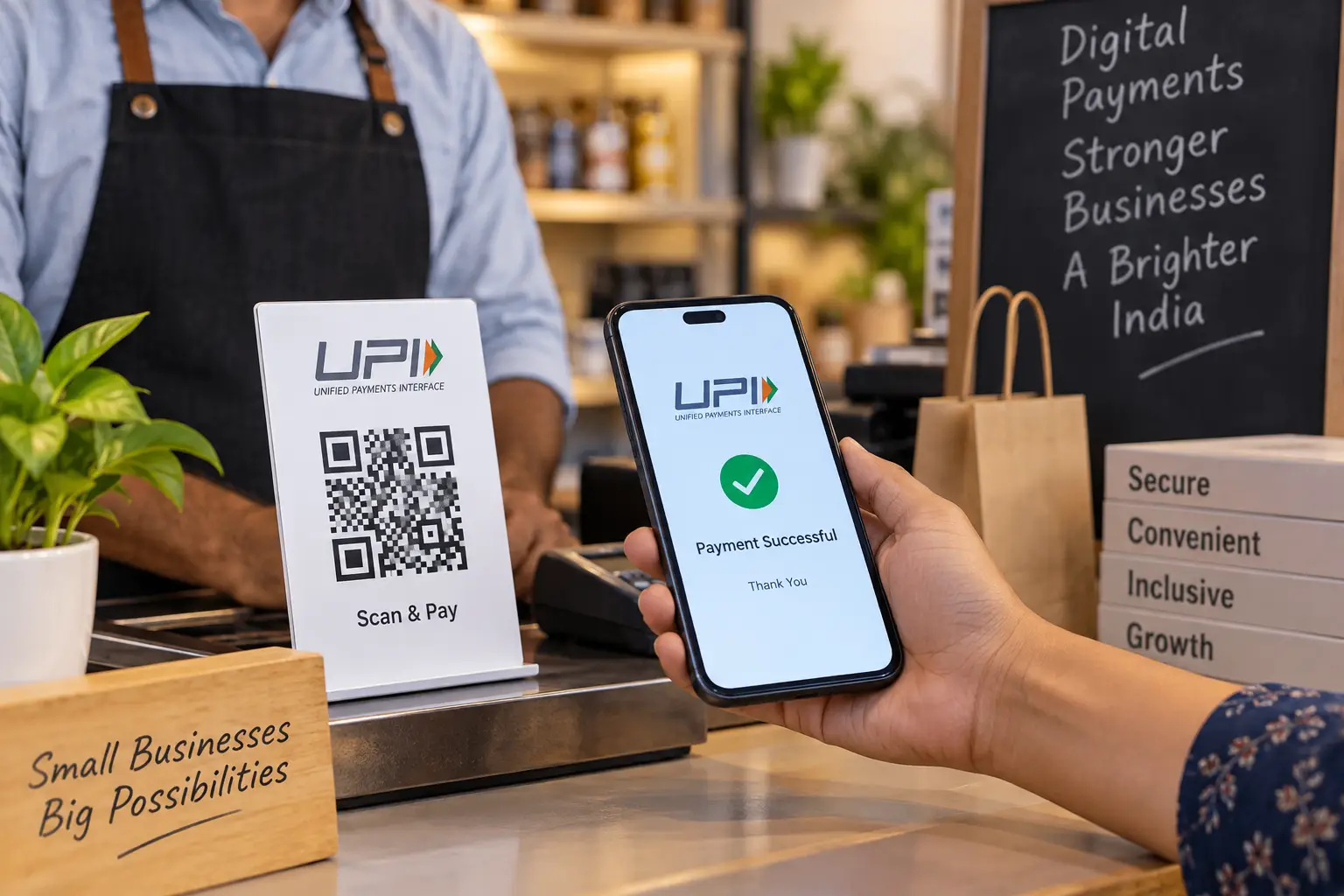
India will implement a new UPI MDR framework from October 15, 2026. The framework will impose a 0.4 percent charge on eligible merchant payments above Rs 2,000. Consumers will continue to use UPI without a transaction charge under the new system.
However, the new framework raises a wider question about the eventual cost of digital payments. Merchants will initially absorb the UPI MDR charge on eligible transactions. Businesses could later respond through pricing, lower discounts or reduced profit margins.
The final impact will depend on market competition and individual business decisions. The new framework starting October 15 sets the standard UPI MDR at 0.4 percent for eligible transactions.
The charge will apply when customers make payments above Rs 2,000 to eligible merchants. The standard MDR will also carry a maximum limit of Rs 300 per transaction. UPI payments up to Rs 2,000 will remain free under the framework. Person-to-person UPI transfers will also remain free, regardless of the transaction value. Small merchants will receive further protection under the new system.
Merchants receiving up to Rs 1 lakh each month will retain zero MDR on all transactions. For example, a Rs 3,000 eligible purchase will attract an MDR of Rs 12. The merchant will pay that amount to the acquiring bank. The payment ecosystem will then distribute the commission among participating entities.
MDR represents a payment-processing charge and does not function as a government tax. The framework also provides lower rates for certain categories of payments. Essential sectors such as telecom, insurance and fuel will face a flat MDR of Rs 5. Payments involving mutual funds and stockbrokers will attract a 0.02 percent MDR.
The maximum charge for these transactions will remain capped at Rs 300. The framework also creates a dedicated fund for supporting UPI adoption among small merchants. The fund will receive 5 percent of total MDR collections.
The announced framework estimates that only about 4 percent of merchant transactions will face the charge. However, transaction numbers do not reveal the total value of affected payments. High-value transactions could account for a larger share of the overall payment value.
The new UPI MDR system does not permit payment apps to impose platform fees. App providers also cannot add hidden charges to UPI transactions. Banks have also received directions to prevent merchants from directly passing MDR costs to customers.
Customers therefore should not see a separate UPI surcharge at checkout. The framework also does not impose monthly quotas on individuals’ free UPI transactions. Daily transaction limits will continue to apply according to existing rules.
The payment ecosystem requires continuous investment as UPI usage expands across India. Infrastructure, cybersecurity, fraud prevention and customer support require sustained spending.
The new UPI MDR framework seeks to create a revenue stream for the payment ecosystem. The model could help support future investment in digital payment infrastructure.
The government has also retained exemptions and concessions for smaller merchants and selected sectors. These measures aim to limit the impact on businesses that operate with smaller transaction values.
The policy has also triggered debate over the reasons behind the change. The Global Trade Research Initiative had earlier raised concerns about possible external pressure on India’s UPI policies.
The think tank referred to criticism of India’s UPI and RuPay framework in a US Trade Representative report. GTRI also acknowledged the need for sustainable funding for payment infrastructure. It suggested alternatives such as budgetary support and cross-subsidisation. It also proposed narrowly designed charges for large commercial transactions.
These arguments have fuelled questions about the policy’s wider background. However, they do not establish that the US directed India to introduce UPI MDR. The available evidence supports scrutiny of possible influence rather than a definitive conclusion.
The merchant will bear the immediate cost when an eligible transaction attracts UPI MDR. A Rs 12 charge on a Rs 3,000 sale provides a simple example. The merchant could absorb that amount within the existing profit margin. The business could also reduce discounts to offset the additional payment expense.
Some businesses could adjust prices across products to recover higher payment-processing costs. Such changes could affect customers even when the checkout screen shows no UPI fee. Customers using cash or other payment methods could also face higher prices in such cases.
However, businesses may not always recover the entire MDR cost from customers. Competition can limit a merchant’s ability to increase prices. Profit margins and customer demand will also influence pricing decisions.
The impact of UPI MDR will become clearer after the new system takes effect. The number of merchants paying the charge will provide one measure of its reach. The value of affected transactions will provide another important indicator. Changes in retail prices and discounts will also require close attention.
The government has addressed the question of who pays the charge directly. The bigger economic question concerns who ultimately absorbs the cost. After October 15, customers may continue making UPI payments without a visible surcharge.
The real impact could emerge through prices, discounts and merchant margins. The UPI MDR framework therefore changes the economics of selected merchant payments. Its broader impact will depend on how businesses, payment firms and customers respond.
About the Author
