

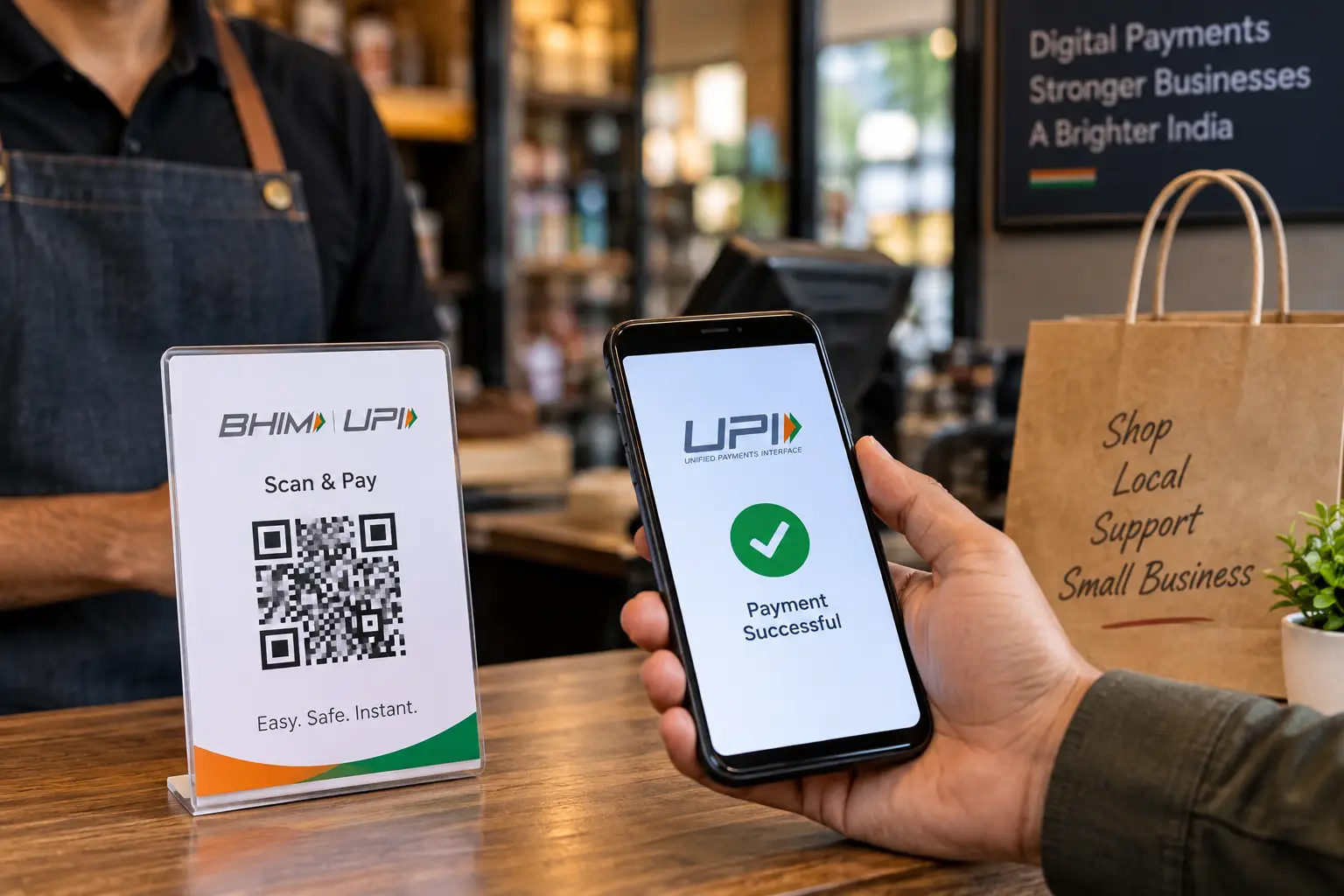
India’s new UPI MDR framework will take effect from October 15, 2026. The framework will impose a 0.4 percent MDR on specified merchant payments above Rs 2,000. Consumers will continue to use UPI without a direct transaction charge. However, the new framework raises a larger question about the cost of digital payments. Merchants will bear the charge on eligible transactions. Businesses could respond by absorbing the cost or adjusting discounts and prices. The actual impact will depend on competition, margins and customer demand.
Under the new framework, MDR will remain capped at Rs 300 per transaction. Payments up to Rs 2,000 will remain free for consumers and eligible merchants. Person-to-person UPI transfers will also remain free regardless of transaction value. Small merchants will receive additional protection under the framework. Merchants earning up to Rs 1 lakh a month through UPI will continue to receive zero MDR. The government says about 96 percent of P2M transactions will remain unaffected. For example, a Rs 3,000 eligible merchant payment will attract an MDR of Rs 12. The merchant will pay that amount through the payment ecosystem. The commission will support participating entities such as banks and payment service providers. The government has clarified that MDR is not a tax or a government charge.
The framework also provides lower rates for several specified categories. Essential services such as telecom, insurance and fuel will attract a flat MDR of Rs 5. Payments involving mutual funds and stockbrokers will attract an MDR of 0.02 percent. The charge for these transactions will remain capped at Rs 300. The framework will also create a fund to encourage UPI adoption among small merchants. Five percent of MDR collections will go towards that fund. The government has designed these measures to limit the impact on smaller businesses.
The new UPI MDR framework does not allow payment apps to impose platform fees. Apps also cannot add hidden charges to eligible UPI transactions. Banks have been advised to ensure that merchants do not pass the MDR directly to customers. Consumers therefore should not see a separate UPI surcharge at checkout. The framework does not introduce monthly quotas for individuals’ free UPI transactions. Daily transaction limits will continue to apply. The government has also stressed that the framework will not affect person-to-person payments.
The government says UPI requires continued investment as its network expands. Payment infrastructure requires spending on cybersecurity and fraud prevention. The system also requires investment in customer support and operational capacity. The new framework seeks to create a revenue stream within the payment ecosystem. The government has presented the move as a step towards the long-term sustainability of UPI. It also expects the framework to support wider participation among payment service providers.
The new framework has also triggered a debate over the policy’s background. In August, the Global Trade Research Initiative raised concerns about changing India’s UPI policy under US pressure. GTRI pointed to criticism of India’s UPI and RuPay framework in the US Trade Representative’s 2026 trade report. GTRI argued that sustainable funding does not necessarily require a broad merchant charge. It suggested targeted budgetary support and cross-subsidisation as alternatives. It also proposed charges focused on large commercial transactions and high-turnover merchants. However, GTRI’s concerns do not establish that the new framework resulted from US direction. The government has rejected claims that US pressure influenced the decision. The Finance Ministry has described the framework as a domestic policy aimed at strengthening the payment ecosystem.
A merchant will initially bear the cost of an eligible MDR transaction. Consider a Rs 3,000 purchase that attracts a Rs 12 MDR. The merchant could absorb that amount within the existing profit margin. The business could also reduce discounts to offset the additional expense. Some businesses could adjust prices across products to recover higher payment costs. Such a response could affect customers without creating a separate UPI fee. Customers using cash or other payment methods could also face those price changes. However, businesses cannot always recover the entire cost from customers. Competition can restrict their ability to raise prices. Customer demand and existing profit margins will also influence their decisions. The UPI MDR framework therefore creates a cost for merchants without directly charging consumers. Its indirect impact will depend on how businesses respond.
The actual impact will become clearer after the framework takes effect. Retail prices will provide one important indicator. Changes in discounts will provide another. Businesses may absorb the cost in some cases. Others may adjust their pricing or payment preferences. The government has already said it will prevent merchants from directly passing MDR charges to customers. Officials have also indicated that they will monitor whether merchants attempt to impose such charges. The larger issue concerns the economic burden created by the new system. The customer may continue to see a free UPI payment on the screen. The cost could still influence the final price of goods and services. That outcome will depend on the competitive position of individual businesses.
The October 15 change marks a shift in the economics of UPI merchant payments. Most UPI transactions will continue without MDR. Person-to-person transfers will remain free. Low-value merchant payments will also remain outside the charge. The new fee will instead focus on specified higher-value commercial transactions. The policy therefore creates a distinction between everyday digital payments and larger merchant transactions. Its success will depend on whether the payment ecosystem gains sustainable funding without weakening merchant adoption. The response from businesses and consumers will become clearer once the new framework takes effect.
About the Author
