

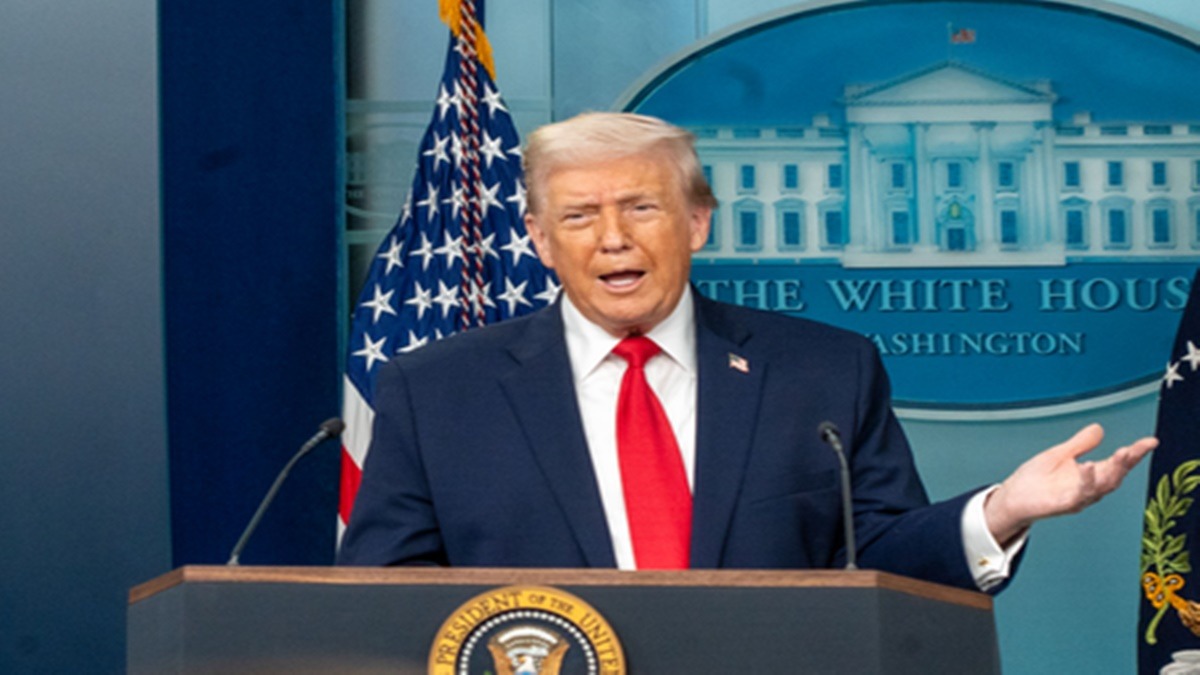
US President Donald Trump has stated that the United States and India are “pretty close” to finalising a landmark bilateral trade agreement. Speaking to reporters at the White House, President Trump highlighted that the pending accord represents a structurally distinct paradigm. Specifically, it departs from legacy trade pacts previously executed by Washington.
Meanwhile, legal teams from both nations are conducting line-by-line verification. This process translates agreed framework parameters into an enforceable treaty text. Similarly, US Secretary of State Marco Rubio reaffirmed this progress. He noted that both sides are down to technical details to ensure synchronized language interpretations across both capitals.
Moving Beyond Legacy Trade Pacts
Speaking at the Oval Office, President Trump emphasized that commercial talks had reached an advanced stage. “They want to make a deal. We’re going to make a deal. Pretty close, yeah,” Trump remarked in response to media queries. “It’s going to be a much different kind of deal than we’ve done in the past.”
                      US-INDIA BTA ARCHITECTURE

    +-----------------------------------------------------------+
    |           Initial Interim Framework Agreement             |
    +-----------------------------+-----------------------------+
                                  |
                                  v
    +-----------------------------------------------------------+
    |               Legal Drafting & Verification               |
    |    (Aligning Technical Definitions & Tariff Schedules)    |
    +-----------------------------+-----------------------------+
                                  |
            +---------------------+---------------------+
            |                                           |
            v                                           v
+-----------------------+                   +-----------------------+
|  Reciprocal Tariff    |                   | Digital Trade & Tech  |
|  Rationalisation      |                   | Collaboration         |
|  - Preferential Access|                   | - GPU & Data Infra    |
|  - Export Protections |                   | - Non-Tariff Barriers |
+-----------------------+                   +-----------------------+
Consequently, this structural departure reflects a calibrated diplomatic approach. Rather than attempting an overarching comprehensive pact that risks stalling, the bilateral deal focuses on targeted goals. For instance, it prioritises reciprocal tariff rationalisation, non-tariff barrier reductions, and strategic economic alignment.
Tariff Alignment and Competitive Advantage
Furthermore, a primary objective for Indian negotiators has been securing preferential market access. Led by the Ministry of Commerce and Industry, India aims to preserve export competitiveness in labor-intensive sectors. Thus, sectors like textiles, gems and jewellery, engineering goods, and pharmaceuticals gain vital protections against regional trade competitors.
+--------------------------------+-------------------------------------------------------+
| Strategic Pillar               | Operational Target & Policy Alignment                 |
+--------------------------------+-------------------------------------------------------+
| Reciprocal Tariff Structure    | Reciprocal tariff rationalisation across core goods  |
| Exporter Competitiveness       | Securing zero-duty/low-duty access relative to peers  |
| Digital Economy & Technology   | Expanding trade in GPUs, data center infrastructure    |
| Sectoral De-risking            | Excluding unresolved sensitive sectors for Phase-2    |
+--------------------------------+-------------------------------------------------------+
In return, the pact creates expanded market access for the United States across industrial products, advanced technological hardware, and select agricultural commodities. Additionally, it establishes strict rules of origin to ensure value addition remains within bilateral boundaries.
Technology and Economic Security Alignment
Besides traditional tariff lines, the upcoming agreement embeds economic security into its core. Specifically, the text sets out frameworks to streamline cross-border trade in technology hardware. This includes Graphics Processing Units (GPUs) and specialized equipment for AI data center infrastructure.
Moreover, both governments have committed to establishing clear pathways for digital trade. As a result, this will reduce burdensome regulatory hurdles and enhance supply chain resilience across critical technology sectors.
What Lies Ahead
However, while both capitals have signaled unprecedented momentum, officials in New Delhi stress caution. Final implementation remains subject to completing formal legal texts, signing procedures, and executive notifications.
Ultimately, by ring-fencing complex points of contention for subsequent rounds, the first phase seeks to deliver immediate predictability. Therefore, it will lower transaction costs and establish a long-term commercial anchor for the strategic partnership.
About the Author
