

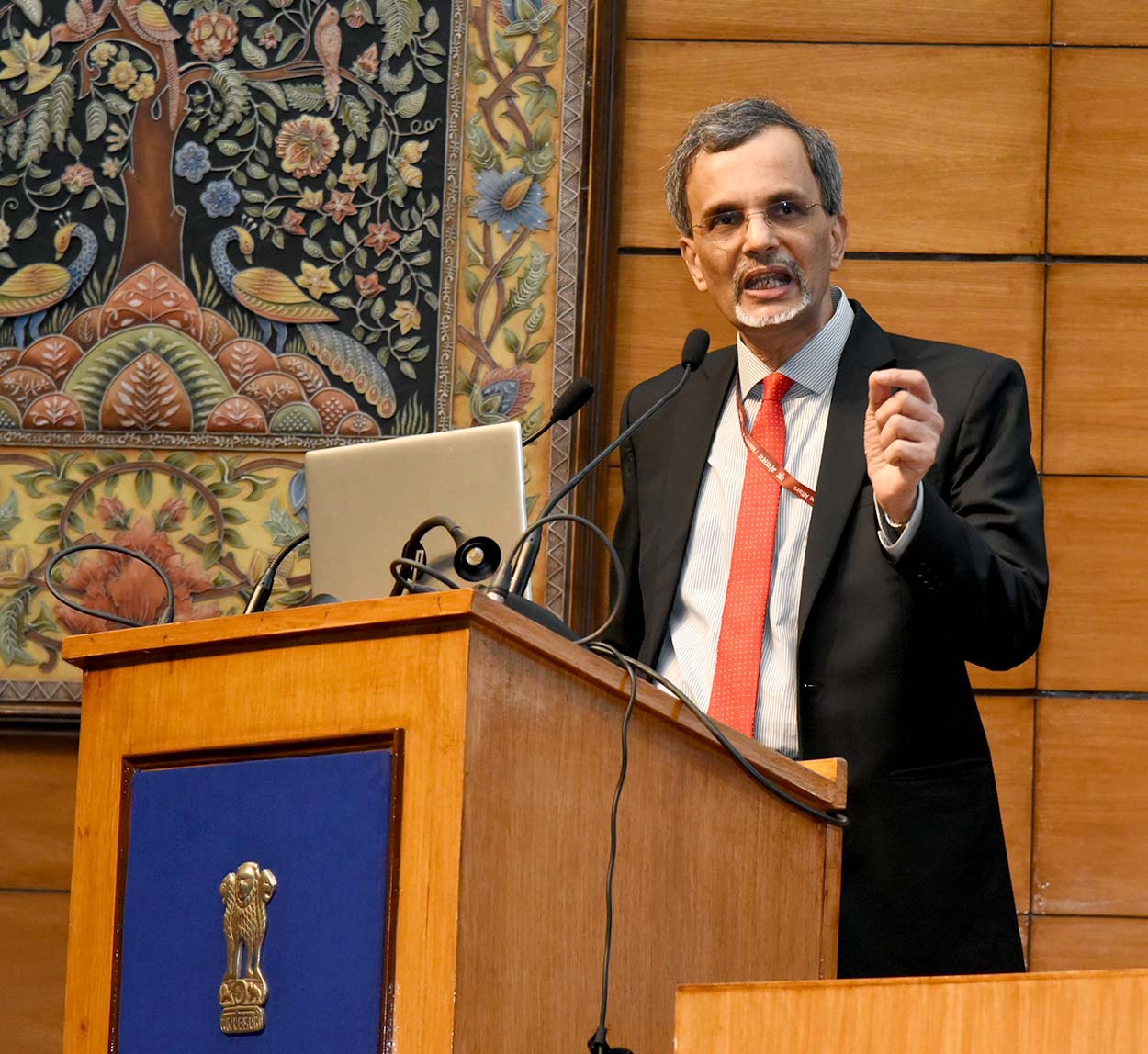
The Chief Economic Adviser, Government of India, Dr. V. Anantha Nageswaran addressing the Press Conference after tabling the Economic Survey 2023-24 in Parliament, New Delhi on July 22, 2024.
Addressing a policy forum on Thursday, 29 October 2026, Chief Economic Adviser (CEA) V Anantha Nageswaran remarked that 2026 resembles 1991 as a critical economic inflection point for India. While headline Gross Domestic Product (GDP) growth remains robust, Nageswaran warned that repetitive global supply-side shocks expose underlying structural vulnerabilities.
Specifically, the CEA highlighted that persistent exposure to imported crude oil prices, tariff-linked trade friction, and technology supply chain disruptions continue to test domestic resilience.
                  STRUCTURAL POLICY & MACROECONOMIC RISKS

    +-----------------------------------------------------------+
    |               Headline FY27 Growth Projections            |
    |                         (~7.0% - 7.1%)                    |
    +-----------------------------+-----------------------------+
                                  |
            +---------------------+---------------------+
            |                                           |
            v                                           v
+-----------------------+                   +-----------------------+
| External Vulnerabilities|                   | Domestic Structural   |
| - Imported Crude Shock|                   |   Gaps                |
| - Tariff & Trade Risks|                   | - Fragmented Care     |
| - FPI Market Outflows |                   |   Infrastructure      |
|                       |                   | - Sluggish Disinvest- |
|                       |                   |   ment Execution      |
+-----------------------+                   +-----------------------+
Imported Energy Vulnerability vs Fiscal Buffer Pressures
A key structural vulnerability remains India’s high dependence on imported energy. Despite short-term growth upgrades by international financial institutions, escalating West Asian geopolitical tensions have pushed Brent crude prices higher, creating direct fiscal pressure.
Industry estimates suggest the ongoing energy price shock could impose a potential burden of up to ₹1.35 lakh crore on fiscal calculations. Consequently, while the government maintains its public capital spending program, rising fuel subsidy obligations could constrain budgetary flexibility for social infrastructure.
+--------------------------------+-------------------------------------------------------+
| Vulnerability Vector           | Structural Impact & Policy Disconnect                 |
+--------------------------------+-------------------------------------------------------+
| Energy Imports                 | Crude volatility threatens trade deficit & inflation |
| Care Economy Framework         | Fragmented schemes leave urban & eldercare underserved|
| Public Asset Monetisation      | Execution lags in demand-based disinvestment sales    |
| Outward Direct Investment      | Outward FDI fell 14% YoY to $4.34 billion in Sept     |
+--------------------------------+-------------------------------------------------------+
The Care Economy Infrastructure Gap
Simultaneously, policy experts and UN representatives highlighted significant structural gaps in India’s “care economy” framework on Thursday. Although programs like the Anganwadi network and Mission Vatsalya exist, the lack of a unified national policy leaves millions of urban households without structured childcare and eldercare options.
Treating care expenditures strictly as social welfare rather than productive economic infrastructure limits female labor force participation. Thus, despite expanding manufacturing ambitions, failing to formalize care infrastructure restricts broader workforce integration.
Execution Lags in Disinvestment and Asset Monetisation
Meanwhile, progress on public sector enterprise (PSE) disinvestment and asset monetization continues to encounter execution delays seven months into FY27. Industry bodies have urged the government to establish a dedicated institutional body combining ministerial oversight with market experts to execute demand-based stake sales.
Ultimately, converting policy intent into commercial execution remains the central test for India’s economic management. Therefore, navigating the 2026 inflection point requires moving beyond headline GDP expansions to address energy security, institutional execution, and social safety nets.
About The Author
