

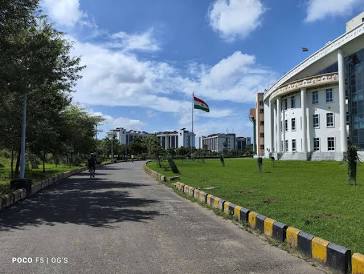
Two major artificial intelligence milestones unfolded on November 21, 2026 across eastern India: Prime Minister Narendra Modi virtually inaugurated a Centre of Excellence in Artificial Intelligence and laid the foundation stones for a Rs 400 crore research park and a 120-bed startup incubatee hostel at IIT Patna, while Google announced a $5 million commitment to IIT Kharagpur during its 75th-anniversary celebrations. Viewed together, these moves offer a useful lens on how state-backed physical infrastructure and corporate-academic funding are converging to broaden India’s technology footprint beyond established southern and western hubs.
Rather than treating these announcements as standalone headlines days later, policy and industry observers can read them as complementary experiments in capacity building. One emphasises brick-and-mortar research and prototyping infrastructure in Bihar, while the other focuses on applied research, curriculum, and tooling at a long-established institution in West Bengal.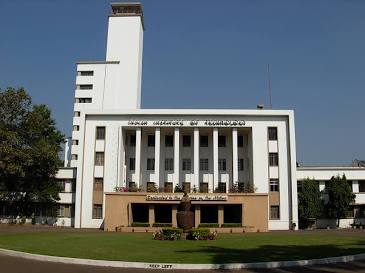
Structural Comparison of the Two Initiatives
Bridging the Lab-to-Market Gap Through Shared Infrastructure
A recurring bottleneck in Indian deep-tech and hardware innovation is the transition from academic proof of concept to commercial validation. The IIT Patna research park—backed jointly by state funds and the Higher Education Financing Agency—targets this gap directly by pairing prototyping, fabrication, testing, and certification facilities with residential support through a 120-bed incubatee hostel.
Operating the Rs 60 crore AI Centre of Excellence as a Section 8 non-profit entity with state, central, and industry participation creates a formal vehicle for applied collaboration. Its real-world value will depend on governance speed, equipment access for small enterprises, and sustained industry off-take once physical construction progresses.
Talent, Tooling, and Domain Relevance in Applied AI
At IIT Kharagpur, Google’s $5 million grant directs attention toward domain-specific applications—Indic languages, agriculture, materials science, and educational technology—where local context and dataset quality matter as much as model scale. Pairing research funding with training for students, teachers, and faculty as well as campus AI frameworks addresses a critical secondary need: ensuring technical fluency spreads across classrooms rather than remaining confined to specialist labs.
At the same time, targeted grants of this size work best when integrated into multi-year institutional roadmaps. Measurable outcomes—such as open datasets, faculty-led deployments, and student training milestones—will determine how effectively the funding compounds over time.
Regional Balance and What to Watch Next
Historically, India’s technology and venture ecosystems have clustered heavily in cities such as Bengaluru, Hyderabad, Mumbai, and the National Capital Region. Expanding research parks in states like Bihar while reinforcing established centres of excellence in eastern India can help retain regional talent and lower relocation friction for early-stage founders.
Going forward, observers will look past announcement figures to execution details: timelines for research park commissioning, governance of non-profit AI centres, and tangible research outputs from academic-corporate partnerships across the region.
About The Author
