

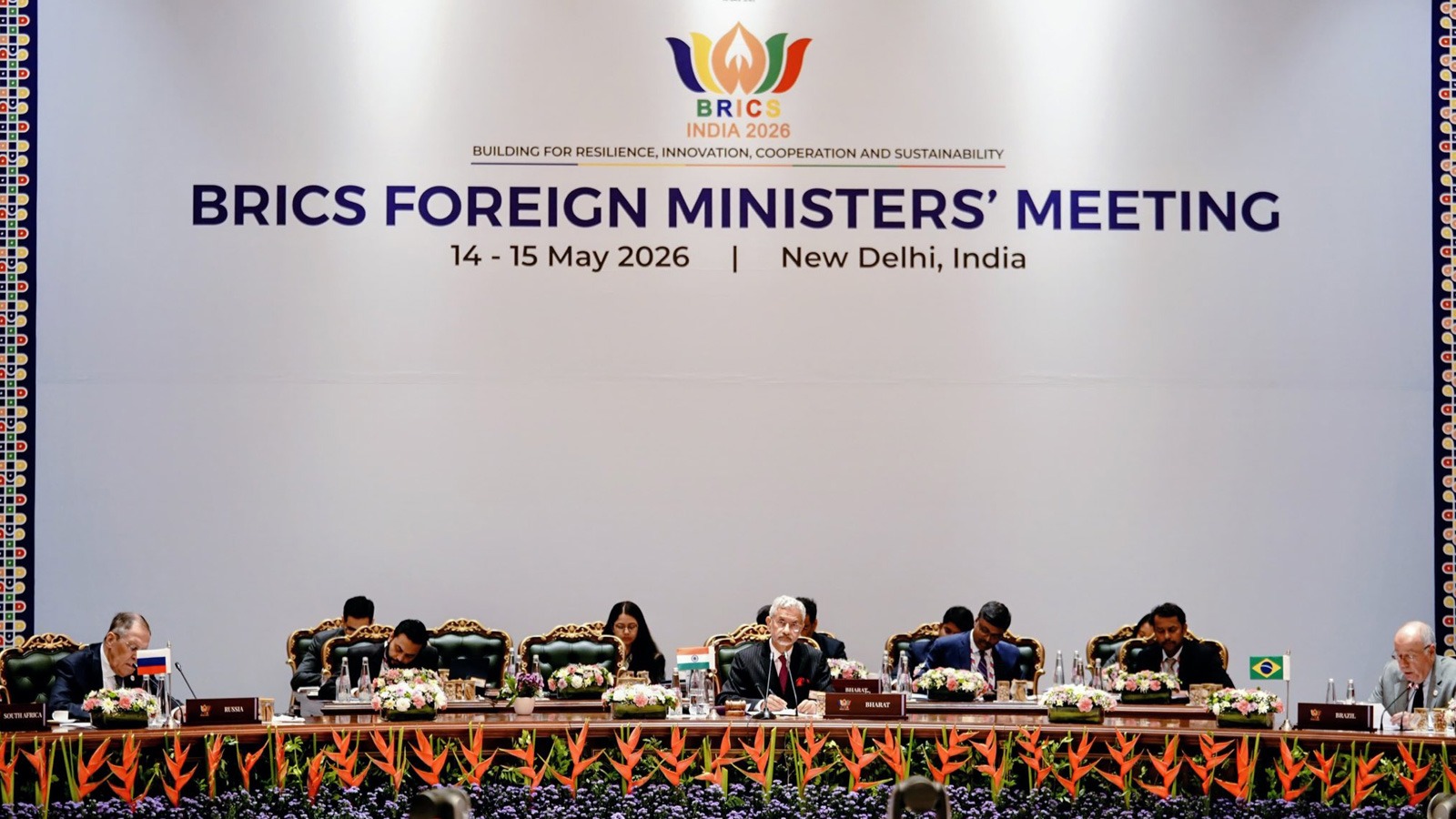
NEW DELHI. India today called for an urgent overhaul of international institutions during the BRICS Foreign Ministers’ Meeting in New Delhi. The two-day event concluded with a Chair’s Statement instead of a joint declaration due to differing views on West Asia. India stated that global governance reforms are no longer a matter of choice but a necessity. The current multilateral system fails to reflect present-day geopolitical realities and struggles with modern global challenges. India stressed that institutions created in an earlier era must evolve to remain effective. Strengthening global governance reforms remains central to ensuring that international decision-making structures are no longer outdated.
Demand for UNSC and Financial Institutional Reform
At the centre of India’s intervention was a renewed demand for reforms in the United Nations Security Council. India argued for greater representation for Asia, Africa, and Latin America through permanent and non-permanent seats. Beyond the UN, India urged for global governance reforms in financial and trade institutions to protect developing nations. Vulnerabilities such as fragile supply chains and energy insecurity highlight the need for stronger multilateral development banks. India advocated for a rules-based global trading system with the World Trade Organization at its core. These efforts aim to address the financing challenges faced by the Global South in the modern era.
Security Concerns and Counter-Terrorism Efforts
The ministers strongly condemned terrorism in all its forms and reiterated a policy of zero tolerance. The New Delhi meeting specifically condemned the terrorist attack in Jammu and Kashmir’s Pahalgam in April last year. India emphasised that global governance reforms must include more effective international cooperation against terror financing and safe havens. The ministers called for the early adoption of the Comprehensive Convention on International Terrorism under the UN framework. They also reaffirmed support for the BRICS Counter-Terrorism Working Group to strengthen regional security. The statement underlined the importance of maintaining unimpeded maritime commerce and protecting civilian infrastructure during global conflicts.
BRICS Foreign Ministers’ Meeting – New Delhi (2026)
| Parameter | Details / Key Outcomes |
| Location | New Delhi, India. |
| Primary Metric | Global governance reforms. |
| Outcome Document | Chair’s Statement (No Joint Declaration). |
| Key Official | Sudhakar Dalela (Secretary, MEA). |
| Expansion Demand | UNSC Permanent & Non-Permanent Seats. |
| Counter-Terrorism | Condemnation of Pahalgam Attack; Zero Tolerance. |
| Regional Conflict | Differing views on West Asia & Gaza Language. |
| Member Countries | 10 Nations including new members like UAE & Egypt. |
Diplomatic Consensus and Regional Differences
While differences over West Asia prevented a joint statement, members found common ground on most other issues. Secretary (Economic Relations) Sudhakar Dalela said the outcome document reflects consensus on climate change, health, and artificial intelligence. The Chair’s Statement reaffirmed support for the Palestinian people’s right to self-determination and an independent state. It noted that the Gaza Strip remains an inseparable part of the Occupied Palestinian Territory. However, the document acknowledged that one member country held reservations regarding certain Gaza-related language. India, which chairs BRICS in 2026, is currently preparing for the upcoming BRICS Summit to be held later this year.
About the Author
