

 Vipul V Tamhane
The Modi government turns an unruly political season into a performance of discipline, delivery, and direction.

The First Movement: Absorbing the Opposition’s Themes
The opposition’s central bet after 2024 was that caste would once again become the language of Indian politics and that the BJP, long accused of subsuming caste within a broader Hindu identity, would be caught flat-footed. Instead, the government accepted the caste census. Critics called it a concession; it was, in fact, a commitment to governing with better information.
A state that knows precisely who its citizens are, and where its benefits are and are not reaching, can design welfare that is fairer and more targeted. India’s digital public infrastructure, from Aadhaar to direct benefit transfer platforms, gives the government a capacity no previous administration possessed. Its ministers from reserved communities have been unambiguous that reservation is “inviolate”. Union Minister Ramdas Athawale went further, saying each caste “should get its share of reservation as per its population when the data of the ongoing Census enumerating caste is out.” The message to the country is that social justice and good data are allies, not enemies.
The same instinct shaped welfare. In West Bengal, the BJP campaigned on the Matrishakti Bharosa Card, promising ₹3,000 a month to women, and its workers went door to door carrying “guarantee cards” backed by the Prime Minister’s personal credibility. After winning the state, the new government did something that confounded its critics: it announced it would retain the Trinamool-era Lakshmir Bhandar scheme, protecting 2.42 crore women beneficiaries. This was not inconsistency. It was the mark of a governing party that understands continuity of support matters more to a household than the name on the scheme.
The Second Movement: Regional Sections, One Score
A national orchestra is made of regional sections, each with its own instruments. In Assam, Chief Minister Himanta Biswa Sarma has shown how delivery builds durable trust. The Orunodoi scheme puts ₹1,250 a month directly into the accounts of around 40 lakh women, and Mission Basundhara has digitised land records that families had struggled with for generations. The 2026 verdict in the Barak Valley reflected that record. After delimitation reduced the region’s seats from 15 to 13, the BJP won nine, with margins of over 99,000 votes in Lakhipur, more than 54,000 in Silchar, and 55,000 in Udharbond. Voters, local leaders said, had responded to “visible development and performance.”
In Tamil Nadu, the BJP has built a broad NDA alliance with the AIADMK, the PMK, and smaller partners, offering a “Lotus Promise 2026” manifesto including ₹2,000 a month for women heads of households, three free LPG cylinders a year, and a state top-up that would take annual support to farmers to ₹9,000. In Uttarakhand, where 23 seats in 2022 were decided by fewer than 5,000 votes, the party set itself the goal of inducting 3,000 workers from other parties into each constituency. In Uttar Pradesh, its Rajya Sabha nominations rewarded grassroots workers from the Pasi, Khatik, Kurmi, Pal, and Lodhi communities rather than recycling familiar faces, while introducing a rule that no leader serves more than two Upper House terms.
The common thread is organisational discipline. Each section plays a different part, but they follow one score.
The Third Movement: Defending the Institutions
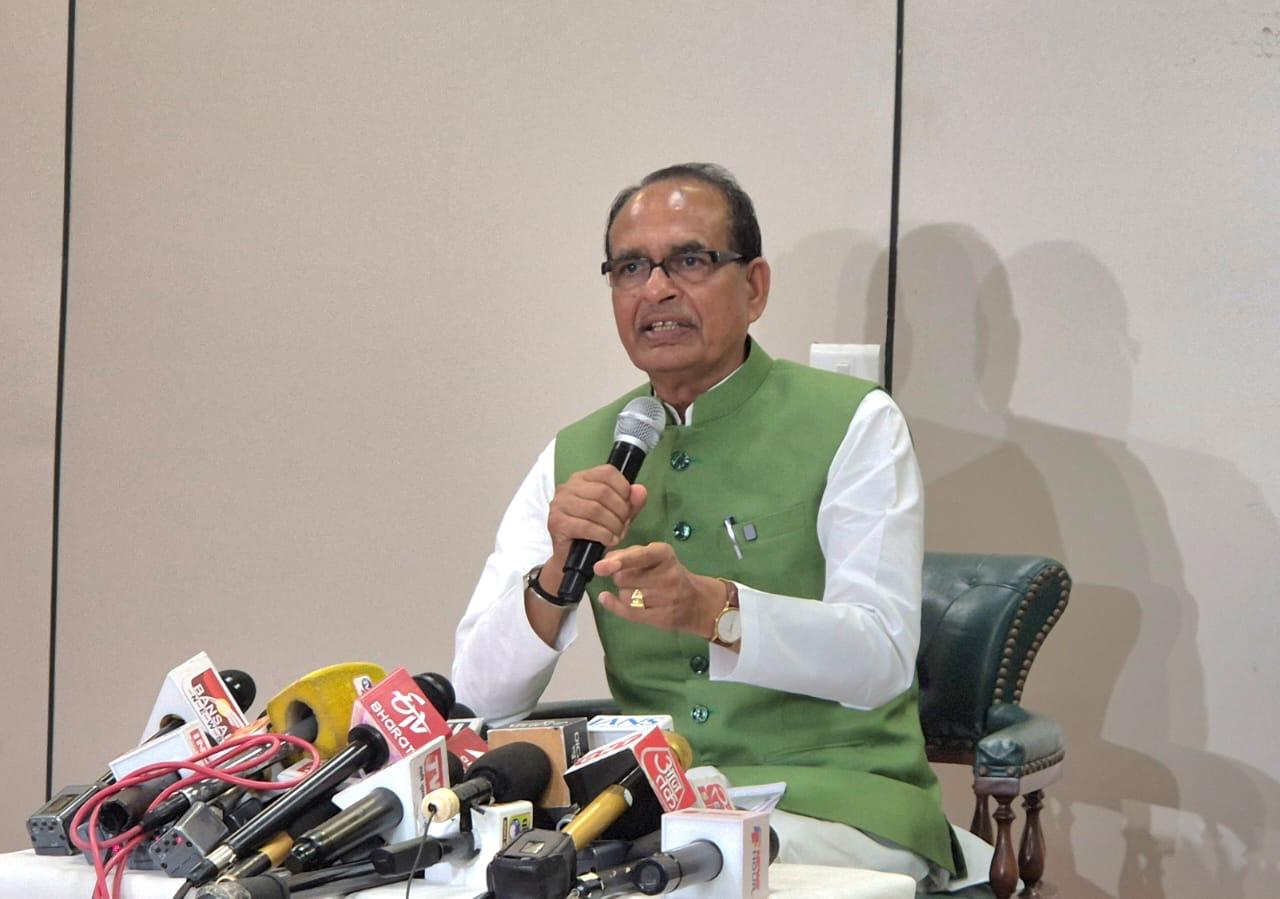
When the opposition took to the streets against the Election Commission’s Special Intensive Revision of electoral rolls, the government chose to defend the institution rather than retreat. Its argument was simple and difficult to answer. Congress leaders had themselves complained about bogus, dead, and duplicate voters; now they opposed the exercise that would remove them. Union Minister Shivraj Singh Chouhan asked the obvious questions: “Why should the names of deceased persons appear on the voter list? Why should the names of non-citizens be included? Why should a single name appear in two places?” The BJP’s rebuttals stressed that 13 crore names had been flagged for verification, not deleted, and that artificial intelligence was not being used to remove voters. Ravi Shankar Prasad put the principle plainly: “The country will be governed by Parliament, not by the streets.”
Critics argue that roll revisions of this scale must be handled with great care so that no eligible voter is excluded, and that concern deserves a serious answer. The answer is transparency, verification, and appeal—not abandoning the clean-up of rolls that every party has at some point demanded.
The Fourth Movement: From the Inside Outward
A government confident at home can be bold abroad, and the Modi government’s foreign policy has been the outward expression of its domestic stability. Its doctrine is strategic autonomy: working closely with the United States, Russia, France, Japan, and the Gulf without being captured by any of them. For ordinary Indians, that means more diversified sources of energy and defence equipment, greater access to technology and investment, and less vulnerability to pressure from a single capital.
The results are concrete. India’s 2023 G20 presidency secured permanent membership of the grouping for the African Union, giving the Global South a lasting voice. Initiatives such as the India-Middle East-Europe Economic Corridor, the deepening partnership with the UAE, and the Act East policy link diplomacy to trade, logistics, and jobs. And when Indians have been in danger, the state has come for them: Operation Ganga in Ukraine, Operation Ajay in Israel, and Operation Indravati in the Caribbean brought citizens home, while eight former Indian Navy personnel sentenced to death in Qatar returned safely in February 2024 after patient diplomacy.
Outside events flow inward too: an oil shock or a tariff war quickly becomes a question of household budgets. A government that absorbs such shocks is doing the most important work of all.
The Conductor and the Ensemble
No conductor plays every instrument. The achievement of the Modi government is that it has built an ensemble: a cabinet that delivers in its own domains, chief ministers who adapt the score to local conditions, and a party organisation that rewards work and keeps renewing itself. The opposition, by contrast, has struggled with the most basic requirement of any orchestra, which is to play together. Its alliances fracture over seat-sharing.
Chaos, in politics, is not a temporary condition; it is the permanent environment. The test of a government is not whether it can find silence, but whether it can make music in the noise. On the evidence of the past two years, the BJP under Narendra Modi has done exactly that, and India’s citizens have been the audience that benefits.
About the Author
