

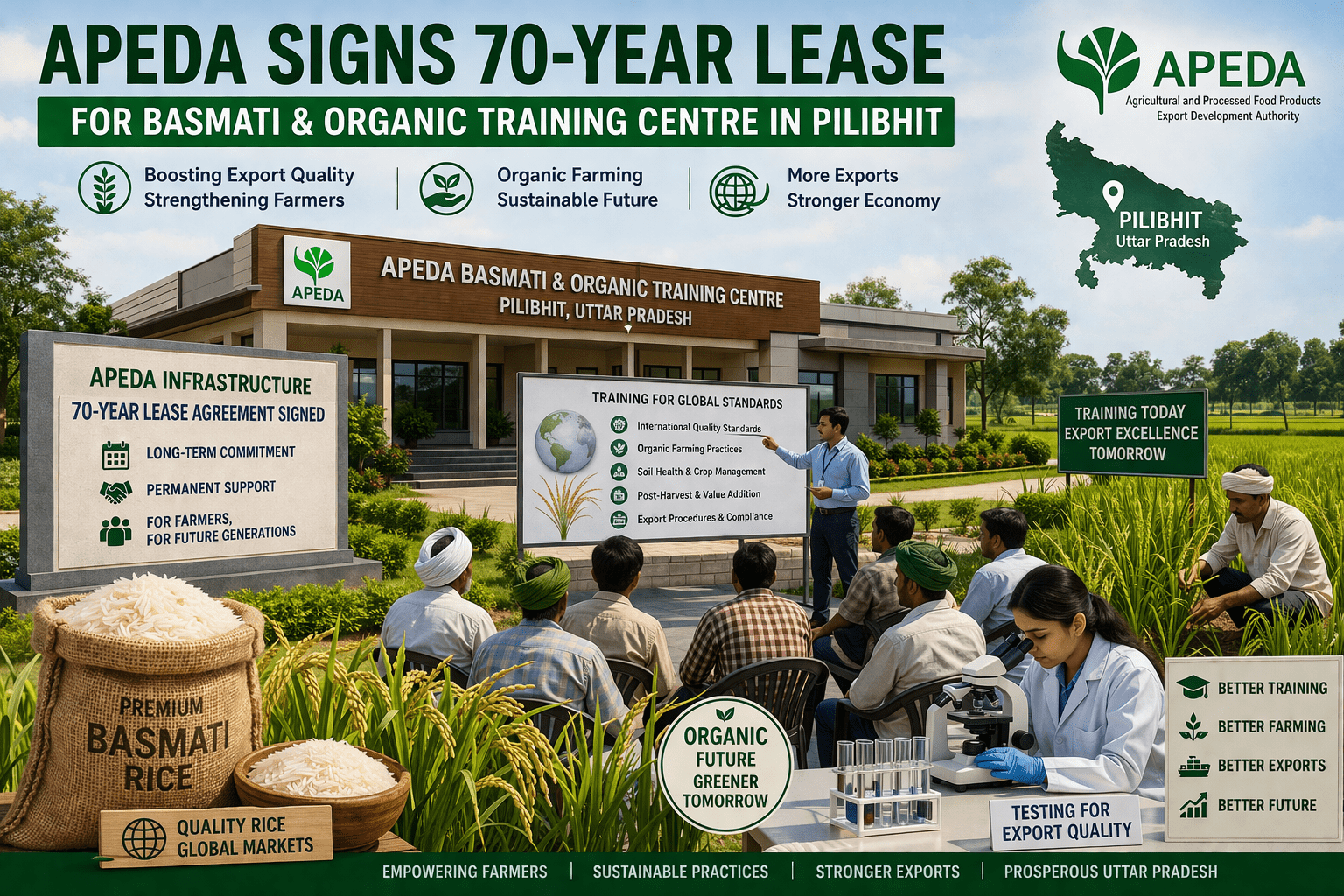
PILIBHIT. The Agricultural and Processed Food Products Export Development Authority (APEDA) has secured a long-term base for agricultural excellence in Uttar Pradesh. Officials confirmed today that a 70-year lease agreement has been signed for a Basmati and organic training centre in Pilibhit. This strategic move aims to enhance the APEDA infrastructure available to farmers in the Terai region. The facility will provide specialised training on international quality standards and sustainable cultivation practices. By securing this land, the authority ensures a permanent hub for research and extension services in a key rice-growing belt. Enhancing the APEDA infrastructure is a critical step toward doubling agricultural exports from the state. The long-term lease reflects the government’s commitment to providing stable support systems for the farming community.
Focus on Basmati Quality and Organic Standards
The Pilibhit centre will play a pivotal role in maintaining the global reputation of Indian Basmati rice. Experts at the facility will guide farmers on the judicious use of pesticides to meet stringent European and American safety norms. Strengthening the APEDA infrastructure through this centre allows for real-time monitoring of crop health and soil quality. Additionally, the centre will promote the adoption of organic farming techniques among local smallholders. This transition is essential for tapping into high-value niche markets that demand chemical-free produce. Training modules will cover the entire value chain, from seed selection to post-harvest management. The authority intends to turn Pilibhit into a model district for export-oriented organic cultivation.
Regional Impact and Export Growth
Pilibhit’s geographical location makes it an ideal site for a dedicated export-centric training hub. The new APEDA infrastructure will serve not only local farmers but also those from adjoining districts in the Terai region. Officials expect that improved access to technical knowledge will lead to a significant rise in the volume of export-quality paddy. APEDA plans to collaborate with state agricultural universities to bring the latest research findings directly to the field. This synergy will help farmers reduce production costs while increasing their overall profitability. Increased exports of Basmati and organic products will bring foreign exchange and boost the local rural economy. The centre will also facilitate the registration of more farmer-producer organisations for direct export activities.
Future Roadmap for Agricultural Excellence
The administration plans to equip the training centre with modern testing laboratories and digital classrooms. Future expansions of the APEDA infrastructure in Uttar Pradesh will likely focus on other high-potential crops like mangoes and seasonal vegetables. Regular workshops will be conducted to educate exporters about evolving trade regulations in destination countries. The 70-year lease provides the necessary timeframe to develop a world-class institution that survives generational shifts in farming. Authorities believe that such permanent structures build trust among farmers regarding the longevity of export schemes. Continuous skill development will ensure that Indian agricultural products remain competitive in an increasingly regulated global market. In summary, the Pilibhit lease agreement marks a milestone for the state’s agricultural export strategy.
Pilibhit Training Centre Details
| Parameter | Details / Status |
| Project Type | Basmati & Organic Training Centre. |
| Lease Duration | 70 Years. |
| Primary Metric | APEDA infrastructure. |
| Location | Pilibhit, Uttar Pradesh. |
| Key Objectives | Export Quality & Organic Transition. |
| Beneficiary | Terai Region Farmers & Exporters. |
About the Author
