

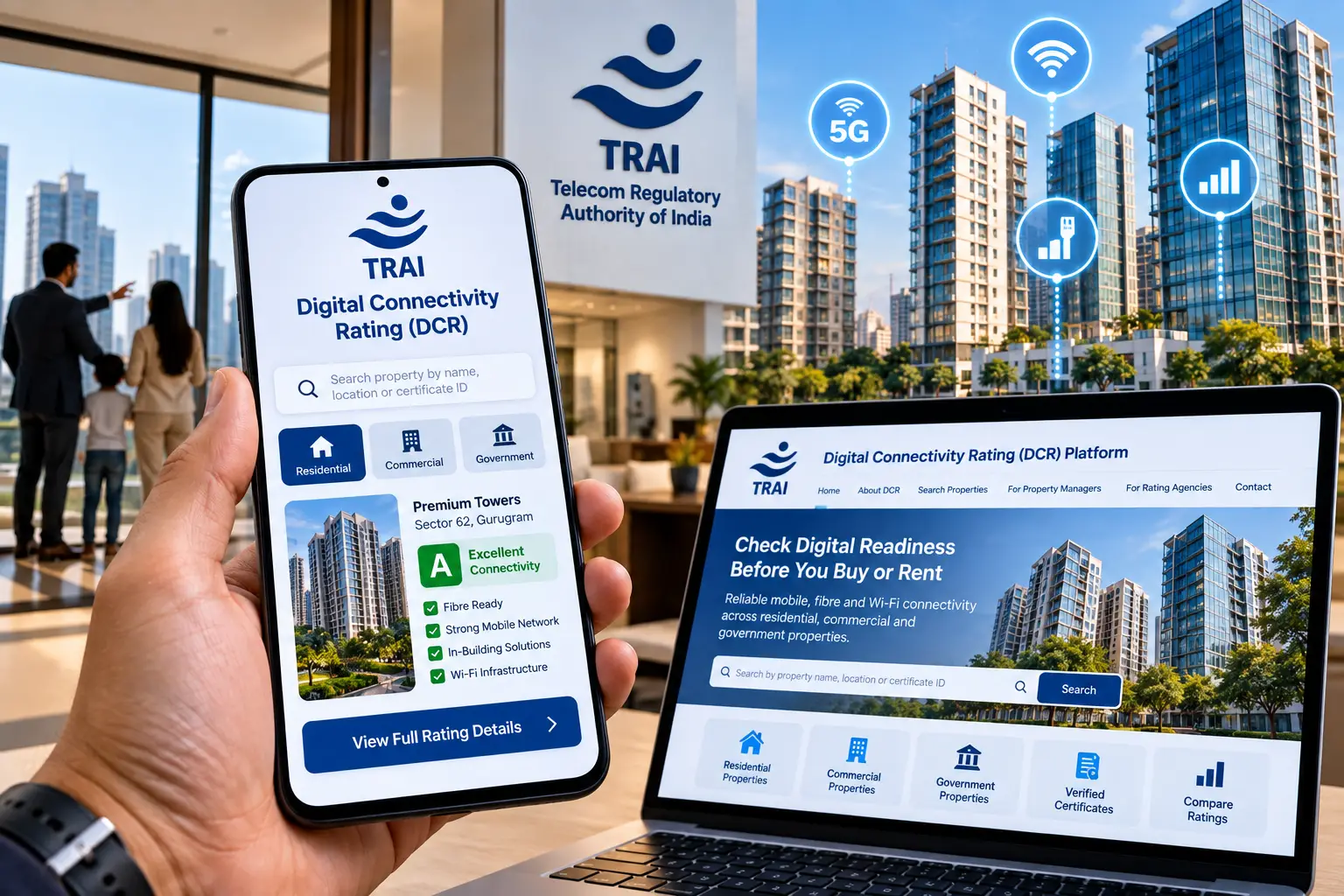
The Telecom Regulatory Authority of India (TRAI) has launched a Digital Connectivity Rating platform for properties across India. The platform will rate digital connectivity inside residential, commercial and government properties. TRAI also launched a dedicated mobile application for the rating system.
The initiative will help buyers and tenants check indoor connectivity before choosing a property. Users can compare ratings before buying, leasing or occupying a building. TRAI has created the platform under its framework for rating properties for digital connectivity. The framework seeks to create a common method for assessing connectivity across buildings.
The system brings property managers, rating agencies and consumers onto one digital interface. It also creates a standard process for assessing digital infrastructure inside properties. The assessment covers fibre readiness, mobile network availability and in-building connectivity solutions. It also examines Wi-Fi infrastructure and network performance within a property.
The rating methodology uses weighted scores for different connectivity parameters. It considers factors such as availability and signal strength across the property. The framework also considers multiple telecom service providers operating within a building. This allows consumers to compare connectivity options across different properties.
Users can search rated properties by name, location or certificate ID. They can also compare ratings before making a property decision. The platform supports digital verification of rating certificates through QR codes. This feature allows users to check the authenticity of certificates issued under the framework.
TRAI Chairman Anil Kumar Lahoti said the platform would provide credible and comparable connectivity information. He said public ratings could help consumers make better property choices. Lahoti said the ratings could help people choose homes and offices with stronger connectivity. He linked reliable connectivity with calls, downloads and access to online services.
The chairman also said the framework could influence property planning at an earlier stage. Developers can consider connectivity needs during architectural design and construction. Early planning could reduce the need for expensive connectivity upgrades after buildings become operational. The framework will initially operate on a voluntary basis.
Lahoti compared the expected adoption of connectivity ratings with green building certifications. Such certifications gained wider acceptance as market awareness increased. TRAI expects the connectivity rating system to follow a similar adoption path. Wider participation will depend on awareness among developers, property managers and consumers.
The framework addresses a problem that buyers can discover only after moving into a property. Poor indoor mobile coverage can affect daily communication and digital services. Lahoti noted that buyers sometimes spend between Rs 5 crore and Rs 10 crore on properties. They may discover weak or unavailable indoor mobile coverage only after moving in.
Public ratings could give buyers connectivity information before they commit large sums to a property. The system could also encourage developers to treat digital infrastructure as a planning requirement. Connectivity now plays an important role in residential and commercial property use. Reliable mobile networks support calls, online payments and access to digital services.
Fibre and Wi-Fi networks also support work, entertainment and other online activities. This makes indoor digital infrastructure relevant for both homes and workplaces. TRAI has also included safeguards against restrictions on telecom competition. The framework does not allow exclusive arrangements between developers and telecom service providers.
This provision seeks to prevent properties from restricting consumers to one telecom operator. Consumers can therefore retain access to different service providers. Registered rating agencies will conduct the certification process. TRAI will not directly control the commercial price of certification services.
However, registered rating agencies must publish their ceiling rates on the platform. The requirement aims to improve transparency around certification costs. Actual charges will depend on market competition and negotiations between property managers and rating agencies. This approach keeps certification pricing separate from the regulatory rating process.
The platform has already attracted participation from several stakeholders. As of now, 23 accredited Digital Connectivity Rating Agencies have registered on the platform. Eleven property managers and seven properties have also registered. TRAI has created a digital audit trail to improve accountability across the process.
The system will maintain records linked to ratings and certification activities. Occupants can raise objections if they find an assigned rating inaccurate or unsatisfactory. They can also seek a formal review of the rating. TRAI can suspend or penalise registrations that fail to meet prescribed standards.
The framework therefore covers both certification and subsequent review. It gives property stakeholders a process for addressing disputes over ratings. For developers, the system could make digital infrastructure a more visible part of project planning. For buyers and tenants, ratings could add another factor to property evaluation.
The initiative also reflects the growing importance of connectivity in property selection. Location and physical infrastructure remain important factors in property decisions. However, reliable digital networks now influence how people use homes and workplaces. The rating system seeks to make that aspect more visible before a property decision.
The success of the platform will depend on adoption across the property market. Consistent ratings across participating agencies will also remain important. If adoption expands, connectivity ratings could become another reference point for property evaluation. Buyers and tenants could then consider digital connectivity alongside location, price and physical infrastructure.
About the Author
