

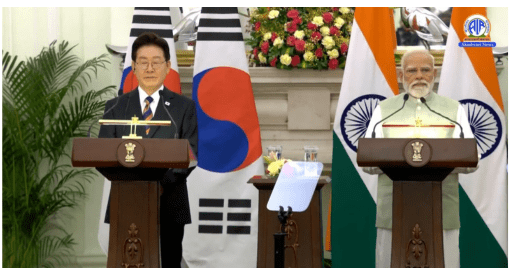
NEW DELHI. India and South Korea signed four significant Memoranda of Understanding (MoUs) across various strategic fields today. These agreements aim to elevate the existing India-South Korea relations to a more comprehensive level of cooperation. High-level delegations from both nations met in New Delhi to finalise the terms of these bilateral partnerships. The MoUs cover critical sectors including semiconductor manufacturing, green hydrogen, and advanced defence technology. Officials stated that these pacts will facilitate smoother technology transfers and increase mutual investments. Strengthening India-South Korea relations remains a vital part of India’s Act East policy in the Indo-Pacific region. Both governments expressed a strong commitment to building a resilient and sustainable economic future together.
Technology and Energy via India-South Korea Relations
The primary agreement focuses on establishing a robust semiconductor supply chain between the two massive economies. South Korean tech giants plan to invest in new fabrication units within Indian industrial corridors soon. This expansion of India-South Korea relations supports the national mission for self-reliance in electronic manufacturing. Another MoU details a joint venture for the development of green hydrogen infrastructure to meet climate goals. Both parties agree to share research on carbon capture and renewable energy storage solutions. These collaborations ensure that the industrial growth of both nations remains environmentally responsible. Scientific exchanges will also increase to foster innovation in artificial intelligence and space exploration.
Maritime Security and Defence Cooperation
The third MoU addresses the growing need for enhanced maritime security in the Indian Ocean and Pacific waters. Both navies will conduct more frequent joint exercises to protect international trade routes from emerging threats. This pillar of India-South Korea relations promotes a free, open, and inclusive maritime environment for all. Defence ministries also agreed to co-produce advanced naval vessels and surveillance systems under the “Make in India” initiative. Regular security dialogues will help coordinate responses to regional geopolitical challenges and humanitarian crises. This strategic alignment strengthens the overall stability of the Asian continent during uncertain times. Such partnerships reflect a shared vision for peace and prosperity across the maritime domain.
Future Trade Outlook and Cultural Exchange
The final agreement aims to streamline the existing Comprehensive Economic Partnership Agreement (CEPA) to boost bilateral trade volumes. Both nations seek to achieve a trade target of fifty billion dollars by the end of the decade. Future sessions will focus on cultural diplomacy and student exchange programmes to build stronger people-to-people ties. Leaders believe that the current India-South Korea relations provide a solid foundation for long-term regional integration. The administration continues to encourage South Korean startups to explore the vibrant Indian entrepreneurial ecosystem. Periodic reviews will ensure the effective implementation of all four MoUs signed during this summit. In summary, the new agreements mark a transformative chapter in the history of the two countries.
India-South Korea MoUs (April 2026)
| Parameter | Details / Status |
| Total MoUs Signed | Four. |
| Primary Metric | India-South Korea relations. |
| Key Sectors | Semiconductors, Green Energy, Defence, Trade. |
| Investment Goal | $50 Billion Bilateral Trade. |
| Strategic Context | Act East Policy / Indo-Pacific Security. |
| Venue | New Delhi, India. |
About the Author
