

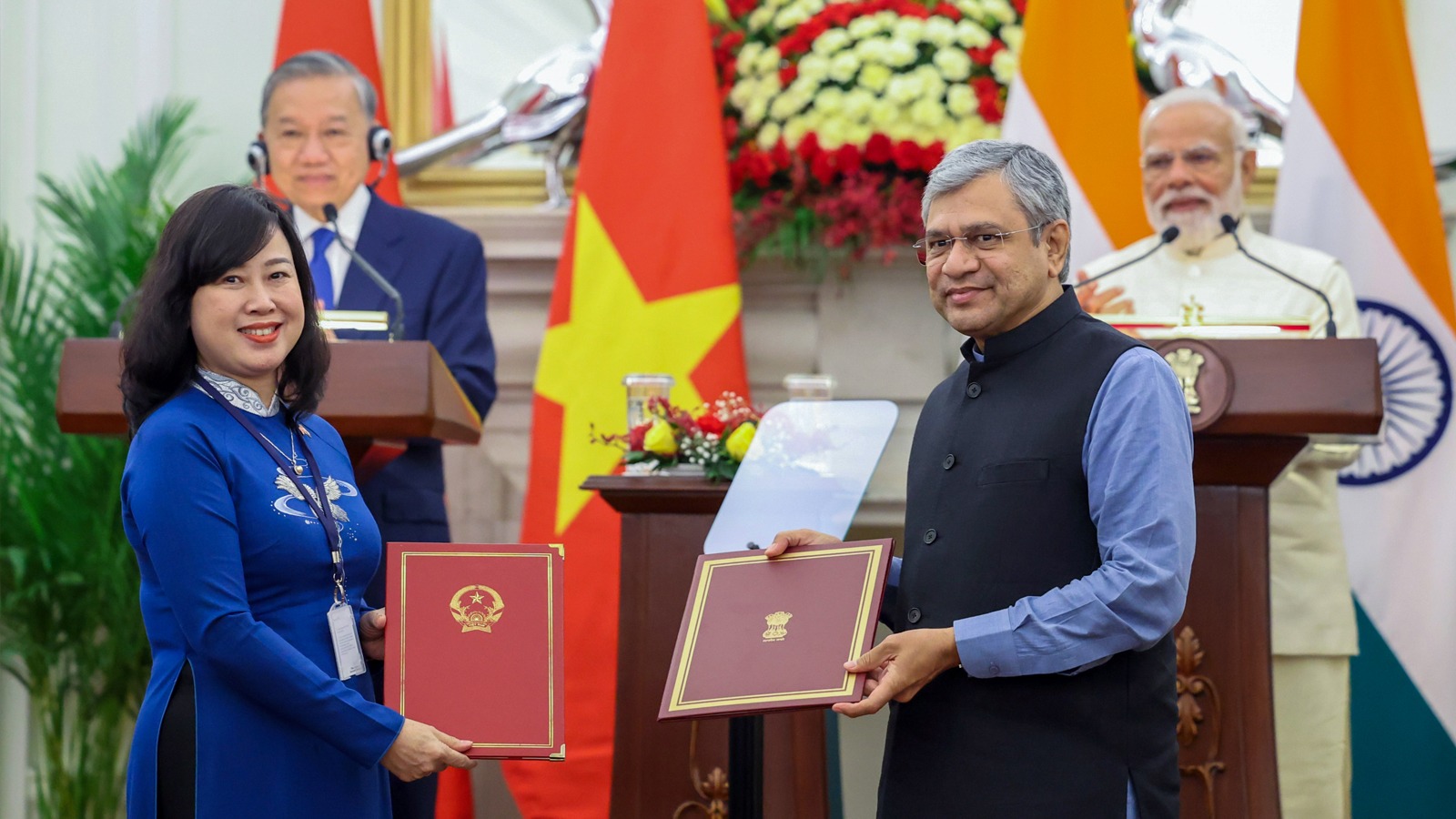
NEW DELHI. The diplomatic ties between New Delhi and Hanoi reached a significant milestone today during the official state visit of Vietnamese President To Lam. India-Vietnam relations were further solidified as the two nations signed 13 wide-ranging agreements following high-level talks. Prime Minister Narendra Modi and President To Lam led the delegation-level discussions at Hyderabad House. The agreements cover critical sectors including maritime security, digital infrastructure, and traditional medicine. Both leaders reaffirmed their commitment to a free and open Indo-Pacific region. Strengthening India-Vietnam relations is a core pillar of India’s “Act East Policy” and Vietnam’s engagement with the ASEAN bloc. The visit underscores the deep historical and cultural bonds shared by the two Asian nations.
Maritime Security and Defence Cooperation
A primary focus of the new agreements involves enhancing the security architecture in the South China Sea. Prime Minister Modi emphasised that robust India-Vietnam relations are essential for regional stability and maritime safety. The two countries signed a Memorandum of Understanding (MoU) to increase information sharing between their respective coast guards. India has also offered a new line of credit to Vietnam for the procurement of advanced naval hardware. This collaboration extends to joint training exercises and capacity building for Vietnam’s defence forces. Both leaders called for the peaceful resolution of maritime disputes based on international law. Enhancing India-Vietnam relations in the defence sector remains a strategic priority for both New Delhi and Hanoi.
Digital Innovation and Economic Integration
The bilateral talks also highlighted the vast potential for cooperation in the digital economy and emerging technologies. Agreements were signed to promote digital payments, cybersecurity, and the development of 5G infrastructure. Prime Minister Modi noted that India-Vietnam relations will benefit from India’s “Digital India” expertise and Vietnam’s growing tech sector. On the economic front, both sides discussed ways to diversify supply chains and increase bilateral trade volumes. Efforts are underway to simplify customs procedures and encourage joint ventures in manufacturing and green energy. The leaders expressed confidence that these initiatives will provide a significant boost to the regional economy. This economic integration is designed to make the partnership more resilient against global market fluctuations.
India-Vietnam Bilateral Highlights
| Parameter | Details / Status |
| Number of Agreements | 13 MoUs/Agreements. |
| Primary Metric | India-Vietnam relations. |
| Key Leaders | PM Narendra Modi & President To Lam. |
| Strategic Focus | Maritime Security, Defence, & Digital Trade. |
| Regional Vision | Free and Open Indo-Pacific. |
| Cultural Link | Traditional Medicine & Buddhist Heritage. |
Cultural Exchange and People-to-People Ties
The 13 agreements also include provisions for promoting tourism, heritage conservation, and educational exchanges. The two nations signed an MoU on cooperation in the field of traditional medicine, specifically focusing on Ayurveda and Vietnamese herbal practices. President To Lam invited Indian businesses to invest in Vietnam’s burgeoning infrastructure and hospitality sectors. Prime Minister Modi highlighted that India-Vietnam relations are deeply rooted in the shared heritage of Buddhism and ancient maritime trade. Special scholarships will be offered to Vietnamese students to pursue higher education and technical training in India. These people-to-people initiatives aim to build a lasting foundation for the next generation of leaders. The visit concluded with a joint vision statement outlining the roadmap for the partnership over the next decade.
About the Author
