

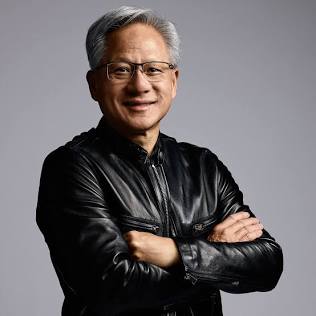
Nvidia reels from an unprecedented leadership upheaval with global financial markets grappling to absorb the shock. A profound dilemma echoes throughout Silicon Valley: Can the chip titan endure without its visionary architect?
Until his sudden resignation, Jensen Huang stood as the sole chief executive the corporation had ever known. Since co-founding the enterprise in 1993, he guided its evolution from a specialised graphics-processor vendor into the principal driver of the worldwide artificial intelligence boom, effectively personifying America’s technological supremacy over rival nations. Ironically, that immense concentration of executive authority has transformed into the organisation’s primary liability. Regulatory documentation previously submitted by the firm explicitly cautioned shareholders that an over-reliance on foundational leadership combined with deficient succession strategies could inflict catastrophic harm on operations.
Scandals, Misconduct Revelations, and Market Panic
Those theoretical warnings began materialising rapidly following a tumultuous week. The board initially stood behind Huang after he retracted an initial denial regarding an affair with Alice Huang, a Singapore-based Chinese tech executive whom U.S. intelligence agencies alleged was recruited as an intelligence operative—an assertion Beijing dismissed as groundless. However, the situation deteriorated further when The New York Times reported a second alleged affair with Kimberly Powell, Nvidia’s Vice-President of Healthcare, followed by Reuters disclosing a third relationship within the company. These revelations of workplace misconduct and alleged non-disclosure agreements triggered an immediate market panic.
Furthermore, an unambiguous successor was entirely absent. Huang historically maintained a flat organisational structure with roughly 60 direct reports and previously dismissed conventional executive grooming methods, leaving the board without an immediate replacement. Financial analysts immediately underscored the economic hazards of Huang’s abrupt exit. Select projections indicated potential valuation contractions of up to 30 per cent. Investors recalibrated away from a business model heavily tethered to his singular strategic foresight and industry connections.
Geopolitical Fallout and Strategic Gains for Beijing
As the dust settles, analysts are asking a critical geopolitical question: Who actually benefits from the downfall of Jensen Huang? Increasingly, experts point to Beijing. Controlling roughly 90 per cent of the global A.I. chip market, Nvidia’s sudden leadership vacuum risks slowing U.S. A.I. progress during a fierce technological race. Furthermore, intelligence officials note that Alice Huang’s former firm, Megaspeed, was a major customer currently under investigation for smuggling billions in restricted chips into China. Infiltrating the inner circle of a leader with direct access to the White House represents a major intelligence victory for Beijing. It marks a chilling shift where foreign operatives target corporate leaders holding the keys to critical global technology.
Silicon Valley Speculation and High-Profile Succession Buzz
Amid the chaos, external speculation has intensified. Hours before Huang’s departure, a viral exchange on X prompted billionaire Elon Musk to comment “That would be an honour” regarding hiring the ousted founder, fueling fierce Silicon Valley debate over whether Huang could eventually transition into Musk’s corporate orbit. Meanwhile, President Donald Trump suggested on Truth Social that Apple C.E.O. Tim Cook is uniquely suited to lead Nvidia, while U.S. lawmakers and the F.B.I. press for answers.
Sovereign Infrastructure and Global Stakes
Nevertheless, the implications transcend individual executive tenure or quarterly share performance. Nvidia manufactures the overwhelming majority of specialised semiconductors driving elite AI architectures globally. Its advanced silicon underpins worldwide cloud infrastructure, autonomous transit systems, and contemporary defence frameworks. Within the escalating technological contest between Washington and Beijing, the enterprise operates less like a conventional commercial entity and more like indispensable sovereign infrastructure. A prolonged administrative void or a permanent fracture in institutional credibility risks paralysing artificial intelligence advancement across Western alliances. It may severely destabilise supply networks for major technology conglomerates, affording Chinese competitors an unexpected strategic advantage.
Interim Leadership and the Road Ahead
In response to the crisis, the board appointed Chief Financial Officer Colette Kress as interim chief executive alongside incoming Board Chair Harvey C. Jones. An exhaustive executive search proceeds, with Huang pledging total collaboration. The upcoming quarters will clarify whether the organisation can orchestrate a seamless transition or whether the departure of a founding titan proves that certain industrial giants remain uniquely dependent on a single individual. Historically, the designation “too big to fail” was reserved strictly for systemic financial institutions; today, that label may apply to a semiconductor pioneer.
About The Author
