

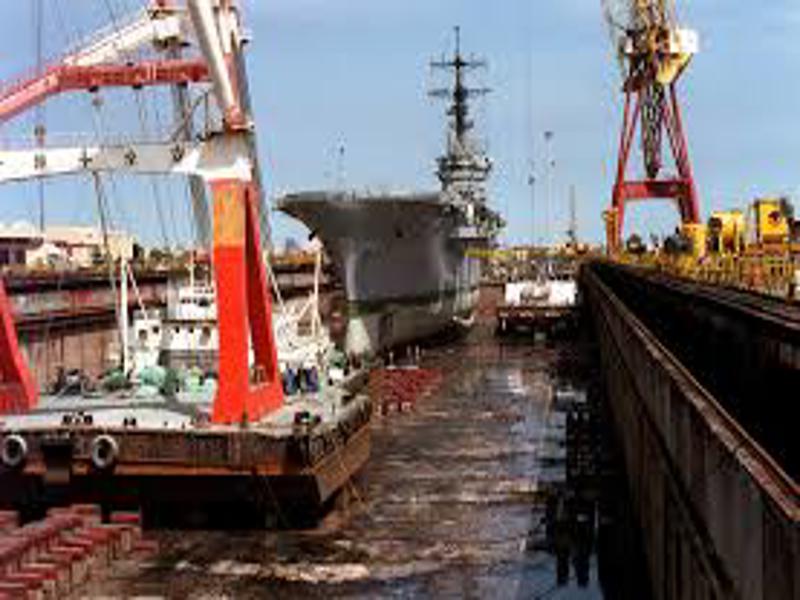
New Delhi: India has officially emerged as the world’s top ship recycling nation. It is a major milestone for the country’s maritime sector. According to the latest data released by the United Nations Conference on Trade and Development (UNCTAD), India captured the highest global market share in 2025. The nation beat its long-term policy targets half a decade ahead of schedule.
The official data reveals that India’s global share in the shipbreaking and recycling industry jumped significantly to 35.4 percent in 2025. Its share was 30.1 percent in 2024.
Charting the Surge: Volume and Vision
The operational turnaround is spectacular. It is driven by aggressive capacity expansion and processing efficiency.
-
The Tonnage Jump: Ship recycling volumes in India skyrocketed to 2.99 million gross tonnes (GT) in 2025, up nearly 60 percent from the 1.86 million GT handled in 2024.
-
MIV 2030 Target Smashed: With this surge, India has achieved the baseline goal set under the Maritime India Vision (MIV) 2030—to establish global leadership in the recycling sector. It achieved the goal five years ahead of its 2030 timeline.
Union Minister Speaks: Celebrating the breakthrough, Sarbananda Sonowal, Minister for Ports, Shipping & Waterways (MoPSW), stated: “India’s emergence as the world’s top ship recycling nation reflects the success of sustained policy reforms, industry efforts, and a strict adherence to international environmental and safety standards.”
The Strategic Reforms Behind the Success
India’s ascent to the global top spot is not accidental. It is the result of a highly coordinated strategy bridging regulatory policy, financial incentives, and strict environmental compliance:
1. The Hong Kong Convention Aligned Ecosystem
India enacted the landmark Recycling of Ships Act, 2019, strictly aligning domestic recycling yards with the safe and sustainable protocols of the Hong Kong International Convention (HKC). Backed by ₹53.5 crore in targeted government moderniasation funding, 115 Indian recycling facilities are now fully HKC-compliant.
2. The Ship-Breaking Credit Note Scheme
To incentivise international ship owners, MoPSW rolled out a unique dual-benefit credit system. Under this scheme, ship owners receive a credit note equivalent to 40% of the scrap value of their recycled vessel. This credit note can subsequently be used to offset up to 5% of the cost of building an entirely new vessel at an Indian shipyard. This simultaneously boosts both domestic recycling and domestic shipbuilding.
3. Expansion Plans at Alang Yard
The state government of Gujarat has formalised a master plan to nearly double national capacity to 9 million light displacement tons (LDT) by aggressively expanding infrastructure at the world-famous Alang Ship Recycling Yard.
Global Ship Recycling Leadership (2025)
| Metric / Indicator | FY 2024 | FY 2025 (Current) | Growth / Impact |
| Global Market Share | 30.1% | 35.4% | +5.3% (World Leader) |
| Recycling Tonnage | 1.86 Million GT | 2.99 Million GT | +60% Volume Surge |
| MIV 2030 Goal | On Track | Smashed Early | Achieved 5 Years Ahead of Schedule |
| Key Strategic Hub | Alang-Sosiya (GJ) | Alang-Sosiya (GJ) | 115 Yards Now HKC-Compliant |
Future Outlook: A Circular Economy Pioneer
The global outlook for the industry remains heavily in India’s favour. Estimates from the Baltic and International Maritime Council (BIMCO) project that the next decade will see more than 16,000 vessels decommissioned and recycled globally.
India holds more than a third of the global market share. It is structurally positioned to securely handle 500 to 600 large vessels annually. Moving forward, the government is actively engaging with international bodies to include Indian yards in the European Union’s approved list of recycling facilities. This step will solidify India’s reputation as a responsible global hub for sustainable maritime development and circular economic growth.
About the Author
