

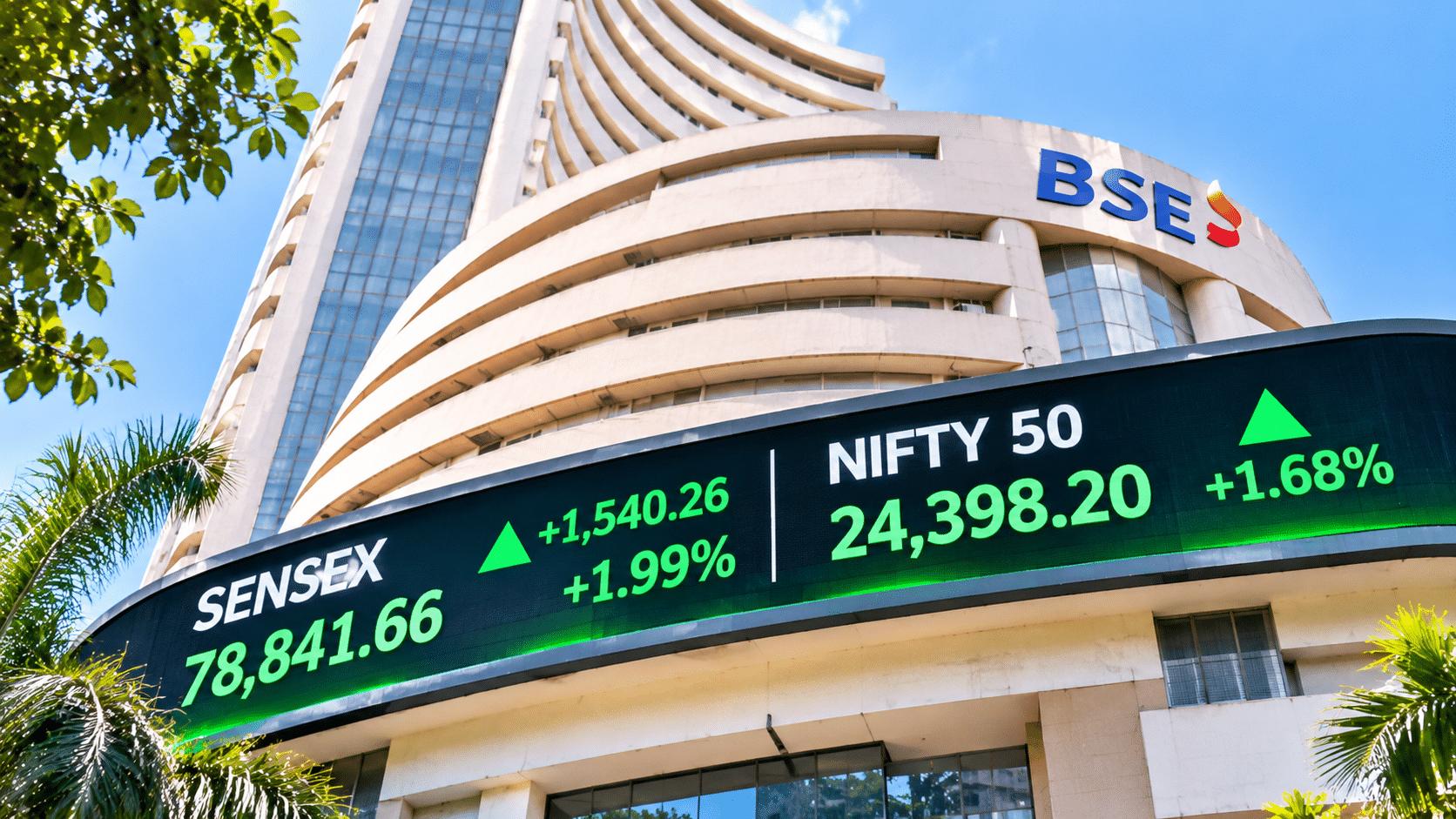
Indian benchmark equity indices extended a multi-day winning streak on Thursday, 5 November 2026, driven by sharp foreign capital inflows and favorable global cues. The BSE Sensex jumped 1,540.26 points, or approximately 1.99 per cent, to trade near 78,841.66 during active session trading.
The benchmark index touched an intraday high of 79,001.19, surging past its previous closing level of 77,301.40. Simultaneously, the broader NSE Nifty 50 advanced past key technical resistance bands between 24,350 and 24,400, reflecting broad-based buying across financial, auto, and realty sectors.
                 5 NOVEMBER 2026 DALAL STREET RALLY

    +-----------------------------------------------------------+
    |                 BSE Sensex Bullish Surge                  |
    |          (Gained 1,540.26 Points / Touched 79,001)        |
    +-----------------------------+-----------------------------+
                                  |
                                  v
    +-----------------------------------------------------------+
    |               Primary Market Catalysts                    |
    +-----------------------------+-----------------------------+
                                  |
            +---------------------+---------------------+
            |                                           |
            v                                           v
+-----------------------+                   +-----------------------+
| Crude Oil Pullback    |                   | Global & FII Inflows  |
| - Brent Crude Falls   |                   | - US Midterm Election |
|   Below $94-$95/Barrel|                     Clarity Eases Risk    |
| - Lower Import Bill   |                   | - Foreign Funds Return|
|   and Inflation Hopes |                     as Net Buyers         |
+-----------------------+                   +-----------------------+
Plunging Crude Oil Prices Provide Macroeconomic Relief
A primary driver behind Thursday’s market surge was a steep retreat in international energy prices. Brent crude oil futures dropped below the $94–$95 per barrel threshold, while WTI crude registered sharp declines.
Because India imports over 85 per cent of its crude requirements, falling oil prices significantly ease domestic inflation risks and current account deficit pressures. Consequently, energy-sensitive sectors—including airlines, paints, tire manufacturers, and oil marketing companies—experienced rapid buying interest.
+--------------------------------+-------------------------------------------------------+
| Market Performance Metric      | Session Value & Operational Trend                     |
+--------------------------------+-------------------------------------------------------+
| BSE Sensex Point Surge         | Advanced 1,540.26 Points (~1.99% Increase)            |
| BSE Sensex Intraday Peak       | Touched 79,001.19 (Vs Previous Close of 77,301.40)    |
| NSE Nifty 50 Level             | Reclaimed 24,350–24,400 Resistance Corridor           |
| Primary Commodity Trigger      | Brent Crude fell below $94–$95 per Barrel             |
| Key Sectoral Performers        | Private Banks, Auto, Realty, and Paint Manufacturers  |
+--------------------------------+-------------------------------------------------------+
US Midterm Election Outcomes and Overseas Fund Flows
Beyond commodity relief, improving global market sentiment provided strong tailwinds for domestic equities. Clear outcomes in the US midterm elections eased political uncertainty across international financial hubs, sparking rallies on Wall Street that spilled over into Asian markets.
Furthermore, foreign institutional investors (FIIs) returned as net buyers, reversing earlier capital outflow trends. Increased foreign buying, combined with steady domestic institutional mutual fund investments, added over ₹6.9 lakh crore to aggregate investor wealth during early session trading.
Valuation Realities and Strategic Market Outlook
While benchmark indices celebrate sharp top-line gains, market analysts advise maintaining a selective stock-picking strategy. Despite recent rallies, fundamental Nifty 50 price-to-earnings (P/E) valuations have moderated to attractive levels compared to peak historical cycles, offering strong entry points for long-term investors.
However, persistent high global interest rates and quarterly corporate margin compression mean broad-based market rallies face potential resistance. Therefore, long-term portfolio growth depends on selecting companies with strong baseline earnings resilience.
Ultimately, Thursday’s surge highlights strong market recovery powered by lower energy costs and foreign capital returning to Indian markets. Moving forward, maintaining economic momentum requires steady corporate profit expansion across non-energy manufacturing sectors.
About The Author
