

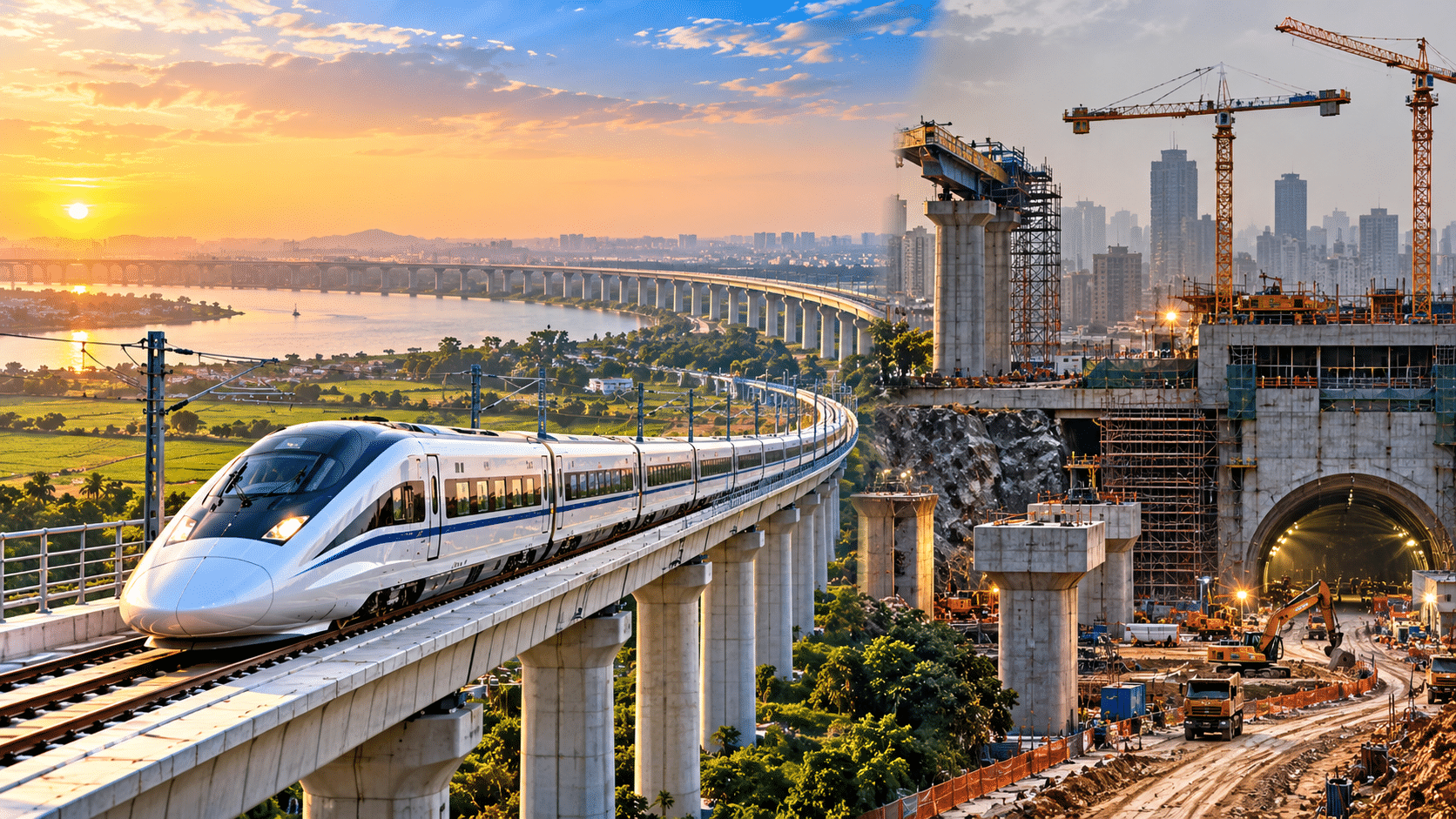
Civil construction milestone updates released in early November 2026 highlight a widening execution gap across India’s premier high-speed rail project. While terminal infrastructure and elevated viaduct segments across Gujarat approach structural completion, persistent administrative friction in neighboring Maharashtra continues to delay full corridor integration.
According to official progress tracking monitored by the National High-Speed Rail Corporation Limited (NHSRCL), civil contractors completed over 280 kilometres of elevated track alignment. However, unresolved land acquisition disputes around urban terminal nodes and delayed environmental clearances threaten the project’s revised 2028 operational timeline.
                 HIGH-SPEED RAIL REGIONAL EXECUTION GAP

    +-----------------------------------------------------------+
    |               Full Corridor Target: 508 km                |
    |          (Mumbai-Ahmedabad High-Speed Rail Line)          |
    +-----------------------------+-----------------------------+
                                  |
                                  v
    +-----------------------------------------------------------+
    |               Regional Execution Discrepancy              |
    +-----------------------------+-----------------------------+
                                  |
            +---------------------+---------------------+
            |                                           |
            v                                           v
+-----------------------+                   +-----------------------+
| Gujarat Segment       |                   | Maharashtra Segment   |
| - >90% Land Acquired  |                   | - Suburban Land       |
| - Viaduct Completed   |                     Litigation Delays     |
|   across 280+ km      |                   | - Terminal Station    |
|                       |                     Construction Lag      |
+-----------------------+                   +-----------------------+
Escalating Project Costs and Currency Depreciation Pressures
Initial capital expenditure for the 508-kilometre corridor was budgeted at ₹1.1 lakh crore ($13.2 billion). However, prolonged land acquisition delays, design modifications for underground tunnels, and foreign exchange fluctuations have pushed revised cost estimates past ₹1.6 lakh crore.
Because key technological components—including rolling stock, signaling systems, and specialized track slabs—depend on Japanese yen-denominated loans and imports, domestic currency depreciation significantly increases final debt servicing obligations. Consequently, public finance experts express concern over rising capital intensity relative to projected passenger fare yields.
+--------------------------------+-------------------------------------------------------+
| Project Metric / Vulnerability | Official Status & Benchmark Value                     |
+--------------------------------+-------------------------------------------------------+
| Total Corridor Length          | 508 Kilometres (Mumbai to Ahmedabad)                  |
| Original Approved Budget       | ~₹1.1 Lakh Crore                                      |
| Revised Estimated Expenditure  | Over ₹1.6 Lakh Crore (30%+ Cost Escalation)           |
| Primary Bottleneck Zone        | Maharashtra Suburban Land Litigation & Tunnel Clearance|
| Financial Currency Risk        | Yen Depreciation vs Rupee Increasing Capital Import Cost|
+--------------------------------+-------------------------------------------------------+
Freight Capacity Disconnect and Transportation Priorities
While mega-passenger corridors command significant capital allocations, legacy trunk routes operated by Indian Railways continue to experience severe freight congestion. Industrial transport bodies emphasize that delaying dedicated freight corridor extensions limits national logistics cost reductions.
Furthermore, ticket pricing structures must balance capital recovery against commuter affordability. If high-speed rail fares remain priced too close to domestic air travel, ridership volumes may fall short of financial breakeven thresholds.
Ultimately, executing complex linear infrastructure requires seamless inter-state coordination. Therefore, central planners must address administrative bottlenecks to prevent escalating capital costs from burdening public transport balance sheets.
About The Author
