

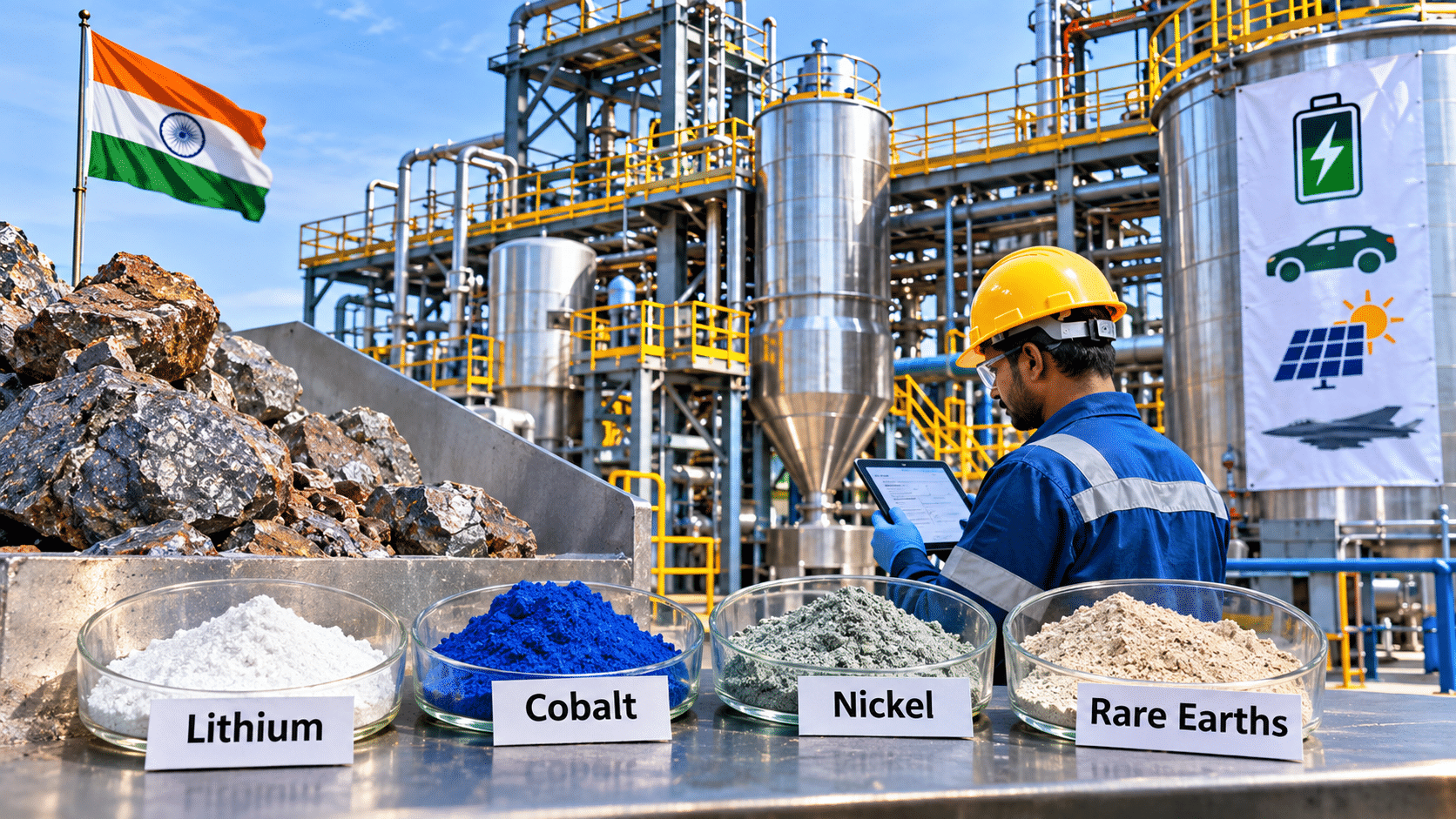
The Union Cabinet, chaired by Prime Minister Narendra Modi, approved Critical Mineral Processing Scheme 2026 worth ₹2,814 crore on Wednesday, 4 November 2026. The five-year initiative—running from FY27 through FY31—focuses on establishing domestic processing and refining facilities for critical minerals, including lithium, cobalt, nickel, and rare earth elements.
According to official Press Information Bureau (PIB) disclosures, the scheme offers targeted capital subsidies to private and public enterprises setting up commercial-scale processing plants. Consequently, the policy seeks to bridge a key structural gap: while India continues securing overseas mining blocks, local processing infrastructure remains virtually non-existent.
                 CRITICAL MINERAL POLICY 2026 EXECUTION FLOW

    +-----------------------------------------------------------+
    |               Union Cabinet Approval (4 Nov 2026)         |
    |          (₹2,814 Crore CapEx Support Scheme)              |
    +-----------------------------+-----------------------------+
                                  |
                                  v
    +-----------------------------------------------------------+
    |               Domestic Processing Hub Expansion           |
    +-----------------------------+-----------------------------+
                                  |
            +---------------------+---------------------+
            |                                           |
            v                                           v
+-----------------------+                   +-----------------------+
| Strategic Objectives  |                   | Structural Bottlenecks|
| - Capital Subsidies   |                   | - Technology Transfer |
|   for Refineries      |                     Lags in Rare Earths   |
| - EV & Solar Battery  |                   | - High Environmental  |
|   Supply Security     |                     Compliance Overhead   |
+-----------------------+                   +-----------------------+
De-risking Clean Energy and High-Tech Manufacturing
Presently, India imports over 90 per cent of its processed critical mineral requirements, leaving domestic electric vehicle (EV) battery makers, solar panel producers, and defense equipment vendors exposed to global supply chain shocks.
By subsidizing up to 25 per cent of baseline capital expenditure for advanced refining units, the government aims to catalyze private capital deployment in specialized metallurgy. Furthermore, the policy incentivizes extracting critical minerals from industrial slag and e-waste recycling streams, fostering circular economy practices across regional manufacturing corridors.
+--------------------------------+-------------------------------------------------------+
| Policy Metric / Parameter      | Official Details & Primary Source                     |
+--------------------------------+-------------------------------------------------------+
| Sanctioning Body               | Union Cabinet (PIB / Ministry of Mines Release)       |
| Total Scheme Outlay            | ₹2,814 Crore (FY 2026–27 to FY 2030–31)               |
| Targeted Elements              | Lithium, Cobalt, Nickel, Graphite & Rare Earths       |
| Primary Financial Mechanism    | Capital expenditure subsidies for refining facilities |
+--------------------------------+-------------------------------------------------------+
Technology Transfer Lags and Environmental Clearance Friction
While financial support provides immediate relief, industry experts emphasize that domestic firms face significant technological hurdles. Extracting high-purity battery-grade materials requires proprietary chemical technology currently dominated by overseas entities.
Additionally, critical mineral processing generates toxic chemical waste that demands strict environmental oversight. Without streamlined single-window environmental clearances, complex regulatory hurdles risk delaying project execution schedules.
Ultimately, Critical Mineral Processing Scheme 2026 marks an important step toward strategic material self-reliance. Therefore, ensuring rapid technology acquisition and transparent environmental enforcement remains critical to building resilient domestic supply chains.
About The Author
