

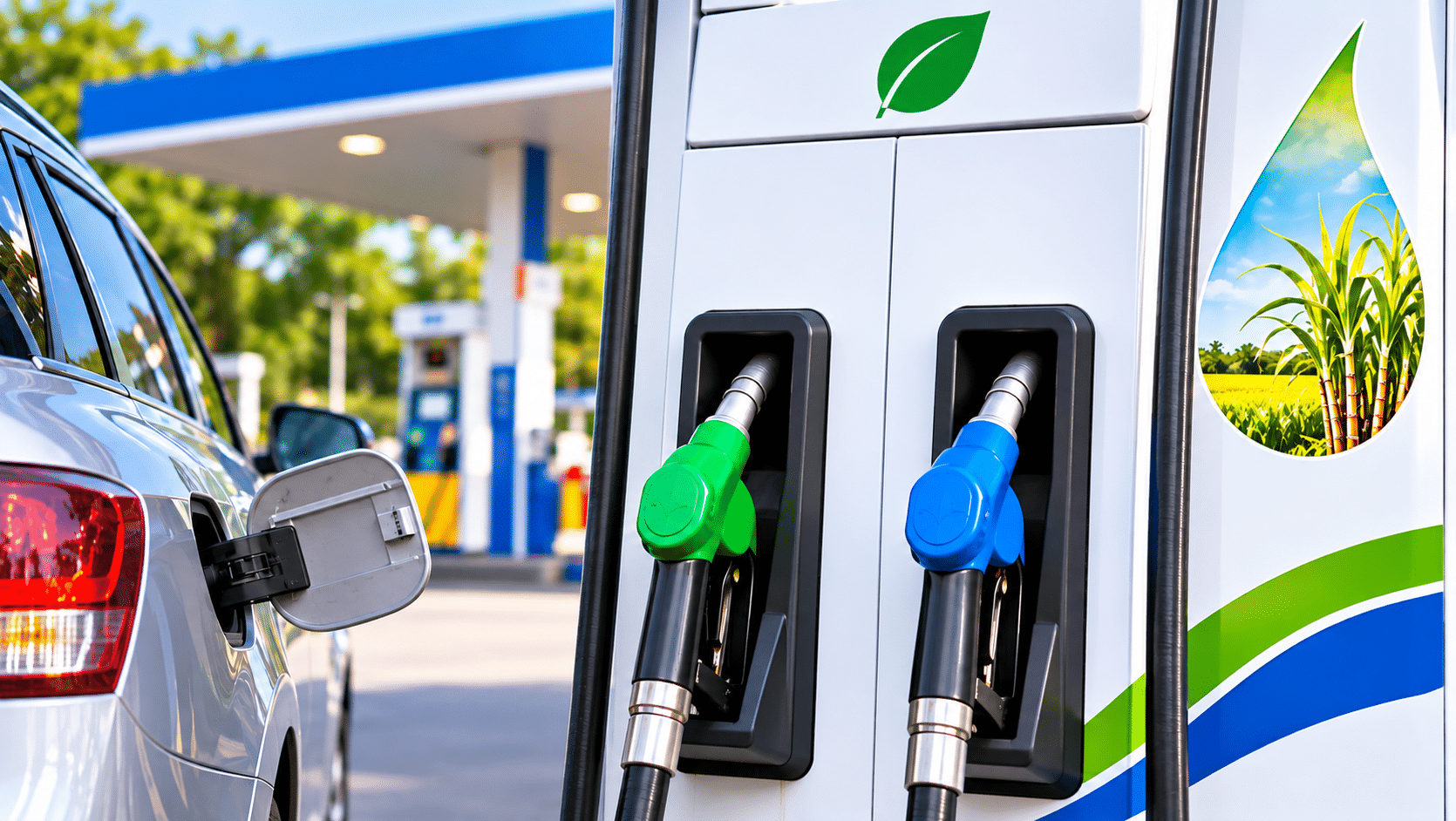
The nationwide expansion of E20 ethanol blending became the centre of intense political and economic debate on Saturday. Leader of the Opposition Rahul Gandhi launched a sharp critique of the Central Government’s biofuel policy, citing state laboratory tests in Karnataka alleging that fuel samples from major oil marketing companies contained ethanol levels exceeding the mandated 20 per cent cap.
The controversy over E20 ethanol blending highlights growing friction between ambitious green transition targets and consumer protection standards. While the government advocates biofuel integration to curb crude oil import dependence and lower carbon emissions, consumer groups and opposition leaders argue that non-compliant vehicle fleets suffer mileage penalties and engine wear without corresponding retail price adjustments or transparent fuel pump labeling.
                 E20 ETHANOL BLENDING POLICY MATRIX

    +-----------------------------------------------------------+
    |               Union Biofuel Mandate Target                |
    |          (20% Ethanol / 80% Gasoline Blend Ratio)         |
    +-----------------------------+-----------------------------+
                                  |
                                  v
    +-----------------------------------------------------------+
    |               Stakeholder & Economic Matrix               |
    +-----------------------------+-----------------------------+
                                  |
            +---------------------+---------------------+
            |                                           |
            v                                           v
+-----------------------+                   +-----------------------+
| Government Rationale  |                   | Opposition Concerns   |
| - Foreign Exchange    |                   | - 5-7% Mileage Drop   |
|   Savings on Crude    |                     in Older Car Engines  |
| - Lower Carbon        |                   | - Demand for Tiered   |
|   Emissions Footprint |                     Pricing & E10 Option  |
+-----------------------+                   +-----------------------+
Fuel Efficiency Discrepancies and Automotive Hardware Realities
Automotive engineering audits confirm that ethanol possesses a lower energy density than pure gasoline, resulting in a 5 to 7 per cent decrease in volumetric fuel economy for standard engines. Furthermore, vehicles manufactured prior to the implementation of BS6 Phase II material standards face potential rubber gasket degradation and fuel system corrosion when using higher ethanol blends over extended periods.
In response to consumer complaints, government officials maintained that E20 ethanol blending meets strict Bureau of Indian Standards (BIS) specifications. Additionally, the Ministry of Petroleum noted that biofuel integration has saved over ₹1 lakh crore in foreign exchange since its inception while supporting domestic sugarcane farmers.
+--------------------------------+-------------------------------------------------------+
| Policy Metric / Parameter      | Disclosed Benchmark & Operational Feature             |
+--------------------------------+-------------------------------------------------------+
| Target Focus Keyphrase         | E20 ethanol blending                                  |
| Standard Blend Ratio           | 20% Ethanol mixed with 80% Gasoline (E20)             |
| Estimated Efficiency Impact    | 5% to 7% drop in fuel economy for standard engines    |
| Primary Economic Benefit       | Reduced crude imports & foreign exchange savings      |
+--------------------------------+-------------------------------------------------------+
Consumer Options and Dual-Dispensing Infrastructure Demands
Economic analysts emphasize that successfully implementing green transition policies requires maintaining transparent consumer choices. Demands are mounting for fuel retailers to provide dual-dispensing options—offering standard E10 fuel alongside E20—allowing owners of legacy vehicles to select compatible fuel types without risking engine wear.
Additionally, refining companies are urged to accelerate research into fuel additives that mitigate moisture absorption and protect engine components. Ensuring product transparency builds public trust in national renewable energy initiatives.
Ultimately, Saturday’s political exchange highlights the need for consumer-centric alignment in energy policy. Therefore, balancing environmental targets with automotive protection remains crucial as India advances its green fuel roadmap.
About The Author
