

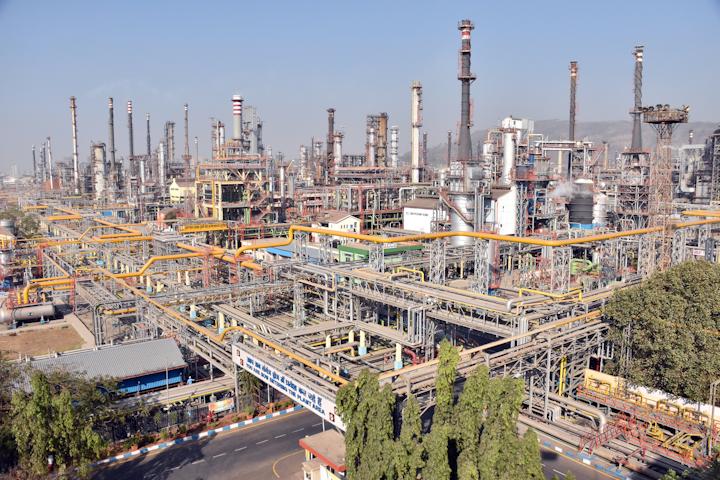
New Delhi: India’s chemicals and petrochemicals sector has recorded massive growth over the past 12 years.
According to the Ministry of Chemicals and Fertilizers, policy reforms, targeted infrastructure creation, and aggressive investment promotion drove this nationwide expansion. Consequently, these initiatives continue to support domestic manufacturing, generate employment, and advance the vision of Viksit Bharat @2047.
 [Dahej (Gujarat)] ────────┐
 [Visakhapatnam (AP)] ─────┼──▶ 3 Operational PCPIRs ──▶ ₹3.4 Lakh Crore Invested
 [Paradeep (Odisha)] ──────┘
PCPIRs and BHAVYA Rasayan Scheme Drive Manufacturing
Crucially, Petroleum, Chemicals and Petrochemicals Investment Regions (PCPIRs) serve as the primary engine for this sectoral growth.
Operational hubs in Dahej, Visakhapatnam-Kakinada, and Paradeep have attracted ₹3.4 lakh crore in capital. Furthermore, these integrated industrial regions host over 2,200 manufacturing units and employ nearly 3.7 lakh people.
                  [SECTORAL INFRASTRUCTURE EXPANSION]
   ┌────────────────────────────────┼────────────────────────────────┐
   ▼                                ▼                                ▼
[BHAVYA Rasayan Scheme]       [Plastic Parks Program]        [FDI Inflow Surge]
₹3,030 Cr Cabinet Outlay       10 Approved / 4 Completed      ₹1,04,895 Cr (2014-2026)
To build upon this momentum, the Union Cabinet approved the BHAVYA Rasayan Scheme with an outlay exceeding ₹3,030 crore. The initiative creates three plug-and-play chemical parks to foster a circular economy. Concurrently, foreign direct investment (FDI) inflows reached ₹1,04,895 crore between 2014 and 2026, more than doubling the volume recorded in the previous decade.
Key Sectoral Infrastructure and R&D Milestones:
Foreign Direct Investment: Attracted ₹1,04,895 crore under 100 per cent automatic routes.
CIPET Network Footprint: Expanded to 51 specialized centres, training over 6.72 lakh professionals.
Quality Standards Enforcement: Issued 37 Quality Control Orders (QCOs) to restrict substandard imports.
Hazardous Unit Safety: Training personnel across 2,393 Major Accident Hazardous (MAH) Units.
R&D, Skilling, and Farmer Outreach Networks
Significantly, research and technical support networks expanded rapidly alongside manufacturing hubs.
[18 Centres of Excellence] ──▶ 85 Patents Filed ──▶ 105 New Products & Technologies Developed
The Central Institute of Petrochemicals Engineering and Technology (CIPET) broadened its footprint to 51 national centres. Furthermore, the Institute of Pesticide Formulation Technology (IPFT) developed 64 pesticide formulations, securing an “A” rating in the 59th OPCW Proficiency Test.
Ultimately, combined investments in plug-and-play infrastructure, technical skilling, and quality controls position the country as a competitive global chemical manufacturing hub.
Chemical Sector Growth Indicators
| Performance Indicator / Metric | Achieved Progress (2014–2026) | Primary Policy Driver | National Economic Impact |
| PCPIR Capital Investments | ₹3.4 Lakh Crore | Integrated hub development at Dahej, Vizag, Paradeep. | Generated ~3.7 lakh direct/indirect jobs. |
| Foreign Direct Investment | ₹1,04,895 Crore | 100% automatic FDI approval policy. | Doubled capital inflows compared to 2004–2014. |
| New Chemical Parks Outlay | ₹3,030+ Crore | Approved BHAVYA Rasayan Scheme. | Establishes 3 cluster plug-and-play parks. |
| Technical Professionals Trained | 6.72 Lakh Skilled Workers | CIPET network expansion to 51 centres. | Supplies specialized workforce to industry. |
| Import Quality Mandates | 37 Quality Control Orders | Department of Chemicals and Petrochemicals (DCPC). | Prevents dumping of substandard chemicals. |
About the Author
